Pop Filters That Tame Plosives Without Killing Tone
Aokeo’s AK-35 suits most home studios with dual-layer nylon mesh and a gooseneck clamp that grips securely. Stedman’s Proscreen XL360 holds up better for vocalists who record loud, daily takes thanks to its metal mesh. Neewer’s NW-35 delivers similar plosive control at a lower price for first-time setups.
Aokeo’s AK-35 blocks plosives well and clamps onto nearly any mic stand, which makes it the pick for most home vocal setups.
Cheap gooseneck mounts flex under tension and drift back toward the mic over a session, so this comparison weighs mount rigidity, mesh layers, and frame diameter against current listings and owner feedback.
The shortlist, ranked

Aokeo AK-35 Pop Filter
Two layers of nylon mesh sit inside a 6-inch metal frame, breaking up plosive bursts before they reach the diaphragm. A gooseneck clamp locks onto stands up to 2 inches thick without slipping. Owners report it holds position through long tracking sessions.
Pros
- Clamp stays locked through long sessions
- Fits most standard mic stands
- Dual mesh cuts plosive thump noticeably
Cons
- Gooseneck can sag after months of use
- Mesh shows fingerprints easily
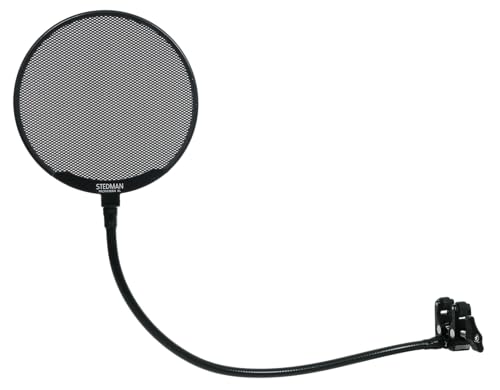
Stedman Proscreen XL360
A perforated metal screen replaces nylon mesh, resisting warping from belted vocal takes and heavy breath. The 6-inch screen mounts through a separate LollyPop-style clamp included in the box. Studios tracking rap and rock vocals favor the metal build for its durability.
Pros
- Metal screen resists warping under heavy use
- Wipes clean instead of needing replacement
- Consistent plosive control across loud takes
Cons
- Priced higher than nylon-mesh alternatives
- Metal screen can catch light in video shots

InnoGear Pop Filter
A 4-inch screen keeps the footprint small on desks crowded with monitors and interfaces. Dual-layer nylon mesh still handles plosive control at the smaller size. Streamers running condenser mics on boom arms report it clears keyboard trays without extra bracket adjustments.
Pros
- Small footprint suits crowded desks
- Clamp fits boom arms and standard stands
- Works well on close-mic setups
Cons
- Smaller screen needs precise centering
- Less coverage for singers who move off-mic
Aokeo Professional Metal Pop Filter
This variant swaps nylon for a metal windscreen while keeping Aokeo’s gooseneck design. A wider 6-inch screen covers off-axis speech, useful when podcast guests shift position mid-conversation. Metal mesh also resists moisture buildup during long recording sessions.
Pros
- Handles off-axis speech from moving guests
- Resists moisture buildup over long sessions
- Sturdier construction than nylon versions
Cons
- Heavier than nylon-mesh alternatives
- Needs a firm stand to avoid tilt

MXL Pop Filter PF-004
A 6.3-inch screen matches the wider capsule spacing found on large-diaphragm condenser mics. Double-mesh nylon layers keep low-frequency plosive energy from reaching the diaphragm. Shock-mounted mics in treated booths pair well with the extra screen width.
Pros
- Wide screen matches large-diaphragm capsules
- Strong low-frequency plosive control
- Gooseneck holds steady through sessions
Cons
- Bulkier fit on smaller desk setups
- Limited color options available

On-Stage ASFSPOP Pop Filter
A finer nylon mesh weave targets sibilance and plosives common in narration and voiceover reads. The screen mounts on a rigid, shorter gooseneck that resists drift during multi-hour sessions. Voiceover artists cite consistent positioning as the main advantage over cheaper clamps.
Pros
- Rigid gooseneck resists drift during long reads
- Fine mesh weave reduces sibilance
- Compact size suits narration booths
Cons
- Smaller screen than 6-inch competitors
- Less coverage for singers who move off-mic
Neewer NW-35 Pop Filter
Dual-layer mesh matches the approach used on pricier filters, built into a 6-inch frame. A flexible gooseneck angles the screen 2 to 4 inches from the mic capsule. Podcasters and streamers setting up a first rig get similar plosive control for less.
Pros
- Lower cost than premium dual-mesh filters
- Simple clamp installs in minutes
- Adjustable gooseneck angles the screen easily
Cons
- Gooseneck flexes more than sturdier models
- Frame feels lighter duty overall
Compared at a glance
| # | Model | Screen size | Best for | Score | Price |
|---|---|---|---|---|---|
| 1 | Aokeo AK-35 Pop Filter | 6 inches | Best overall | 9.4 | Check price |
| 2 | Stedman Proscreen XL360 | 6 inches | Best for loud vocalists | 9.1 | Check price |
| 3 | InnoGear Pop Filter | 4 inches | Best for compact desks | 8.9 | Check price |
| 4 | Aokeo Professional Metal Pop Filter | 6 inches | Best for podcasters | 8.7 | Check price |
| 5 | MXL Pop Filter PF-004 | 6.3 inches | Best for large-diaphragm condensers | 8.5 | Check price |
| 6 | On-Stage ASFSPOP Pop Filter | 5 inches | Best for voiceover work | 8.3 | Check price |
| 7 | Neewer NW-35 Pop Filter | 6 inches | Best budget | 8.0 | Check price |
How to pick the right one
What a pop filter actually does A pop filter breaks up the fast air burst from P and B sounds before it reaches the mic diaphragm. That air blast causes a low-frequency thump without one. Nylon mesh diffuses the burst across a wide woven surface. Metal mesh spreads it through perforated holes instead.
Nylon mesh vs metal mesh Nylon mesh costs less and handles typical speaking and singing volume well. It can stretch or wear thin after a year of heavy use. Metal mesh resists warping and wipes clean of moisture, which matters in humid rooms. Daily recording or high-energy performances favor the metal build.
Matching screen size to your mic Large-diaphragm condenser mics need a wider screen, close to 6 inches, to cover the full capsule. Compact desk setups with boom arms often do better with a 4-inch screen to avoid crowding monitors. Checking a mic’s capsule diameter before buying prevents an undersized or oversized fit.
How far should a pop filter sit from the mic? Two to four inches from the capsule gives plosive protection without muffling the vocal tone. A gooseneck clamp should hold that distance without sagging mid-session. Rigid, shorter necks resist drift better than long flexible ones on lightweight stands.
Common questions
Do pop filters actually reduce plosives?
Yes. Mesh screens diffuse the air blast from P and B sounds so it spreads out before reaching the diaphragm, cutting the low-frequency thump.
Is a metal or nylon pop filter better?
Nylon works fine for most home recording. Metal holds up better under loud, frequent use and wipes clean of moisture.
What size pop filter do I need?
Match the screen to your mic’s capsule width. Large-diaphragm condensers usually need a 6-inch screen, while compact desk mics can use a 4-inch screen.
Can I use a foam windscreen instead of a pop filter?
Foam windscreens cut wind noise outdoors but do less for close-mic plosives indoors. A mesh pop filter targets vocal plosives more precisely.
How far should a pop filter sit from the mic?
Around 2 to 4 inches from the capsule gives plosive protection without dulling the vocal tone.
Do pop filters work for podcasting and voiceover?
Yes. A fine-mesh or metal filter placed close to the mic reduces plosives and sibilance during narration and interviews.
Will a pop filter affect audio quality?
A properly placed filter has minimal effect on tone. Placing it too close can slightly dull high frequencies, so keep the recommended distance.
How do I clean a pop filter?
Metal mesh filters wipe down with a damp cloth. Nylon mesh should be spot-cleaned and air-dried to avoid stretching the fabric.
Which pop filter is best for loud or daily vocal sessions?
Metal mesh options like the Stedman Proscreen XL360 resist warping better than nylon under frequent, high-volume use.
Final word
Aokeo’s AK-35 covers most home studio needs through reliable plosive control and a gooseneck mount that holds its position. Vocalists tracking loud or daily sessions should step up to the Stedman Proscreen XL360 for its metal mesh durability. Anyone building a first podcast rig on a tight budget can start with the Neewer NW-35 and lose little in performance.