Jump Boxes vs Cables: Best Portable Jump Starters
NOCO’s Boost Plus GB40 is the best portable car jump starter for most drivers, with spark resistant clamps and enough output for gas engines and small diesels. GOOLOO’s GP4000 suits bigger trucks and diesels, while the DeWalt DXAEJ14 adds a built-in air compressor for tires and dead batteries in one unit.
Most drivers need a portable jump starter that balances safe clamps with enough cranking power. NOCO’s Boost Plus GB40 covers typical gas engines and small diesels without the bulk of a high-amp pack. Bigger engines call for the GOOLOO GP4000, and drivers who also fight low tires benefit from the DeWalt DXAEJ14’s built-in compressor.
Peak amp numbers dominate the marketing, yet they rarely explain sustained output or real engine limits. A pack that revives a sedan can stall out on a diesel truck, and clamps without reverse polarity protection risk sparking near a battery. We compared published amp ratings, stated engine limits, battery capacity, and safety certifications, then cross checked owner reports of actual roadside starts.
How to choose
What to look for in a portable car jump starter Peak amps get the attention, but engine compatibility matters more. Check the stated gas and diesel limits before comparing amp numbers. Safety features like reverse polarity and spark resistant clamps protect both you and the vehicle. Battery capacity, USB ports, and extras such as lights or compressors round out the decision.
Which jump starter fits your engine size Compact gas engines need far less current than a diesel truck. A unit rated for 800 peak amps handles most sedans, while trucks and diesels want 2000 amps or more. Cold weather raises the current a battery demands, so add a margin above the minimum rating. Check the listed displacement limit rather than assuming a bigger number always wins.
Best jump starter for frequent use or roadside emergencies Fleet drivers and anyone with an older battery benefit from a higher capacity pack. Frequent use wears down cheaper units faster, so rugged housings and higher peak amps pay off. A built-in air compressor or display screen adds convenience for drivers who handle more than one roadside issue. Weigh that extra bulk against how often you actually need it.
How to store and maintain a jump starter in cold weather Lithium packs slowly self discharge, so top off the charge every few months. Extreme heat in a summer trunk shortens battery life just as much as deep cold. Inspect clamps and cables for damage before relying on the unit in an emergency. Keep it charged and reasonably warm through winter for the most reliable starts.
The best picks, ranked
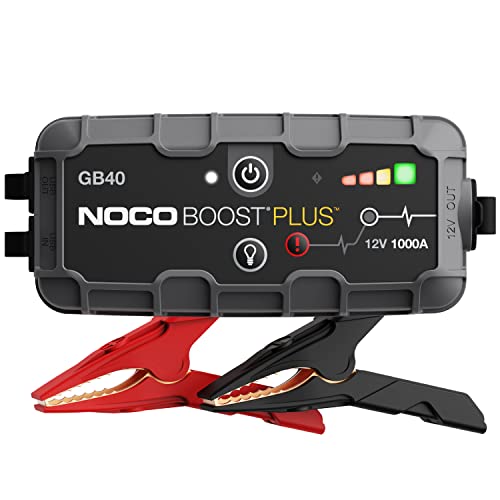
NOCO Boost Plus GB40 Jump Starter
NOCO’s Boost Plus GB40 leads the list for balanced safety and everyday reliability. Spark resistant, reverse polarity clamps protect the battery terminals during a stressful roadside moment. Owners report confident starts on gas engines and small diesels, though very large diesels need a higher output pack.
Pros
- Spark resistant, reverse polarity clamps
- Confident starts on common engines
- Doubles as a USB power bank
Cons
- Underpowered for large diesel trucks
- No built-in air compressor

GOOLOO GP4000 Jump Starter
GOOLOO’s GP4000 targets trucks and larger diesel engines with a high peak amp rating. Fast USB-C charging keeps the pack ready between jumps. The bigger battery adds bulk, so compact cars rarely need this much output.
Pros
- High output for big engines
- Fast USB-C charging both ways
- Bright multi-mode work light
Cons
- Bulkier than compact pocket packs
- More power than small cars need

DeWalt DXAEJ14 Jump Starter
DeWalt’s DXAEJ14 pairs jump starting with a built-in air compressor. One unit handles a dead battery and a low tire on the same trip. Lead acid construction makes it heavier than lithium pocket starters.
Pros
- Built-in compressor fixes low tires
- Strong peak output for its size
- Useful all-in-one roadside kit
Cons
- Heavier lead acid design
- Takes up more trunk space

Tacklife T8 Jump Starter
Tacklife’s T8 delivers dependable starts at a friendly price point. Reverse polarity protection guards against wiring mistakes. Output favors cars and smaller diesels rather than the largest engines.
Pros
- Strong value for everyday cars
- Reverse polarity protection included
- Compact enough for a glovebox
Cons
- Lower peak amps than premium packs
- Not built for the largest diesels

HULKMAN Alpha85 Jump Starter
HULKMAN’s Alpha85 shows charge level and jump status on a built-in screen. That feedback helps first-time users confirm a safe connection before cranking. Output handles most engines, though the display and larger battery add bulk.
Pros
- Clear charge and status display
- Strong output for most engines
- Fast USB-C charging
Cons
- Larger than pocket sized starters
- Costs more than bare bones units
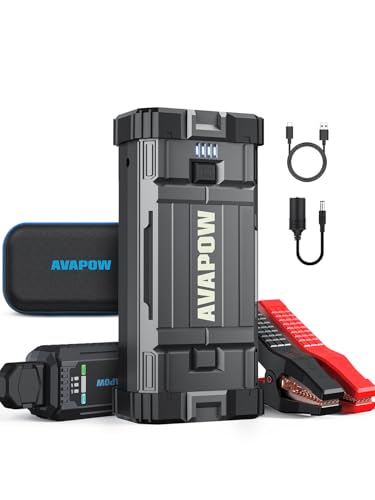
Avapow A58 Jump Starter
Avapow’s A58 suits drivers who jump start vehicles often. A rugged housing and high peak output withstand repeated use. The larger capacity adds weight and stretches full recharge time.
Pros
- High output for repeated starts
- Doubles as a backup power bank
- Rugged, grippy housing
Cons
- Heavier than pocket sized units
- Longer time to fully recharge

Audew Portable Jump Starter
Audew’s Portable starter fits easily in a glovebox at a low price. It starts most gas cars and charges a phone in a pinch. Lower capacity limits it to compact engines and occasional use.
Pros
- Compact glovebox friendly size
- Affordable everyday backup
- Works as a phone charger
Cons
- Lower output for large engines
- Best suited to occasional use
How they compare
| # | Model | Peak amps | Best for | Score | Price |
|---|---|---|---|---|---|
| 1 | NOCO Boost Plus GB40 Jump Starter | 1000 peak amps | Best overall | 9.5 | Check price |
| 2 | GOOLOO GP4000 Jump Starter | 4000 peak amps | Best for large engines and diesels | 9.3 | Check price |
| 3 | DeWalt DXAEJ14 Jump Starter | 1400 peak amps | Best all-in-one with air compressor | 9.1 | Check price |
| 4 | Tacklife T8 Jump Starter | 800 peak amps | Best value for everyday cars | 8.8 | Check price |
| 5 | HULKMAN Alpha85 Jump Starter | 2000 peak amps | Best for beginners who want status feedback | 8.6 | Check price |
| 6 | Avapow A58 Jump Starter | 2500 peak amps | Best for frequent or heavy use | 8.3 | Check price |
| 7 | Audew Portable Jump Starter | 600 peak amps | Best budget pick for occasional use | 8.0 | Check price |
Good to know
How many amps do I need to jump start a car?
It depends on engine size. Compact gas cars often start with 400 to 800 peak amps, while diesels typically need 1000 amps or more. Check the unit’s stated engine limit rather than the headline number alone.
Can a portable jump starter start a diesel engine?
Yes, if it lists a diesel displacement limit. Diesels draw heavy cranking current, so models like the GOOLOO GP4000 or Avapow A58 suit larger engines better than compact packs.
NOCO GB40 vs GOOLOO GP4000: which handles bigger engines?
The GOOLOO GP4000 rates higher at 4000 peak amps and suits trucks and large diesels. The NOCO GB40 covers most gas engines and small diesels in a smaller, lighter package.
Are portable jump starters safe to use?
Modern lithium models with reverse polarity and spark resistant clamps are safe when connected correctly. Always match positive and negative terminals before pressing the power button.
How often should I recharge a jump starter?
Top it off every few months even without use, since lithium packs slowly self discharge. A fully charged unit is more likely to work when an emergency actually happens.
Do I need a jump starter with a built-in air compressor?
Only if you want one device for two problems. The DeWalt DXAEJ14 handles a dead battery and a low tire, though it weighs more than a standalone starter.
Can a jump starter double as a phone charger?
Most models include USB ports for exactly that purpose. Heavy use as a charger does drain the reserve you might need for an actual jump.
Will cold weather reduce a jump starter’s power?
Yes. Cold lowers both your car battery’s output and the jump starter’s available current. Choose a unit rated well above your engine’s minimum if you drive in winter climates.
Is it safe to leave a jump starter in the car?
Occasional storage is fine, but extreme heat in a parked trunk shortens lithium battery life. A moderate spot, checked periodically, keeps the unit ready longer.
Do jump starters work on a completely dead battery?
Nearly all handle a very low battery, though a few need a trace of residual voltage. Many models include a boost mode built for deeply discharged batteries.
Our take
NOCO’s Boost Plus GB40 remains the best portable car jump starter for most drivers, pairing dependable starts with strong safety protections. Drivers with trucks or diesels get more output from the GOOLOO GP4000, and anyone who also fights flat tires benefits from the DeWalt DXAEJ14’s built-in compressor.

