Portable Hoof Boots Compared by Shell, Closure, and Fit
EasyCare Easyboot Glove wins overall for barefoot trail riders who want a strapless, low-profile shell. Renegade Viper handles rocky, technical terrain through its Kevlar-reinforced shell and cable closure. Scoot Boot packs and swaps trailside fastest, closing with a single strap in seconds.
EasyCare Easyboot Glove leads this comparison for barefoot trail riders who want a boot that stays put without straps. Its stretchy urethane shell wraps the hoof so nothing sits above the coronary band to rub. That snug fit demands an accurate, current hoof tracing, or the boot rubs instead of protects. Riders wanting a faster on-off swap should consider Scoot Boot instead.
Portability on a trail means three things: pack size, how fast cold hands can fasten a boot, and whether it survives a rocky crossing without spinning loose. We compared published shell materials, closure hardware, and sizing methods against what owners report about wear time and true-to-size fit. Intended use mattered too, since a boot built for turnout rarely suits fast trail work.
Our top picks

EasyCare Easyboot Glove
The Glove’s stretchy urethane shell wraps the hoof without upper straps, so nothing sits above the coronary band to rub. A drawstring gaiter option adds debris protection on sandy trails. Owners report the fit runs true when measured off a fresh trim, and the low profile suits horses that spook at bulky boots.
Pros
- No straps to rub above the coronary band
- Low profile stays secure at speed
- Optional gaiter adds trail debris protection
Cons
- Fit tolerance is tight, so trims must stay current
- Pulling on a swollen or muddy hoof takes practice

Renegade Viper Hoof Boot
A Kevlar-reinforced composite shell shrugs off sharp rock without the cracking some plastic boots show over a season. Cable and hook-and-loop straps tension across the front, keeping the boot centered on technical ground. Owners running rocky trail systems report the longest wear life of any boot in this lineup.
Pros
- Kevlar composite resists cracking on sharp rock
- Cable closure keeps tension even on rough ground
- Longest reported wear life in this lineup
Cons
- Cable tension needs periodic readjustment
- Heavier per boot than minimalist styles

Cavallo Trek Hoof Boot
A wider toe box than most boots here suits flared or club-footed hooves without forcing a size up. Two adjustable straps plus a rear captivator hold the boot through hours in the saddle. Riders logging multi-hour trail days report less rubbing at the heel bulbs than with single-strap designs.
Pros
- Wider toe box fits flared and irregular hooves
- Rear captivator adds heel bulb support
- Comfortable over multi-hour rides
Cons
- Two straps take longer to fasten than pull-on styles
- Bulkier profile than the Easyboot Glove
Scoot Boot
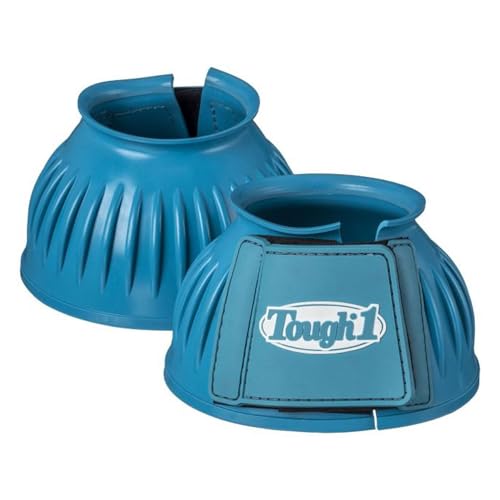
A single quick-release strap replaces the multi-buckle systems on pricier boots, cutting both fitting time and moving parts. The TPU shell holds up to regular arena and trail use without the reinforcement rocky-terrain boots carry. Owners cite it as one of the more forgiving boots in this lineup to size at home from a printed hoof tracing.
Pros
- Lowest-cost entry point in this lineup
- One strap simplifies fitting and daily use
- Holds up to regular arena wear
Cons
- Less reinforcement than boots built for rocky ground
- Runs narrow on flared hoof shapes

Old Mac’s G2 Hoof Boot
A durable rubber and nylon build tolerates mud, manure, and standing water better than boots meant only for a two-hour ride. The double strap closure stays put through days of pasture turnout without daily readjustment. Owners running horses on soft or rehab footing report it holds up to round-the-clock wear.
Pros
- Rubber build tolerates mud and standing water
- Stays secure through multi-day turnout without adjustment
- Reinforced sole resists wear on soft ground
Cons
- Bulkier than boots built for riding at speed
- Not designed for extended trotting or cantering

Woof Wear Medical Hoof Boot
A wide hook-and-loop opening lets a wrap or poultice stay in place while the boot goes on, which matters after an abscess or hoof surgery. The EVA footbed cushions a sore sole better than a rigid trail shell. Farriers and rehab owners use it between vet visits rather than for turnout or riding.
Pros
- Wide opening fits over bandages and poultices
- EVA footbed cushions a sore or bruised sole
- Simple to clean between treatments
Cons
- Not built for turnout or sustained riding
- Less rugged than trail-specific shells

EasyCare Easyboot Trail
A soft gaiter and cable closure fold flat, so a spare pair slides into a saddle bag without taking up the space a rigid shell needs. It ranks among the lighter boots here to carry as backup, and the cable adjusts without tools. Owners keep one pair in the trailer for the rare thrown shoe on a long ride.
Pros
- Among the lightest boots in this lineup to carry as a spare
- Folds flat for saddle bag or trailer storage
- Cable closure adjusts without tools
Cons
- Gaiter needs periodic cleaning after muddy rides
- Less durable than Kevlar-reinforced designs for daily use
Before you buy
What to look for in a portable horse boot Pack size decides how easily two spares fit in a saddle bag or trailer tack box. Shell material trades directly against that, since rigid composite resists rock but folds less flat than a soft gaiter. Closure speed matters just as much when a shoe pulls loose mid-ride and cold hands need to work fast. Sizing runs by hoof width and length rather than a shoe size, so a fresh tracing beats guessing from a horse’s usual brand.
Cable, strap, or pull-on: comparing closure systems Single-strap designs like Scoot Boot go on fastest but offer less fine adjustment across an oddly shaped hoof. Cable systems on the Renegade Viper and Easyboot Trail tension evenly around the hoof wall and hold up better on uneven rock. Dual-strap boots such as the Cavallo Trek add a rear captivator for extra security on long rides, though fastening takes longer. Easyboot Glove skips fasteners entirely, relying on shell fit instead of straps or cables.
How to size a hoof boot for different hoof shapes A hoof tracing taken right after a trim gives the length and width most brands size against. Boots bought from an old tracing rarely fit once growth changes the shape. Flared or club-footed hooves need a wider toe box, an area where the Cavallo Trek has an edge over narrower shells. A boot sized too tight rubs the coronary band and heel bulbs within one ride, while one sized too loose spins and wastes its protection.
Turnout, therapy, or trail: matching the boot to the job Turnout boots such as Old Mac’s G2 need rubber that tolerates standing water and mud for days, not just a two hour ride. Therapeutic boots like the Woof Wear Medical Hoof Boot open wide enough to clear a wrap or poultice, trading riding durability for easy access. Trail and endurance boots prioritize a secure fit at speed over that wide therapeutic opening. Covering all three jobs with one boot usually compromises each, so many working barns keep two styles on hand.
How they compare
| # | Model | Shell material | Best for | Score | Price |
|---|---|---|---|---|---|
| 1 | EasyCare Easyboot Glove | Flexible urethane, no upper strap | Best overall | 9.4 | Check price |
| 2 | Renegade Viper Hoof Boot | Kevlar-reinforced composite | Best for rocky terrain | 9.1 | Check price |
| 3 | Cavallo Trek Hoof Boot | Polyurethane with reinforced toe | Best for all-day trail comfort | 8.9 | Check price |
| 4 | Scoot Boot | TPU compound | Best value | 8.7 | Check price |
| 5 | Old Mac’s G2 Hoof Boot | Rubber and nylon webbing | Best for turnout | 8.5 | Check price |
| 6 | Woof Wear Medical Hoof Boot | Neoprene and rubber with EVA footbed | Best for recovery and therapeutic use | 8.3 | Check price |
| 7 | EasyCare Easyboot Trail | Polyurethane with soft gaiter | Best for packing a spare | 8.1 | Check price |
Common questions
How do you measure a horse’s hoof for boots?
Trace the hoof on paper right after a trim, then measure the widest point and the length from toe to the back of the frog. Compare both numbers against the brand’s sizing chart rather than a shoe size. Measurements taken on an overgrown hoof will run small once the horse is trimmed again.
What is the best portable hoof boot for a saddle bag?
The Easyboot Trail and Scoot Boot both fold flatter than rigid shells and weigh under a pound per boot. Either works as a lightweight spare for a thrown shoe on trail. Riders who need rockier terrain protection instead carry the heavier Renegade Viper.
Can horse boots replace metal shoes?
Many barefoot horses wear boots only on rides over rocky or abrasive ground, leaving hooves bare the rest of the time. Others use boots full time if the hoof has not adapted to bare turnout. A farrier or trimmer familiar with the horse’s hoof shape can advise which approach fits.
Cable closure vs strap closure: which hoof boot holds up better?
Cable systems tension more evenly around the hoof wall and tend to hold up longer on rocky trails. Strap closures go on and off faster and need less maintenance. Riders covering technical terrain lean toward cable models like the Renegade Viper.
Why does my horse’s hoof boot keep coming off?
A boot that spins or pulls off is almost always sized too large or fitted from an outdated hoof tracing. Loose gaiters and worn cables also lose their grip over time. Re-measuring after the horse’s most recent trim solves most fit problems.
Are hoof boots good for horses with laminitis?
Boots with a cushioned EVA footbed, such as the Woof Wear Medical Hoof Boot, support a sore sole better than a hard trail shell. Vets often pair therapeutic boots with padding specific to the horse’s case. Riding boots built for trail speed are not a substitute for a vet-directed rehab plan.
How long do hoof boots last?
Wear life depends on terrain and how often the horse is ridden barefoot versus turned out in them. Kevlar-reinforced shells like the Renegade Viper hold up longest on rocky ground. Straps and cables wear out before the shell does on most boots, so keeping spare hardware on hand pays off.
Old Mac’s G2 vs Easyboot Glove: which is better for turnout?
Old Mac’s G2 is built for extended turnout, with rubber that tolerates mud and standing water for days. The Easyboot Glove is designed for riding, not standing wear, and its close fit is not meant for round-the-clock use. Horses needing both turnout and trail protection typically need two different boots.
Is a Kevlar hoof boot worth it for rocky trails?
The Renegade Viper’s Kevlar-reinforced composite resists cracking on sharp rock better than standard plastic shells and reports the longest wear life in this lineup. Riders sticking to soft arena footing rarely need that reinforcement and can save weight with a lighter boot instead.
The bottom line
EasyCare Easyboot Glove earns the top spot for barefoot trail riders because its strapless urethane shell stays secure without rubbing the coronary band, provided the fit comes from a current hoof tracing. Riders who want a lighter, cheaper spare to stash in a saddle bag should pick Scoot Boot or the Easyboot Trail instead. Anyone crossing consistently rocky terrain gets more wear life from the Kevlar-reinforced Renegade Viper.