How to Pick a Portable Kayak That Still Tracks Straight
Sea Eagle’s SE370 leads for stable multi-person paddling thanks to its drop-stitch floor, Advanced Elements’ AdvancedFrame Convertible suits solo touring with rigid aluminum ribs, and the Intex Explorer K2 fits paddlers who want a low-cost weekend setup with included paddles and pump.
Sea Eagle’s SE370 tracks straighter than most inflatables because a drop-stitch floor keeps its hull rigid on open water. Setup takes about ten minutes, longer than simpler single-chamber kayaks.
Packed size and on-water stability pull in opposite directions for inflatable and folding kayaks, so weight capacity, hull rigidity, and owner reports on setup time from lake and river use guided this comparison.
What we recommend

Sea Eagle SE370 Inflatable Kayak
Rigidity on open water comes from a drop-stitch floor that avoids the flex common in cheaper inflatables. Three independent air chambers add a safety margin if one section loses pressure. The included pump inflates the full hull in about ten minutes.
Pros
- Rigid drop-stitch floor improves tracking
- Multiple air chambers add a safety margin
- Handles both solo and multi-person trips
Cons
- Heavier packed weight than solo-focused kayaks
- Setup takes longer than single-chamber models

Advanced Elements AdvancedFrame Convertible Kayak
Aluminum ribs built into the bow and stern hold the hull’s shape better than pure inflatable designs, improving tracking in wind and current. Convertible seating adjusts for one or two paddlers depending on the trip. Its rigid frame adds weight compared with simple single-chamber kayaks.
Pros
- Aluminum ribs improve tracking and shape retention
- Convertible seating for one or two paddlers
- More stable in wind than frameless inflatables
Cons
- Heavier than frameless inflatable options
- Packed size larger due to rigid rib inserts
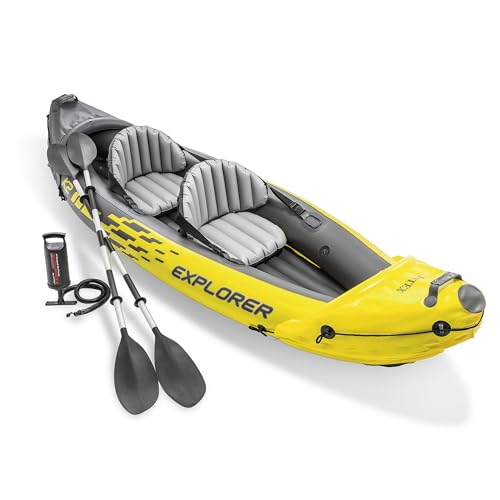
Intex Explorer K2 Kayak
Low price and a simple two-chamber design make this kayak an easy entry point for casual lake paddling. Included paddles and a pump mean no separate purchases before the first trip. Hull rigidity trails pricier drop-stitch models, so calm water suits it best.
Pros
- Low price includes paddles and pump
- Light packed weight for casual trips
- Easy setup for beginners
Cons
- Less rigid hull limits use to calm water
- Not built for extended touring distances
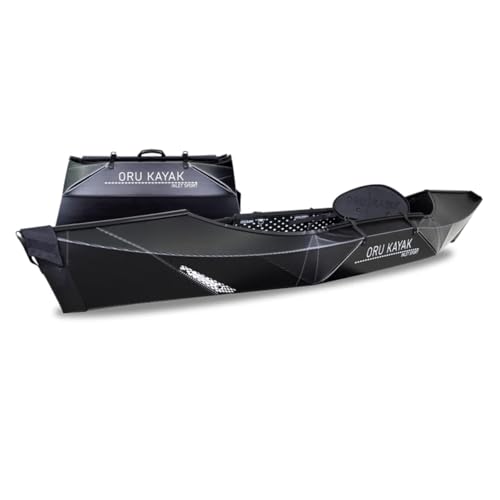
Oru Kayak Inlet Foldable Kayak
Folding polypropylene panels collapse this hull into a case smaller than most deflated inflatables, small enough for a closet or car trunk. Setup means folding rather than pumping, taking a few minutes once practiced. Weight capacity suits solo paddlers rather than tandem trips.
Pros
- Compact folded case fits small storage spaces
- No pump required for setup
- Rigid hull tracks well for a foldable design
Cons
- Single-person capacity limits group trips
- Folding technique takes practice to master

Driftsun Voyager 2 Person Inflatable Kayak
Two adjustable seats and dedicated foot braces suit tandem paddling over multi-mile trips better than fixed single seating. A removable skeg improves straight-line tracking compared with skeg-free inflatables. Its tandem length means a larger packed size than solo kayaks.
Pros
- Adjustable seats suit two paddlers comfortably
- Removable skeg improves tracking
- Foot braces add paddling leverage
Cons
- Larger packed size than solo-focused kayaks
- Slower to inflate given the added length

Aquaglide Chelan 120 Inflatable Kayak
Under 25 pounds packed, this solo kayak suits paddlers who carry gear on foot to reach the water. A single air chamber keeps setup fast but offers less redundancy than multi-chamber designs. Its weight capacity fits most solo adults without much extra gear.
Pros
- Very light for carrying to remote put-ins
- Quick single-chamber setup
- Compact packed size for solo trips
Cons
- Less redundancy than multi-chamber kayaks
- Lower weight capacity limits gear you can bring
Intex Excursion Pro Kayak
Two flush-mounted rod holders and a higher weight capacity than the base Explorer suit anglers carrying tackle. A raised floor and thicker material add puncture resistance near rocky shorelines. Reinforced material adds weight compared with the standard Intex Explorer line.
Pros
- Built-in rod holders suit anglers
- Higher weight capacity for gear and coolers
- Reinforced material resists punctures
Cons
- Heavier packed weight than recreational Intex models
- Bulkier to store than solo touring kayaks
Before you buy
What to look for in a portable kayak Packed weight and folded or deflated dimensions decide whether a kayak fits a car trunk or closet without a roof rack. Hull rigidity, whether from a drop-stitch floor, aluminum ribs, or rigid fold panels, affects how straight a kayak tracks on open or windy water. Weight capacity needs to cover the paddler plus any gear, coolers, or fishing tackle brought along. Setup time varies from a few minutes of folding to fifteen minutes of pumping.
Which portable kayak suits solo paddlers Single-chamber inflatables and folding hulls keep packed weight lower for solo carries to remote put-ins. Rigid rib inserts, like those in the Advanced Elements AdvancedFrame, improve tracking without a second paddler to help steady the boat. A weight capacity near 300 pounds covers most solo adults carrying light gear. The Aquaglide Chelan 120, under 25 pounds packed, suits paddlers walking gear in on foot.
Tandem and family kayaking: what changes Two-person kayaks need dedicated seating and foot braces spaced for both paddlers’ comfort on longer trips. Weight capacity of 400 pounds or more accounts for two adults plus basic gear like paddles and a cooler. Setup time grows with tandem length, so budgeting extra minutes before launch avoids a rushed inflation. A removable skeg, as on the Driftsun Voyager, helps a longer hull hold a straight line.
Best portable kayaks for fishing and gear-heavy trips Built-in rod holders and reinforced material resist the wear that rocky shorelines and tackle boxes cause over repeated trips. Weight capacity matters more than packed size here, since coolers and gear add up fast. A raised floor keeps feet drier when water splashes over the side during casting. The Intex Excursion Pro carries more weight than the base Explorer thanks to this reinforcement.
Compared at a glance
| # | Model | Capacity | Best for | Score | Price |
|---|---|---|---|---|---|
| 1 | Sea Eagle SE370 Inflatable Kayak | 3 people, 650 lbs | Best overall | 9.3 | Check price |
| 2 | Advanced Elements AdvancedFrame Convertible Kayak | 1 to 2 people, 550 lbs | Best for solo touring stability | 9.0 | Check price |
| 3 | Intex Explorer K2 Kayak | 2 people, 400 lbs | Best budget | 8.2 | Check price |
| 4 | Oru Kayak Inlet Foldable Kayak | 1 person, 300 lbs | Best for compact storage | 8.8 | Check price |
| 5 | Driftsun Voyager 2 Person Inflatable Kayak | 2 people, 400 lbs | Best for two paddlers | 8.7 | Check price |
| 6 | Aquaglide Chelan 120 Inflatable Kayak | 1 person, 300 lbs | Best for lightweight solo paddling | 8.6 | Check price |
| 7 | Intex Excursion Pro Kayak | 2 people, 550 lbs | Best for fishing | 8.5 | Check price |
Questions worth asking
What is the best portable kayak for a small car?
Foldable designs like the Oru Kayak Inlet and lightweight inflatables like the Aquaglide Chelan 120 pack small enough for a trunk without a roof rack.
Inflatable vs folding kayak, which tracks straighter?
Folding kayaks with rigid hulls generally track straighter than inflatables, though drop-stitch models like the Sea Eagle SE370 come close.
How long does it take to inflate a portable kayak?
Most inflatable kayaks take 10 to 15 minutes with an included pump, and folding kayaks assemble in a similar timeframe without pumping.
Are portable kayaks safe for open water?
Multi-chamber inflatables and rigid-hull folding kayaks handle moderate open water better than single-chamber budget models built for calm lakes.
What weight capacity is enough for two people?
Look for at least 400 pounds combined capacity to cover two adults plus basic gear like paddles and a small cooler.
Can a portable kayak work for fishing?
Yes, models like the Intex Excursion Pro include flush-mounted rod holders and reinforced material suited to angling.
How much does a portable kayak weigh packed?
Packed weight ranges from around 22 pounds for basic solo inflatables to over 40 pounds for tandem or fishing-focused models.
Do portable kayaks puncture easily?
Quality models use multiple air chambers and puncture-resistant material, though rocky shorelines still call for caution compared with hard-shell kayaks.
Is a folding kayak better than an inflatable for storage?
Folding kayaks like the Oru Inlet collapse into a smaller, more rigid case, while inflatables pack lighter but need a pump to set up.
The verdict
Sea Eagle’s SE370 earns the top recommendation for tracking that stays rigid whether one or three paddlers are aboard. Solo paddlers who prioritize packed size should choose the Oru Kayak Inlet instead, and anglers carrying tackle get more practical value from the reinforced Intex Excursion Pro.