Portable Projectors Worth Packing for Movie Night
The Anker Nebula Capsule 3 Laser leads for its pocketable size and sharp laser focus, while the XGIMI MoGo 2 Pro wins on picture quality for the money. Budget buyers should look at the ViewSonic M1 Mini Plus for casual, plug-and-play viewing.
For most people the Anker Nebula Capsule 3 Laser is the best portable projector, pairing a can-sized body with autofocus and Google TV, while the XGIMI MoGo 2 Pro offers a brighter, crisper image for those with a little more to spend.
Portable projectors are tricky because a small chassis forces trade-offs between brightness, battery and sound. We compared published lumens, resolution, battery ratings and streaming support so you can match a model to how and where you actually watch.
What we recommend
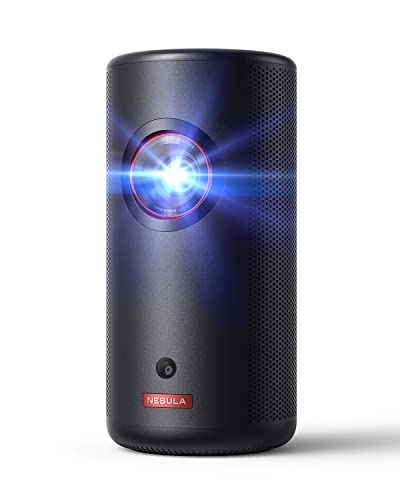
Anker Nebula Capsule 3 Laser
This soda-can-sized laser projector packs autofocus, auto keystone and Google TV into a body you can hold in one hand. Owners praise the sharp laser image and genuine grab-and-go convenience for travel and backyard nights.
Pros
- Truly pocketable laser design
- Fast autofocus and keystone
- Built-in Google TV streaming
Cons
- Modest brightness in daylight
- Single speaker sound is limited

XGIMI MoGo 2 Pro
The MoGo 2 Pro delivers a bright, detailed 1080p image with intelligent screen adaption and Android TV built in. It is a strong pick for anyone who prioritizes a clean, color-accurate picture in a still-portable footprint.
Pros
- Bright, color-rich image
- Auto keystone and obstacle avoidance
- Good built-in Harman Kardon audio
Cons
- No internal battery
- Netflix needs a workaround

Anker Nebula Mars 3 Air
The Mars 3 Air trades pocket size for a rugged handle, longer battery life and higher brightness suited to patios and camping. Owners report it holds up well outdoors while still running Google TV natively.
Pros
- Built-in handle and battery
- Loud, room-filling speakers
- Bright enough for dusk viewing
Cons
- Larger and heavier than a mini
- Not truly pocket portable

Samsung The Freestyle (2nd Gen)
The Freestyle swivels almost anywhere and runs Samsung’s full Tizen smart platform with wide app support. Its cradle design and auto-leveling make it easy to throw an image onto a ceiling or wall in seconds.
Pros
- Rotates to almost any surface
- Full Samsung app ecosystem
- Auto focus and leveling
Cons
- External battery sold separately
- Dim in bright rooms
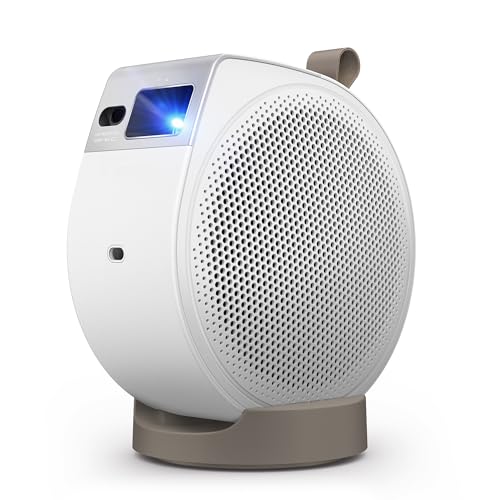
BenQ GV31
The GV31 stands out for its integrated subwoofer and tilting body that aims from the floor to the ceiling. It suits viewers who want a projector that doubles as a capable Bluetooth speaker between movies.
Pros
- Punchy built-in audio
- Wide tilt range
- Doubles as a Bluetooth speaker
Cons
- Lower brightness rating
- Streaming dongle sold separately

ViewSonic M1 Mini Plus
The M1 Mini Plus is an inexpensive, palm-sized projector with a built-in stand and JBL speaker for casual viewing. Owners see it as a simple way to try projection without a big outlay, best used in a dark room.
Pros
- Very affordable
- Handy integrated stand
- Compact and light
Cons
- Low native resolution
- Best only in the dark
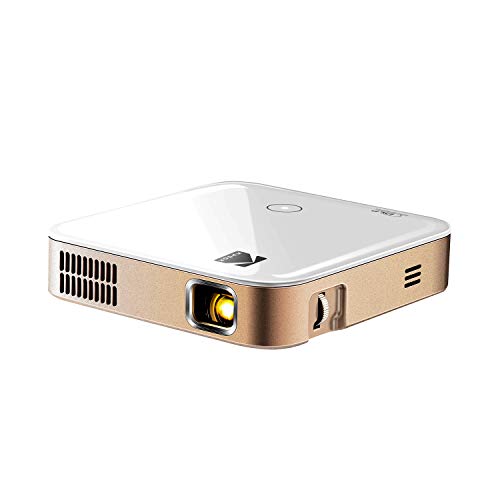
Kodak Luma 350
The Luma 350 is a lightweight pocket projector with built-in Wi-Fi and Android apps for quick, cable-free viewing. It works best as a secondary screen for bedrooms, dorms or travel rather than a main home theater.
Pros
- Very portable and light
- Wireless streaming built in
- Easy to operate
Cons
- Limited brightness
- App store is basic
Compared at a glance
| # | Model | Resolution | Best for | Score | Price |
|---|---|---|---|---|---|
| 1 | Anker Nebula Capsule 3 Laser | 1080p | Best overall | 9.4 | Check price |
| 2 | XGIMI MoGo 2 Pro | 1080p | Best for picture quality | 9.2 | Check price |
| 3 | Anker Nebula Mars 3 Air | 1080p | Best for outdoor use | 9.0 | Check price |
| 4 | Samsung The Freestyle (2nd Gen) | 1080p | Best for flexibility | 8.8 | Check price |
| 5 | BenQ GV31 | 1080p | Best sound | 8.6 | Check price |
| 6 | ViewSonic M1 Mini Plus | 480p native | Best budget | 8.3 | Check price |
| 7 | Kodak Luma 350 | 480p native | Best for casual streaming | 8.0 | Check price |
How to choose
How bright does a portable projector need to be? Brightness on portable models is usually rated in ANSI or ISO lumens, and most fall between 200 and 400. That range is fine for a dark room or after sunset, but none will overpower daylight. If you plan to watch before dark, prioritize the higher-lumen options and always control ambient light where you can.
Battery versus plugged-in power Some picks include an internal battery for genuine cordless use, while others rely on wall power or an optional battery base. Battery runtimes of two to three hours cover a single film, but brightness often drops in battery-saving modes. If you mostly watch near an outlet, a mains-powered model can give you a better image.
Built-in streaming and apps A projector with Google TV, Android TV or Tizen lets you stream without extra hardware, which matters when you are traveling light. Watch for licensing quirks, since some platforms restrict certain apps and may need a plug-in streaming stick. Confirm your must-have services are supported before buying.
Image size, focus and setup Portable projectors typically throw a usable image between 40 and 100 inches depending on distance. Autofocus and auto keystone save real frustration when you are setting up on uneven surfaces outdoors. Owners consistently report that these convenience features are worth paying up for on a device meant to move around.
Good to know
Can I use a portable projector outside?
Yes, but wait until dusk or full dark for the best picture, since portable models are not bright enough to fight daylight. Outdoor-focused units like the Mars 3 Air add battery life and louder speakers that suit backyards and camping.
Do portable projectors have built-in speakers?
Most do, and some, like the BenQ GV31, include a subwoofer for surprisingly full sound. For larger gatherings you can still pair an external Bluetooth speaker to almost any of these models.
What resolution should I look for?
Native 1080p projectors give a noticeably sharper image than lower-resolution models that only accept 1080p input. If picture clarity matters to you, favor the true 1080p picks over the budget 480p options.
How far should the projector sit from the wall?
It varies by model, but many portable projectors produce a roughly 80 to 100 inch image from around eight to ten feet away. Check the throw ratio in the specs, then test placement in your space.
Can these projectors run on battery power?
Several, including the Capsule 3 Laser and Mars 3 Air, have internal batteries good for one to three hours. Others rely on wall power or a separate battery base, so confirm before you plan a cordless movie night.
Will they stream Netflix and Disney+?
Models running Google TV or Android TV generally handle major services, though Netflix sometimes needs a specific setup step. Always verify the exact apps you need are officially supported on the model you choose.
Are portable projectors good for gaming?
They can work for casual gaming, but input lag is higher than a dedicated monitor. Look for a low-latency or game mode if fast response matters, and keep expectations modest for competitive play.
How do I keep the image in focus?
Models with autofocus adjust automatically each time you move them, which is a big convenience for portable use. On manual units you simply turn a focus dial until text on screen looks crisp.
Final word
For the best mix of size, image and convenience, the Anker Nebula Capsule 3 Laser is our top portable projector, with the XGIMI MoGo 2 Pro close behind for picture quality. Outdoor viewers should step up to the Mars 3 Air, while the ViewSonic M1 Mini Plus covers tight budgets.


