Which Saddle Pad Packs Down Best for Trailer Hauling?
Weaver Leather’s Original Wool Saddle Pad is the best all-around choice for owners hauling saddles between barns and trailers. Diamond Wool’s Cool Back Contoured Pad delivers strong value through breathable air channels. Trail riders needing dense felt that rolls flat for packing should look at the 5 Star Equine Saddle Pad.
Riders who trailer often need saddle pads that pack flat without losing shape. Weaver Leather’s Original Wool Saddle Pad handles that job best, wicking sweat through dense felt while holding its contour ride after ride. It weighs more than foam-core pads, though, so trail riders chasing minimal pack weight may prefer a lighter option.
Saddle pad shopping gets confusing because portable means different things to different riders. Some want a thin pad that stuffs into a saddle bag, while others want one light enough to carry to a show in a single trip. We compared material, thickness, weight, and saddle-type fit across current Amazon listings, then weighed owner feedback on how each pad held up to folding and repeated hauling.
What matters most
What to look for in a portable saddle pad Portable saddle pads trade cushioning against pack size. Wool felt holds shape and wicks sweat but adds weight, typically four to seven pounds depending on thickness. Foam-core pads like the VenTECH design weigh less and resist compression, though they feel firmer underfoot. Fleece-bottom pads pack the smallest and lightest but flatten faster under daily use. Thickness usually runs from a half inch up to one and a quarter inches; thicker felt suits horses with prominent withers, while thinner foam or fleece works for lighter trail outings.
Choosing a pad for trail rides and trailering Trail riders who haul to trailheads care most about pack size and dry time. A single-layer wool pad like the 5 Star Equine Saddle Pad rolls flatter than a multi-layer pad, which matters when saddle bags are already full of gear. Overnight camps mean a pad needs to dry before the next morning’s ride; synthetic fleece dries faster than dense wool felt. Multi-day trips often call for a middle ground: a pad thick enough for miles but light enough to carry as a spare.
Western versus English saddle pad fit Western pads are usually contoured to follow the bars of a western tree, with wear leathers sewn near the cinch. English pads like the Intrepid International Square Saddle Pad use a square all-purpose cut with billet loops that route the girth through the pad itself. Putting an English pad under a western saddle leaves the tree bars uncovered near the back, which can cause rubbing. Riders who switch between saddle types on the same horse typically keep separate pads for each.
How do you care for and pack a saddle pad on the road? Wool felt pads need full air drying before storage, since trapped moisture leads to mildew and odor. Brushing dried sweat and dirt out of the felt after each ride keeps the fibers from matting down. Rolling a pad rather than folding it in quarters helps it hold its contour over repeated trips. Fleece and foam pads tolerate a quick machine wash on most models, which suits riders hauling to weekend shows with limited time between classes.
Our top picks

Weaver Leather Original Wool Saddle Pad
Pressed wool felt forms this pad’s contoured western shape, roughly one inch thick at the withers. Owners run it under roping, ranch, and trail saddles because the felt wicks sweat and holds shape after repeated folding for transport. Wear leathers at the front corners protect the felt from cinch and rigging wear.
Pros
- Wool felt wicks moisture away from the horse’s back
- Holds its contoured shape through repeated packing and unpacking
- Wear leathers protect against cinch and rigging rub
Cons
- Heavier than foam-core pads of similar thickness
- Needs full air-drying between rides to prevent mildew

Diamond Wool Cool Back Contoured Saddle Pad
An air-channel core sits between two layers of wool felt in Diamond Wool’s Cool Back design, cutting heat buildup on longer rides. Its contoured shape suits a range of back widths without a custom order. Made in the USA, the pad holds up well to the folding and refolding that comes with frequent trailering.
Pros
- Air-channel core reduces heat buildup on the horse’s back
- Contoured cut fits a wider range of horses without custom sizing
- Wool exterior wicks sweat like a full felt pad
Cons
- Costs more to replace than a basic felt pad
- Foam core needs gentler handling than solid wool felt

5 Star Equine Saddle Pad
A single layer of dense virgin wool felt makes up this pad, sold in multiple thickness options to match different saddle fits. Trail and endurance riders favor it because the density spreads weight evenly over long miles. Single-layer construction also rolls flatter for trailer storage than multi-layer pads.
Pros
- Dense single-layer felt spreads pressure over long trail miles
- Available in multiple thicknesses to fine-tune saddle fit
- Rolls flatter than multi-layer pads for trailer storage
Cons
- Thicker versions add noticeable weight to carry to the trailhead
- Virgin wool felt takes longer to dry than synthetic fleece

Professional’s Choice VenTECH Air Ride Saddle Pad
A closed-cell foam core sits inside a ventilated shell here, channeling air across the horse’s back during arena and trail work. Moisture-wicking liner pulls sweat away from the skin faster than a plain foam pad. Closed-cell foam also resists compression better than open-cell alternatives over a full season of use.
Pros
- Ventilated shell reduces heat buildup in warm weather
- Closed-cell foam resists compressing flat over a season
- Moisture-wicking liner speeds drying between rides
Cons
- Firmer underfoot feel than wool felt pads
- Less cushioning than thicker felt options on rocky trails
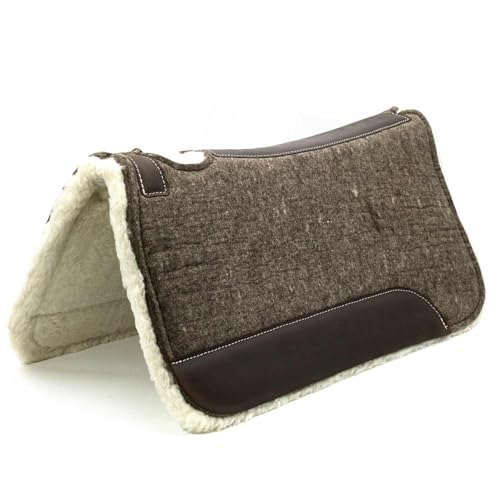
Mustang Fleece Bottom Saddle Pad
Canvas on top and synthetic fleece underneath make up Mustang’s build, cutting several pounds compared to wool felt equivalents. The lighter construction folds smaller for saddle bags or a trailer tack compartment. Riders use it as a spare pad they can carry along without adding much load.
Pros
- Folds smaller than wool felt for saddle bag storage
- Several pounds lighter than comparable felt pads
- Fleece bottom is machine washable in most versions
Cons
- Fleece compresses faster than wool felt under daily use
- Offers less cushioning on long, rocky trail rides

Intrepid International Square Saddle Pad
A square cut fits close-contact and all-purpose English saddles here, with a quilted cotton shell over a thin foam layer. Billet loops keep the pad aligned with the girth during work. Its lighter build packs easily alongside show tack without adding bulk.
Pros
- Billet loops keep the pad from slipping during work
- Lightweight cotton shell packs easily for shows
- Machine washable for quick turnaround between rides
Cons
- Thin foam gives less shock absorption than a wool pad
- Square cut cannot be resized for an unusually built horse

Tough-1 Contoured Wool Saddle Pad
Printed cotton tops a wool felt bottom in this Tough-1 pad, giving new owners a lower-cost entry into felt-pad benefits. Wear leathers come sewn onto most versions to guard against cinch wear. Thinner felt than premium wool pads keeps the price down but limits use under heavy daily work.
Pros
- Lower cost entry point into wool felt cushioning
- Wide range of printed top colors and patterns
- Sewn-on wear leathers guard against cinch rub
Cons
- Felt layer is thinner than premium wool pads
- Felt compresses faster under daily heavy use
How they compare
| # | Model | Material | Best for | Score | Price |
|---|---|---|---|---|---|
| 1 | Weaver Leather Original Wool Saddle Pad | 100% pressed wool felt | Best overall | 9.4 | Check price |
| 2 | Diamond Wool Cool Back Contoured Saddle Pad | Wool felt with air-channel foam core | Best value | 9.2 | Check price |
| 3 | 5 Star Equine Saddle Pad | 100% virgin wool felt | Best for trail riding | 9.0 | Check price |
| 4 | Professional’s Choice VenTECH Air Ride Saddle Pad | Closed-cell foam core with ventilated shell | Best for hot weather riding | 8.7 | Check price |
| 5 | Mustang Fleece Bottom Saddle Pad | Canvas top with synthetic fleece bottom | Best lightweight and packable | 8.4 | Check price |
| 6 | Intrepid International Square Saddle Pad | Quilted cotton shell with foam lining | Best for english saddles | 8.2 | Check price |
| 7 | Tough-1 Contoured Wool Saddle Pad | Cotton top with wool felt bottom | Best budget | 8.0 | Check price |
Frequently asked questions
What is the best portable saddle pad for trail riding?
The 5 Star Equine Saddle Pad works well for trail riding because its dense wool felt rolls flat for packing and spreads pressure over long miles. Riders who want less weight to carry can choose the Mustang Fleece Bottom Saddle Pad instead.
How thick should a saddle pad be for everyday riding?
Most everyday western pads run between three-quarters of an inch and one inch, which balances cushioning with saddle fit. Horses with prominent withers often need the thicker end of that range to avoid pressure points.
Can you use an English saddle pad under a western saddle?
Not reliably. English pads use a square cut sized for close-contact or all-purpose saddles, so they leave the wider western tree bars uncovered near the back. A contoured western pad matches the tree shape correctly and avoids rubbing.
Is wool felt better than foam for a saddle pad?
Wool felt wicks moisture better and holds its shape longer, which is why pads like the Weaver Leather Original Wool Saddle Pad remain popular for daily use. Foam-core pads such as the VenTECH design weigh less and resist heat buildup, which suits arena work in warm weather.
Which saddle pad is easiest to pack for hauling?
The Mustang Fleece Bottom Saddle Pad packs smallest because its fleece-and-canvas build weighs about two and a half pounds and folds flat. Wool felt pads add more bulk but hold their contour better over repeated trips.
Do saddle pads need to match the saddle’s tree width?
Yes. A pad that is too thick under a narrow tree can pinch the withers, while a thin pad under a wide tree leaves gaps that cause slipping. Checking fit with the saddle in place, not just the pad alone, catches most mismatches.
How do you clean a wool felt saddle pad?
Owners typically brush off dried sweat and dirt after each ride, then spot clean with water rather than fully submerging the felt. Full air drying before storage prevents the mildew smell that comes from packing a damp pad away.
Are foam saddle pads good for hot weather riding?
Ventilated foam pads like the Professional’s Choice VenTECH Air Ride Saddle Pad channel air across the horse’s back and include a moisture-wicking liner, which helps in warm conditions. Owners riding in consistently high heat still combine them with a thin wool liner pad for extra sweat absorption on longer rides.
The verdict
For most owners hauling between barns and trailheads, Weaver Leather’s Original Wool Saddle Pad remains the safer all-around pick, since wool felt holds shape through repeated packing and unpacking. Trail riders chasing the lightest possible load should carry the Mustang Fleece Bottom Saddle Pad instead, even though it cushions less on rocky ground. English riders showing on weekends get a closer contact fit from the Intrepid International Square Saddle Pad, since a western-shaped pad won’t match their saddle’s flap.