Compact Skis and Skiboards Built for Easy Travel
Snowfeet Mini Ski Skates pack the smallest here, strapping right onto regular boots. Resort skiers wanting a shorter learning curve should try K2 Fatty Skiboards instead. Parents outfitting kids for travel do well with Firefly Junior All-Mountain Skis, sized for easy carrying.
Length decides portability more than anything else, since skis over about 130 centimeters stop fitting in a normal trunk without folding a seat down. Snowfeet Mini Ski Skates solve that by strapping short blades directly to a boot, though they trade resort speed for that size. K2 Fatty Skiboards keep more resort capability in a shorter, duffel-sized package.
Shorter skis handle differently than full-length pairs, and that surprises new buyers. We compared length, weight and the skill level each design suits, then checked owner reports on stability at speed and durability under resort use.
The top picks, ranked
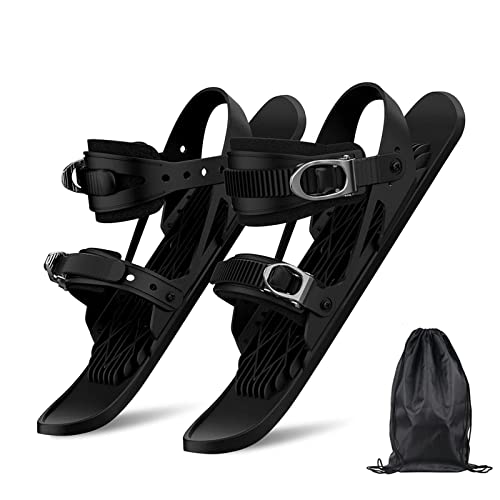
Snowfeet Mini Ski Skates
Short blades strap directly onto regular winter boots, skipping separate ski boots and poles entirely. Compact enough for a backpack, this design skips the dedicated ski bag most setups need. Owners stick to short slopes, sledding hills and quick sessions rather than full resort runs.
Pros
- Packs into a backpack, no ski bag needed
- No separate ski boots required
- Simple to learn for short slopes
Cons
- Not designed for high-speed resort runs
- Less stability than full-length skis at speed

K2 Fatty Skiboards
Riders move switch and land backward on this twin-tip shape without swapping gear, unlike most full-length skis. Its shorter length fits a large duffel bag instead of a full ski bag. Snowboarders and freestyle skiers mention an easier transition than on standard alpine skis.
Pros
- Twin-tip shape suits switch riding
- Shorter length fits a duffel instead of a ski bag
- Compatible with standard alpine bindings
Cons
- Less stable at high speed than full-length skis
- Steeper learning curve for true beginners
Line Chopstick Skiboards
Rail and jump landings hold up better on this stiffer, park-tuned flex than on softer all-mountain skiboards. Its compact length makes tricks easier to initiate and land cleanly. Terrain park regulars treat this as their go-to for quick laps without hauling full-length skis.
Pros
- Stiffer flex suits rails and jumps
- Short length simplifies trick initiation
- Compact enough for quick park laps
Cons
- Not suited to beginners
- Less float in deep or variable snow
Volkl RTM Skiboards
Simpler shape and construction keep the cost down while still fitting standard alpine bindings. Even at this price, the shorter length packs smaller than any full-length ski. First-time skiboarders use this as a lower-risk way to test the format before spending more.
Pros
- Lower cost entry into skiboarding
- Compatible with standard bindings
- Compact enough for easy transport
Cons
- Construction feels less refined than premium skiboards
- Less durable under heavy park use

Firefly Junior All-Mountain Skis
Junior lengths starting well under 100 centimeters mean a child’s full setup takes far less trunk and overhead bin space than an adult pair. Soft flex forgives beginner mistakes while still holding an edge on groomed runs. Parents traveling with multiple kids’ setups credit the size for keeping packing manageable.
Pros
- Short length packs small for family trips
- Soft flex suits learning skiers
- Bindings often adjust as the child grows
Cons
- Sized specifically for children, not adults
- Needs replacing as the child grows taller

Head Wing Beginner Skis
Control at low speed improves with this shorter recommended length for beginners, while it still packs smaller than a longer intermediate ski. Soft, forgiving flex helps new skiers hold a wedge turn without fighting the ski. Adults learning later in life mention the shorter length easing the intimidation of first runs.
Pros
- Shorter length suits new adult skiers
- Soft flex forgives early mistakes
- Often bundled with bindings already mounted
Cons
- Still longer than skiboards or Snowfeet
- Outgrown in ability within a season or two
Rossignol Experience Junior Skis
A slightly stiffer flex than entry-level junior skis lets a progressing child carry speed on groomed runs without the ski folding under them. Lengths stay well below adult sizing, keeping travel bags compact. Parents of kids past the beginner stage treat this as the step-up model before an adult ski.
Pros
- Stiffer flex supports progressing skiers
- Compact junior lengths ease travel
- Bridges the gap before an adult ski
Cons
- Too stiff for a true first-time beginner
- Shorter usable lifespan as the child grows
How to pick the right one
What counts as a portable ski Length matters most, since anything under about 100 centimeters fits in a duffel bag instead of a dedicated ski bag. Skiboards and boot-mounted designs like Snowfeet push this furthest, trading top-end speed stability for size. Junior skis pack small mainly because a child’s proportional height is already short, not because of a special design.
Skiboards vs boot-mounted mini skis: which is better for you Standard alpine bindings and ski boots work with skiboards like the K2 Fatty, so they handle more like a short ski on a chairlift-served resort. Boot-mounted designs such as Snowfeet skip separate ski boots entirely, trading resort performance for convenience on short slopes or sledding hills. Resort days call for skiboards. Casual, low-speed use suits mini skis better.
Choosing sizes for kids versus adults A child’s height and weight set junior ski sizing, and outgrowing a pair within a season or two is normal. Adult beginner skis run shorter than intermediate or advanced lengths specifically to ease early turns. Buying a size meant to be grown into usually backfires, since an oversized ski is harder to control while learning.
How to pack skis and skiboards for travel A padded duffel or soft ski bag protects even a shorter pair’s edges in transit. Airlines often size-restrict checked ski bags, and compact skiboards frequently avoid the oversize fees full-length skis trigger. Checking a specific airline’s length limit still beats assuming a shorter ski avoids the fee automatically.
Compared at a glance
| # | Model | Length | Best for | Score | Price |
|---|---|---|---|---|---|
| 1 | Snowfeet Mini Ski Skates | Roughly 22 to 26 inches | Best overall for portability | 9.2 | Check price |
| 2 | K2 Fatty Skiboards | Around 99 centimeters | Best for all-mountain skiboarding | 8.9 | Check price |
| 3 | Line Chopstick Skiboards | Around 90 to 99 centimeters | Best for park and freestyle | 8.5 | Check price |
| 4 | Volkl RTM Skiboards | Around 99 centimeters | Best budget | 8.0 | Check price |
| 5 | Firefly Junior All-Mountain Skis | Roughly 70 to 120 centimeters depending on size | Best for kids and family travel | 8.6 | Check price |
| 6 | Head Wing Beginner Skis | Typically 140 to 160 centimeters for adult beginners | Best for adult beginners | 8.2 | Check price |
| 7 | Rossignol Experience Junior Skis | Roughly 90 to 140 centimeters depending on size | Best for progressing kids | 8.3 | Check price |
Questions worth asking
What are the most portable skis for travel?
Skiboards and boot-mounted mini skis like the Snowfeet Mini Ski Skates pack the smallest, since both stay well under standard ski length and fit in a duffel bag or backpack.
Are skiboards good for beginners?
Some are. Softer, wider models like the Volkl RTM suit newer riders, while park-tuned boards like the Line Chopstick expect more control and suit intermediate or advanced riders better.
Can you use regular ski boots with skiboards?
Yes. Most skiboards, including the K2 Fatty and Line Chopstick, use standard alpine ski bindings compatible with regular ski boots.
Do airlines charge extra for shorter skis or skiboards?
Sometimes still, since airlines often measure the full bag length rather than the ski itself. Compact skiboards trigger oversize fees less often than full-length skis, but checking the specific airline’s policy avoids surprises.
What length ski works best for a child learning to ski?
Junior skis sized between a child’s chin and nose generally work best for control while learning. The Firefly Junior All-Mountain line covers a range of these shorter lengths.
Are boot-mounted mini skis like Snowfeet good for resort runs?
They suit short slopes, sledding hills and casual use better than full resort terrain, since they lack the stability longer skis or skiboards offer at higher speed.
How much shorter are skiboards than regular skis?
Skiboards typically run 90 to 100 centimeters, against 150 centimeters or more for a standard adult ski, which is why they pack so much smaller.
Do shorter skis perform worse at high speed?
Generally yes. Shorter length reduces stability at speed compared to longer skis, which is the main tradeoff for the portability gained.
Skiboards vs short junior skis: which packs smaller for a family trip?
Skiboards usually run shorter than junior skis overall, but a young child’s junior pair can pack just as small since their proportional length is already short.
Final word
Snowfeet Mini Ski Skates pack smaller than anything else here and skip separate boots entirely, which suits casual, low-speed trips best. Skiers wanting real resort performance in a compact package should choose K2 Fatty Skiboards instead. Families traveling with kids get the most practical value from Firefly Junior All-Mountain Skis, since a short junior length comes free with a child’s smaller size.