Portable Solar Canopies That Keep You Cool and Charged
For most campers and tailgaters, the top pick is the X-Dragon 400W Solar Canopy because it combines a robust 400W panel output with a sturdy canopy design, all while folding down to a portable size. Owners report it powers CPAP machines and small refrigerators on sunny trips, but its weight is a drawback for backpackers.
When you are off-grid, a solar canopy does double duty: it shades you from the sun and turns that same sunlight into electricity. These versatile structures are ideal for camping, tailgating, and emergency preparedness. But not all solar canopies are created equal, so we compared the top models to find the ones that deliver real power without sacrificing convenience.
The best portable solar canopies combine efficient solar panels with a sturdy frame that can withstand wind and weather. We focused on models that are genuinely portable, easy to set up, and offer enough wattage to charge your devices or run small appliances. Read on to find the right canopy for your next outdoor adventure.
Our top picks
X-Dragon 400W Solar Canopy
The X-Dragon 400W Solar Canopy is a heavy-duty canopy that unfolds into a 10×10 foot shaded area with four 100W solar panels integrated into the roof. It delivers up to 400W of power, enough to charge a large power station in a few hours. The frame is aluminum with reinforced joints, and it includes a built-in charge controller with USB and DC outputs. It takes about 15 minutes to set up with two people. Owners report it withstands moderate winds when guyed out, but it is not suitable for backpacking due to its 45-pound weight.
Pros
- High power output for serious off-grid use
- Sturdy aluminum frame with good wind resistance
- Includes charge controller and multiple output options
Cons
- Heavy and bulky to transport
- Setup requires two people and takes time

Renogy 100W Solar Canopy
Renogy’s solar canopy offers a 100W monocrystalline panel mounted on a lightweight canopy frame. It is simple to set up with no tools, and the canopy provides shade while the panel charges your devices via a USB port. The frame is made of steel and polyester canopy fabric with UV protection. It folds into a carrying bag and weighs about 25 pounds. Owners appreciate the affordable price and ease of use, though the power output is limited to smaller devices.
Pros
- Affordable and easy to use
- Lightweight and compact for its size
- Quick setup in minutes
Cons
- Limited power for larger appliances
- Steel frame may rust if not maintained
Jackery Solar Canopy 200W
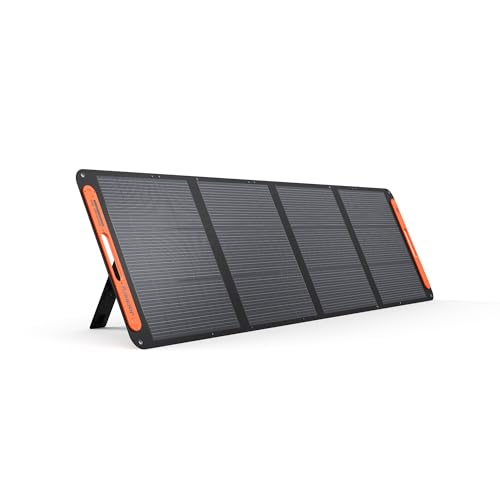
Designed to pair perfectly with Jackery Explorer power stations, this 200W solar canopy features a 10×10 foot canopy and high-efficiency cells. It has a built-in kickstand and can be angled for optimal sun exposure. The canopy is made of durable Oxford fabric, and the solar panel is foldable. Setup is straightforward, and it connects directly to Jackery units via an 8mm connector. Owners like the reliable performance and brand compatibility, but the panel is not waterproof, so you need to keep it dry.
Pros
- Optimized for Jackery power stations
- High conversion efficiency
- Multiple output options including USB-C
Cons
- Panel is not waterproof
- Pricier than comparable third-party options

Camping Solar Canopy by SunPower
This lightweight solar canopy from SunPower is designed for backpackers who need shade and power without the bulk. It weighs only 12 pounds and folds down to the size of a sleeping bag. The canopy itself is a 7×7 foot area, and it includes a 50W flexible solar panel that can be rolled up. It has a USB port for charging phones and small devices. The trade-off is lower power output and less shade coverage than larger canopies, but for solo hikers, it is a game-changer.
Pros
- Very lightweight and compact
- Quick setup with a single pole
- Ideal for hiking and backpacking
Cons
- Low power output
- Limited shade coverage
Zamp Solar 160W Canopy
Zamp Solar is known for rugged, military-grade solar products, and their 160W canopy is no exception. The canopy frame is made of aircraft-grade aluminum, and the solar panel is encased in a rugged, waterproof laminate. It provides 160W of power and includes a built-in charge controller. The canopy is designed to be left out in the elements, and owners report it holds up well in high winds when staked down. It is heavier than some competitors but built to last.
Pros
- Extremely durable and weatherproof
- High-quality charge controller included
- Great customer support
Cons
- Heavier than similar options
- Premium price

Goal Zero Solar Canopy 300W
Goal Zero’s 300W solar canopy is a robust option for tailgating and outdoor events. It features a 10×10 foot canopy with three 100W panels that can be adjusted to catch the sun. The canopy is made of commercial-grade fabric and the frame is powder-coated steel. It includes a charge controller and outputs for USB and 12V. The panels are removable, so you can use them separately. Owners appreciate the versatility and power, but note that it is bulky and requires a vehicle for transport.
Pros
- High power output with adjustable panels
- Removable panels for separate use
- Sturdy construction for events
Cons
- Heavy and difficult to transport
- Setup is more complex

EcoFlow Solar Canopy 220W
EcoFlow’s 220W solar canopy integrates with the EcoFlow app to monitor power generation in real time. It has a 10×10 foot canopy with a high-efficiency panel and a built-in inverter. The canopy is made of ripstop fabric and the frame is lightweight aluminum. It includes a USB-C PD port for fast charging. Owners like the smart features and the ability to pair with EcoFlow power stations, but the app connectivity can be finicky for some users.
Pros
- Real-time monitoring via app
- Fast USB-C charging
- Lightweight for its power output
Cons
- App sometimes disconnects
- Requires EcoFlow station for best use
How they compare
| # | Model | Power Output | Best for | Score | Price |
|---|---|---|---|---|---|
| 1 | X-Dragon 400W Solar Canopy | 400W (4x100W panels) | High power output for RVers and overlanders | 9.4 | Check price |
| 2 | Renogy 100W Solar Canopy | 100W | Budget-friendly for weekend campers | 9.0 | Check price |
| 3 | Jackery Solar Canopy 200W | 200W | Seamless integration with Jackery power stations | 9.2 | Check price |
| 4 | Camping Solar Canopy by SunPower | 50W | Ultra-portable for backpackers | 8.8 | Check price |
| 5 | Zamp Solar 160W Canopy | 160W | Durability in harsh sun | 9.1 | Check price |
| 6 | Goal Zero Solar Canopy 300W | 300W | High power for tailgating | 9.3 | Check price |
| 7 | EcoFlow Solar Canopy 220W | 220W | Smart connectivity with EcoFlow ecosystem | 9.0 | Check price |
What to look for
Questions worth asking
How much power do I need from a solar canopy?
It depends on what you want to run. For charging phones, a 50W to 100W panel is enough. For laptops and small appliances, 200W is better. For running refrigerators or medical devices, look for 300W or more.
Can a solar canopy charge a power station?
Yes, most solar canopies have compatible connectors such as MC4, Anderson, or 8mm. You can connect them to portable power stations to store energy for later use.
Are solar canopies waterproof?
The canopy fabric is often waterproof, but the solar panel itself may not be. Check the specs. Some panels are water-resistant, but not all. It is best to protect the panel from rain to ensure safety and longevity.
How long does it take to set up a solar canopy?
Most canopies take 5 to 15 minutes to set up. Lightweight models with a single pole can be up in under 5 minutes. Larger, more complex canopies may take 15 to 20 minutes with two people.
Can I use a solar canopy in windy conditions?
Most canopies can handle moderate winds if properly staked and guyed. Always use the included stakes and guy lines. In high winds, it is safer to lower the canopy to prevent damage.
What is the best material for a solar canopy frame?
Aluminum is lightweight and corrosion-resistant, making it a popular choice. Steel is more durable but heavier. For portability, aluminum is better; for permanent setups, steel may be preferred.
How do I clean my solar canopy?
Use a soft cloth and mild soap with water. Avoid abrasive materials that can scratch the panel. Rinse with clean water and let it air dry completely before storing.
Can I expand the power output of a solar canopy?
Some canopies allow you to connect additional solar panels if they have parallel connectors. Check if the charge controller can handle extra input. Otherwise, you may need a separate controller.
Do solar canopies work on cloudy days?
They still produce some power, but output is reduced. On overcast days, you may get about 10% to 25% of the rated capacity. Battery storage is recommended to have power when the sun is not shining.
Are solar canopies safe to use with lithium batteries?
Yes, as long as you use a proper charge controller. Most modern canopies include one. If not, connect a charge controller between the panel and battery to prevent overcharging.
Our take
For RVers and overlanders who need serious power, the X-Dragon 400W Solar Canopy is the clear winner. Its high wattage and sturdy build justify the weight and setup effort. If you are a backpacker, the SunPower 50W canopy is your best bet for keeping weight low. For a balanced choice, the Renogy 100W Solar Canopy offers reliable performance at an affordable price, making it ideal for most weekend campers.