Top Portable VR Headsets for On-the-Go Gaming
The Meta Quest 3 is our top pick for most people, offering a rich mixed reality experience and a vast game library in a wireless design. It delivers crisp visuals and intuitive controls, but its battery life is limited to about two hours of active use. For budget-conscious buyers, the Meta Quest 2 remains a solid choice, though it lacks the newer passthrough features.
Portable VR headsets have evolved from smartphone holders to fully standalone devices. Today’s models pack powerful processors and high-resolution displays into lightweight designs. They let you game, watch movies, or explore virtual worlds anywhere without wires.
We compared the most popular portable VR headsets on the market. Our selection includes options for different budgets and use cases. We focused on standalone headsets that offer the best balance of performance, comfort, and content. Read on to find the right one for your travels.
What we recommend

Meta Quest 3
The Meta Quest 3 is the latest in the Quest line, featuring full-color passthrough for mixed reality. It runs on the Snapdragon XR2 Gen 2 platform, delivering twice the graphical performance of its predecessor. The dual 2064×2208 LCDs provide sharp visuals, and the redesigned Touch Plus controllers offer improved haptics. With a vast library of games and apps, it is the most versatile portable headset available.
Pros
- Full-color mixed reality passthrough
- High-resolution display with wide field of view
- Extensive game library via Meta Quest Store
Cons
- Battery life is short for long sessions
- No built-in headphone jack on some models

Meta Quest 2
The Meta Quest 2 remains a popular entry point into portable VR. It offers a 1832×1920 resolution per eye and runs on the Snapdragon XR2 Gen 1. While it lacks color passthrough, it supports a huge catalog of games. The headset is comfortable for many users and often available at a lower price. It is a great way to experience VR without breaking the bank.
Pros
- Affordable price point
- Large selection of games and apps
- Lightweight design
Cons
- Lower resolution than newer models
- No color passthrough for mixed reality

PICO 4
The PICO 4 is a strong competitor with a balanced design and pancake lenses. It features a 2160×2160 resolution per eye and a 105-degree field of view. The headset is lighter than most, and its rear battery design distributes weight evenly. It runs on the Snapdragon XR2 Gen 1 and offers a decent library, though not as extensive as Meta’s. The PICO 4 is particularly praised for its comfort during long sessions.
Pros
- Ergonomic design with balanced weight
- Sharp display with pancake lenses
- Good battery life
Cons
- Smaller game library than Meta Quest
- Limited customer support in some regions

HTC Vive XR Elite
The HTC Vive XR Elite is a premium headset that offers both standalone and PC VR connectivity. It features a 1920×1920 resolution per eye with a 110-degree field of view. Its modular design allows for a battery in the back or a glasses-friendly front. The headset includes full-color passthrough and hand tracking. It is a versatile option for those who want a high-end experience with multiple use cases.
Pros
- Works as standalone or with PC
- Modular design adds flexibility
- Full-color passthrough and hand tracking
Cons
- Higher price point
- Shorter battery life compared to others
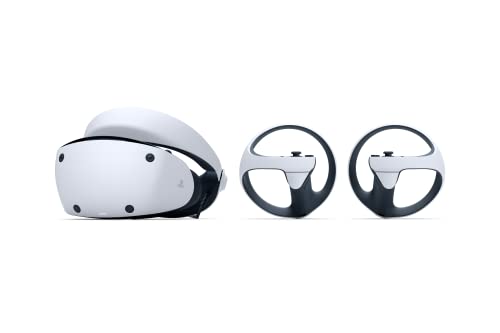
PlayStation VR2
The PlayStation VR2 is designed exclusively for the PS5, offering a high-fidelity VR experience. It features a 2000×2040 resolution per eye with OLED displays and a 110-degree field of view. The headset includes eye tracking, haptic feedback, and adaptive triggers. While it is not wireless, it provides a premium gaming experience for console users. It is portable in the sense that you can move it to another room, but it requires a PS5.
Pros
- Stunning OLED visuals with HDR
- Immersive haptic feedback
- Eye tracking for foveated rendering
Cons
- Requires a PS5, not standalone
- Wire limits movement

DPVR P2
The DPVR P2 is a budget-friendly standalone headset that focuses on media consumption. It has a 1920×1080 resolution per eye and a 100-degree field of view. The headset runs on a quad-core processor and offers a simple interface. It is lightweight and comfortable, making it suitable for watching movies or casual games. However, its game library is limited, and the controller is basic.
Pros
- Very affordable
- Lightweight and comfortable
- Good for watching 3D movies
Cons
- Low resolution compared to others
- Limited game selection

Lenovo Mirage Solo
The Lenovo Mirage Solo is an older standalone headset that was built for Google Daydream. It features a 2560×1440 resolution per eye and a 110-degree field of view. It offers inside-out tracking with WorldSense. Although Daydream was discontinued, the headset can still be used for some apps and media. It may be a good option for those who find it at a clearance price, but support is limited.
Pros
- Good resolution for its age
- Inside-out tracking
- Can be found at low prices
Cons
- Discontinued platform
- Limited content availability
The lineup, side by side
| # | Model | Display | Best for | Score | Price |
|---|---|---|---|---|---|
| 1 | Meta Quest 3 | Dual LCD, 2064×2208 per eye | Best overall for mixed reality and performance | 9.4 | Check price |
| 2 | Meta Quest 2 | Single LCD, 1832×1920 per eye | Best budget-friendly standalone | 8.7 | Check price |
| 3 | PICO 4 | Dual LCD, 2160×2160 per eye | Best for comfort and adjustable IPD | 8.5 | Check price |
| 4 | HTC Vive XR Elite | Dual LCD, 1920×1920 per eye | Best for premium features and glasses-friendly design | 8.3 | Check price |
| 5 | PlayStation VR2 | OLED, 2000×2040 per eye | Best for PlayStation 5 owners | 8.1 | Check price |
| 6 | DPVR P2 | Dual LCD, 1920×1080 per eye | Best for 3D movies and light gaming | 8.0 | Check price |
| 7 | Lenovo Mirage Solo | Dual LCD, 2560×1440 per eye | Best for Google Daydream content (legacy) | 7.8 | Check price |
What matters most
Common questions
What is a portable VR headset?
A portable VR headset is a self-contained virtual reality device that does not require a PC, smartphone, or console to operate. It includes its own display, processor, and tracking sensors, allowing you to use it anywhere.
Can I use a portable VR headset while traveling?
Yes, standalone headsets are designed for portability. They are lightweight and have no external cables, making them easy to pack and use in different locations.
How long does the battery last on a portable VR headset?
Battery life varies by model, but most standalone headsets last between two to three hours of active use. Some headsets offer external battery packs or hot-swappable batteries for extended sessions.
Do portable VR headsets require a smartphone?
No, modern portable VR headsets are completely standalone. They have built-in processors and storage, so you do not need to insert a smartphone. Older models like Google Cardboard require a phone, but they are not considered full VR headsets.
What is the difference between 3DOF and 6DOF tracking?
3DOF (degrees of freedom) tracking only detects head rotation, while 6DOF tracking also detects positional movement (forward, backward, left, right, up, down). Most modern portable headsets offer 6DOF inside-out tracking, allowing you to walk around in virtual space.
Can I watch movies and videos on a portable VR headset?
Yes, you can watch movies and videos in a virtual cinema environment. Many headsets have streaming apps that let you watch content from services like Netflix or YouTube in a virtual theater.
Are there any health concerns with using VR headsets?
Some users may experience motion sickness or eye strain. It is recommended to take breaks and start with short sessions. Also, ensure the headset is properly adjusted to avoid discomfort.
Can I use a portable VR headset with glasses?
Many headsets are designed to accommodate glasses, but it depends on the model. Some have adjustable focal distance or enough space for glasses. The HTC Vive XR Elite is noted for its glasses-friendly design. You can also purchase prescription lens inserts for some headsets.
How do I update the software on a portable VR headset?
Software updates are typically delivered over Wi-Fi. You can check for updates in the settings menu of the headset. It is important to keep the software updated for new features and performance improvements.
What is the difference between the Meta Quest 2 and Quest 3?
The Quest 3 has a newer processor (Snapdragon XR2 Gen 2) that delivers more graphical power. It also features full-color passthrough for mixed reality, while the Quest 2 only has black-and-white passthrough. The Quest 3 has higher resolution displays and improved lenses, but it is more expensive.
Final word
If you want the best all-around portable VR headset, choose the Meta Quest 3. It offers the most advanced features and the largest content library. For budget shoppers, the Meta Quest 2 still delivers a great experience at a lower cost. If comfort is your top priority, consider the PICO 4 due to its balanced design. Avoid the Lenovo Mirage Solo unless you find it at a steep discount, as its platform is discontinued. The PlayStation VR2 is only a good choice if you already own a PS5 and prioritize high-fidelity gaming over portability.


