Portable RV Water Filters That Keep Your Tanks Full and Clean
For most RVers, the Camco TastePURE Inline Water Filter is the top choice. It delivers clean, great-tasting water right from your hose, and its compact size makes it perfect for travel. The main limitation is that it only filters one hose line, so you may need separate filters for your drinking water and shower.
If you live on the road, clean water is a top priority. RV parks and campgrounds often have questionable water quality, so a reliable filter is essential. Portable filters are easy to set up and remove, and they protect your RV’s plumbing and your health.
We compared popular models that are truly portable and have waterproof housings. Our selection includes inline filters, canister systems, and whole-house options. Each one is rated for flow rate, contaminant reduction, and ease of use. Read on to find the perfect match for your rig.
The shortlist, ranked

Camco TastePURE Inline RV Water Filter
This inline filter connects directly to your water hose. It reduces bad taste, odor, and sediment. The clear housing lets you see when the filter needs changing. It’s a simple and effective solution for RVers.
Pros
- Easy to install with no tools
- Clear housing shows filter condition
- Compact and lightweight for travel
Cons
- Only filters one line at a time
- Not rated for microbiological contaminants
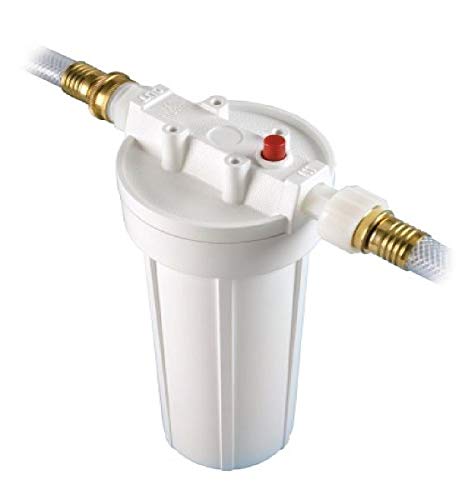
Culligan RV-800 Water Filter
The Culligan RV-800 uses KDF media to reduce chlorine, lead, and other contaminants. It fits inline or can be used as a standalone. It’s a durable filter with a high flow rate.
Pros
- High capacity and long-lasting
- Reduces a wide range of contaminants
- Can be used inline or as a standalone
Cons
- Bulky and may need extra support
- Requires a wrench for installation
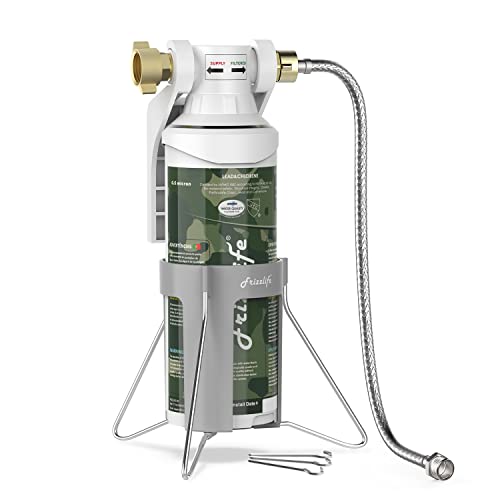
Frizlife RV Inline Water Filter
This filter is designed for RVers who want strong water pressure. It reduces chlorine, sediment, and bad taste. The housing is impact-resistant and weatherproof.
Pros
- High flow rate for powerful showers
- Durable construction
- Simple twist-on installation
Cons
- Large size may not fit tight storage
- Filter change indicator is not present

Camco EVO PV-Series Canister Water Filter
The EVO canister system uses a metal bracket and clear sump. It accepts standard 10-inch filters, so you can choose the right filter for your needs. The twist-off design makes changes quick and simple.
Pros
- Accepts any standard 10-inch filter
- Clear sump to monitor filter life
- Sturdy metal bracket
Cons
- Requires regular maintenance of O-rings
- Must purchase filter separately

iSpring WGB22B 2-Stage Whole House Water Filter
This two-stage system filters all the water entering your RV. It removes sediment and reduces chemicals. The clear housings allow for visual inspection. It is more permanent but still portable enough for RV use.
Pros
- Filters all water in the RV
- Very high capacity
- Clear housings for easy monitoring
Cons
- Heavy and requires mounting
- Overkill for small RVs

APEC Water Systems ROES-50 Portable Reverse Osmosis System
This is a portable RO system that attaches to a faucet. It removes up to 99% of contaminants. It’s ideal for RVers who want the highest purity for drinking water.
Pros
- Removes up to 99% of contaminants
- Includes multiple stages
- Compact and portable design
Cons
- Produces waste water
- Installation is more involved

Waterdrop WD-RV-01 Portable RV Water Filter
This compact inline filter is affordable and effective. It reduces chlorine, sediment, and bad taste. It’s a great entry point for RVers on a budget.
Pros
- Very affordable
- Lightweight and compact
- Easy to install
Cons
- Lower capacity than others
- Limited contaminant reduction
How they stack up
| # | Model | Filtration | Best for | Score | Price |
|---|---|---|---|---|---|
| 1 | Camco TastePURE Inline RV Water Filter | Reduces sediment, bad taste, and odor | Best Overall Inline Filter | 9.4 | Check price |
| 2 | Culligan RV-800 Water Filter | Reduces chlorine, lead, cysts, and more | Most Effective Contaminant Removal | 9.1 | Check price |
| 3 | Frizlife RV Inline Water Filter | Reduces chlorine, sediment, and taste | Best for High Flow Rate | 8.9 | Check price |
| 4 | Camco EVO PV-Series Canister Water Filter | Standard 10-inch cartridge (not included) | Best for Easy Filter Changes | 8.8 | Check price |
| 5 | iSpring WGB22B 2-Stage Whole House Water Filter | 2: sediment and carbon block | Best Whole House Option | 8.6 | Check price |
| 6 | APEC Water Systems ROES-50 Portable Reverse Osmosis System | Reverse osmosis with carbon pre/post filters | Best for Purists | 8.3 | Check price |
| 7 | Waterdrop WD-RV-01 Portable RV Water Filter | Reduces chlorine, sediment, and taste | Best Budget Pick | 8.0 | Check price |
How to choose
Questions worth asking
How often should I replace my RV water filter?
It depends on usage and water quality. Most manufacturers recommend every 1 to 3 months or after a certain number of gallons. If you notice a change in taste or flow, replace it sooner.
Can I use a portable RV water filter for my whole RV?
Yes, if you choose a whole-house system that connects to your main water line. Inline filters only filter the specific hose they are attached to.
Do portable RV water filters remove bacteria and viruses?
Most portable filters do not remove bacteria or viruses. They are designed for sediment and chemical reduction. If you need microbiological protection, look for a filter with a certification for cysts or use a UV purifier.
Will these filters reduce my water pressure?
Some filters can reduce pressure, especially if they have a low flow rate. Check the flow rate specification. Models with 4 gallons per minute or higher usually maintain good pressure.
Are portable RV water filters easy to install?
Inline filters are very easy. Just connect them to your hose with no tools. Canister systems require mounting but still do not need professional help. Always read the instructions.
Can I use these filters for non-RV purposes?
Yes, many are compatible with standard garden hoses, so you can use them for camping, boat, or outdoor activities. Whole-house systems are more permanent but still portable.
What is the difference between an inline filter and a canister filter?
An inline filter fits directly into the hose line. A canister filter is a separate housing that you install with a bracket. Canister filters often accept standard cartridges, giving you more flexibility.
Do I need a water softener with a filter?
Portable filters do not soften water. If you have hard water, you may need a separate softener. Some RV parks have soft water, but it is not guaranteed.
How do I know if my filter is working?
You may notice a change in taste or odor. Some filters have a flow meter or a clear housing that shows the filter condition. Regularly replace the filter to ensure it is effective.
Can I leave the filter connected in freezing temperatures?
No, water in the filter can freeze and crack the housing. Always disconnect and drain the filter when temperatures drop below freezing.
The verdict
If you want a simple, reliable solution for clean drinking water, get the Camco TastePURE Inline Filter. For full RV protection, the iSpring WGB22B is the best investment. For those on a tight budget, the Waterdrop WD-RV-01 offers decent filtration at a low cost. Choose based on your filtration needs and installation preferences.


