Potting Bench Storage and Weather Resistance Compared
Best Choice Products Wood Potting Bench with Sink Cutout fits most yards with balanced storage and surface space. Suncast Resin Potting Bench resists weather without any wood maintenance. Origin Point Compact Potting Bench suits small patios where floor space runs limited.
A potting bench needs to survive soil, water, and sun exposure while still leaving enough surface to work on.
Frame material drives most of the price and maintenance difference, from untreated wood to powder-coated steel. Surface space, storage type, and weather resistance were compared across current listings to sort the tradeoffs.
What to look for
What to look for in a potting bench Surface area decides how many flats or pots fit at once. Storage type, open shelves versus enclosed cabinets versus drawers, affects how organized tools stay. Frame material drives long-term durability more than any other spec, especially outdoors year-round.
Wood vs resin vs steel, which frame lasts longest Wood, cedar especially, looks natural but needs sealant unless naturally rot-resistant. Resin skips maintenance entirely, though it flexes more under heavy loads. Powder-coated steel resists rust and suits benches supporting heavier pots or frequent moving.
Best potting bench size for small vs large spaces Compact benches under 32 inches wide suit balconies and small patios but limit work to one or two flats. Full-size benches over 40 inches give room for multiple projects, though they need more floor space and resist repositioning.
Storage features that matter for daily gardening A sink cutout speeds up cleanup between plantings. Enclosed cabinets protect soil bags from rain better than open shelves. Drawers corral small items like seed packets and hand tools that otherwise get lost among pots.
Our top picks

Best Choice Products Wood Potting Bench with Sink Cutout
A sink cutout accepts a drop-in basin, paired with a lower shelf and two side hooks for tools. Work surface space fits standard nursery flats without crowding. Owners note the fir wood needs a yearly sealant coat to resist splitting outdoors.
Pros
- Sink cutout accepts a standard drop-in basin
- Tool hooks add hanging storage beyond shelving
- Surface fits multiple nursery flats at once
Cons
- Untreated fir needs yearly sealant to prevent splitting
- Heavier to move than resin or steel benches

Suncast Resin Potting Bench
Molded resin panels never need sealing or staining, unlike wood alternatives. An enclosed cabinet keeps soil bags and small tools dry. Standing work suits the surface height well, according to owner feedback.
Pros
- Never needs sealing, staining, or weatherproofing
- Enclosed cabinet keeps soil bags dry and hidden
- Lighter weight than wood or steel equivalents
Cons
- Surface area runs smaller than wood benches in this range
- Resin can flex slightly under heavy pots

Origin Point Compact Potting Bench
Patios and balconies that cannot clear full-size benches suit this compact frame. A single shelf underneath holds pots and bags without extending the footprint. One to two nursery flats still fit on the narrower surface.
Pros
- Narrow footprint clears tight patio or balcony space
- Steel frame resists rust without extra maintenance
- Lighter build makes repositioning easier than full-size benches
Cons
- Smaller surface limits work to one or two flats
- Wood top still needs periodic sealing

Giantex Potting Bench Table with Storage Drawer
A sliding drawer holds small hand tools alongside a lower open shelf for bagged soil. Below the main surface, a metal wire shelf holds pots in progress. Owners report the drawer keeps seed packets and gloves organized rather than loose on the counter.
Pros
- Sliding drawer organizes small tools and seed packets
- Wire rack adds a third storage tier below the shelf
- Wide surface accommodates multiple projects at once
Cons
- Covered areas suit it better than full sun and rain
- Drawer runners can stick if soil debris builds up

Sunnydaze Decor Rolling Potting Bench
Locking caster wheels let gardeners roll this bench between a shed and a patio without lifting. Two open shelves keep pots and tools within reach. Once positioned, locked casters hold the bench stable for work.
Pros
- Locking caster wheels allow easy repositioning
- Two open shelves keep tools and pots accessible
- Stable once wheels are locked for working
Cons
- Wood frame still requires sealing for outdoor exposure
- Added wheel height may not suit shorter gardeners

Convenience Concepts Oxford Potting Bench
A single lower shelf covers storage here, with no sink or drawer add-ons. Cost stays below premium benches while still offering a stable, elevated surface. Owners recommend it for occasional or seasonal potting rather than daily heavy use.
Pros
- Lowest price point among benches compared here
- Laminate finish resists minor moisture better than raw wood
- Simple assembly with fewer parts
Cons
- Engineered wood is less durable long-term than solid fir or cedar
- Not rated for full outdoor rain exposure
Backyard Discovery Cedar Potting Bench
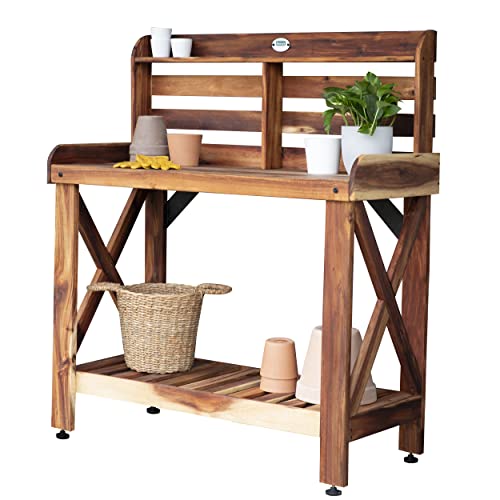
Cedar resists rot and insects naturally, better than fir or pine, suiting uncovered yard placement. A galvanized steel liner on the lower shelf resists rust from wet soil bags. Wide surface space handles repotting multiple plants in one session.
Pros
- Cedar resists rot and insects without chemical treatment
- Galvanized shelf liner handles wet soil bags without rusting
- Widest work surface among benches compared here
Cons
- Price runs higher than fir or engineered wood benches
- Heavier construction makes relocation more difficult
The lineup, side by side
| # | Model | Material | Best for | Score | Price |
|---|---|---|---|---|---|
| 1 | Best Choice Products Wood Potting Bench with Sink Cutout | Fir wood | Best overall | 9.4 | Check price |
| 2 | Suncast Resin Potting Bench | Molded resin | Best for weather resistance | 9.1 | Check price |
| 3 | Origin Point Compact Potting Bench | Powder-coated steel frame, wood top | Best for small spaces | 8.9 | Check price |
| 4 | Giantex Potting Bench Table with Storage Drawer | Fir wood with metal wire shelf | Best for organization | 8.7 | Check price |
| 5 | Sunnydaze Decor Rolling Potting Bench | Fir wood frame, steel wheels | Best for mobility | 8.5 | Check price |
| 6 | Convenience Concepts Oxford Potting Bench | Engineered wood with laminate finish | Best budget | 8.3 | Check price |
| 7 | Backyard Discovery Cedar Potting Bench | Solid cedar with galvanized steel shelf liner | Best for full outdoor exposure | 8.0 | Check price |
Common questions
What is the best material for an outdoor potting bench?
Cedar and resin hold up best outdoors. Cedar resists rot naturally and resin needs no sealing at all, while fir and engineered wood require more upkeep or covered placement.
How big should a potting bench work surface be?
A surface between 36 and 48 inches wide handles most home gardening tasks, including multiple nursery flats, while anything under 32 inches suits balconies or occasional use.
Do potting benches need to be covered from rain?
Wood benches without natural rot resistance benefit from covered placement or annual sealant. Resin and cedar benches tolerate direct rain exposure better.
Potting bench with sink vs without, is the sink worth it?
A sink cutout speeds up rinsing pots and tools between uses, which matters most for frequent potting, though it adds cost and needs plumbing or a manual fill-and-drain basin.
Can a potting bench double as outdoor storage?
Benches with enclosed cabinets or deep shelves hold soil bags, small tools, and pots, functioning as light storage in addition to a work surface.
What height should a potting bench be?
Most benches stand between 34 and 38 inches tall, close to standard counter height, letting most adults work standing without much bending.
Are rolling potting benches sturdy enough for heavy pots?
Rolling benches with locking casters stay stable once positioned, though they generally support less weight than fixed benches with wider legs.
How do you maintain a wood potting bench outdoors?
Applying an exterior sealant or stain once a year, and keeping the bench off direct soil contact, extends the life of fir or engineered wood benches significantly.
Which potting bench works best for small patios?
Compact benches under 32 inches wide, like the Origin Point model, clear tight walkways while still holding a shelf of pots and tools.
Final word
Cedar and resin benches need the least ongoing maintenance for full outdoor exposure, while fir wood options add more storage features at a lower upfront cost. Match surface size to how many plants a typical session involves.