Precision Belt Sanders for Fine Woodworking and Metalwork
For most precision work, the 1×30 belt sander from WEN stands out with its adjustable table and variable speed, ideal for sharpening and small projects. Its main advantage is affordability without sacrificing accuracy. A key limitation is the smaller belt size compared to larger models, which may slow down bigger jobs.
Precision belt sanding demands a tool that offers stable tracking, variable speed, and a flat platen. The right sander can make or break a finish, whether you are shaping wood or sharpening steel.
We looked at models from WEN, Jet, and Bucktool, among others, to find the best for hobbyists and professionals. Each sander was assessed on its ability to handle fine work without burning or gouging.
The top picks, ranked
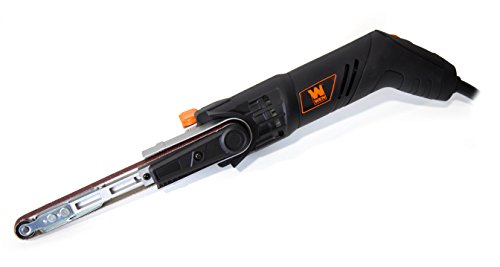
WEN 6307 1×30 Belt Sander
The WEN 6307 is a compact 1×30 belt sander with a 2.1 amp motor and variable speed dial. Its adjustable table and miter gauge allow for accurate angle sanding, making it a favorite among knife makers and model builders.
Pros
- Variable speed for heat control
- Adjustable table for precise angles
- Compact footprint
Cons
- Belt changes can be tricky
- Small dust port may clog

Jet JSG-96 2×42 Belt Sander
Jet’s JSG-96 offers a 2×42 belt with a powerful 1/2 HP motor and cast iron base for stability. It features a quick release belt tension and tracking adjustment, providing reliable performance for both wood and metal.
Pros
- Sturdy cast iron base
- Easy belt tracking adjustment
- Suitable for heavy use
Cons
- No variable speed
- Heavier than competitors

Bucktool BDS-4601 4×36 Belt Sander
The Bucktool BDS-4601 is a 4×36 belt sander with a 6.2 amp motor and a large cast iron worktable. It includes a 6-inch disc sander for added versatility, though the belt is the main draw for precision work with a flat platen.
Pros
- Large table for support
- Dual sander combo
- Powerful motor
Cons
- No variable speed
- Belt tracking may need frequent adjustments
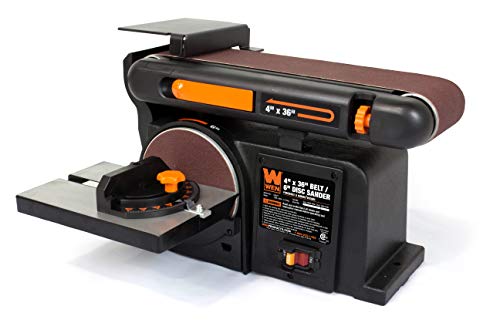
WEN 6502 4×36 Belt and 6-inch Disc Sander
WEN’s 6502 is a 4×36 belt sander with a 6-inch disc, both powered by a 4.3 amp motor. It offers a quick release belt tension and a dust port, making it a practical choice for hobbyists who need both belt and disc sanding at an accessible price.
Pros
- Two tools in one
- Affordable price point
- Adjustable table for angles
Cons
- Tracking can drift
- Disc table not adjustable for tilt
Grizzly Industrial T30397 2×42 Belt Sander
Grizzly’s T30397 is a 2×42 belt sander with a 3/4 HP motor and variable speed from 800 to 3600 FPM. Its small footprint and adjustable table make it popular among knife makers who need to shape bevels accurately.
Pros
- Variable speed for heat control
- Quiet operation
- Precise tracking
Cons
- Higher price
- Belt changes require tools

Delta 31-196 1×30 Belt Sander
The Delta 31-196 is a basic 1×30 belt sander with a 2.5 amp motor. It offers a simple design with an adjustable sanding table, making it an easy introduction to precision sanding for novices.
Pros
- Easy to use
- Lightweight and portable
- Inexpensive
Cons
- No variable speed
- Less stable than heavier models

Palmgren 96851 6 x 48 Belt Sander
Palmgren’s 96851 is a heavy-duty 6×48 belt sander with a 1 HP motor and a cast iron table. It features a precision tracking system and a large platen for flat sanding, designed for continuous industrial use.
Pros
- Extremely durable construction
- Large belt for bigger projects
- Smooth tracking
Cons
- Very heavy
- Requires 220V outlet
How to pick the right one
The lineup, side by side
| # | Model | Belt Size | Best for | Score | Price |
|---|---|---|---|---|---|
| 1 | WEN 6307 1×30 Belt Sander | 1 x 30 inches | Sharpening and small detail work | 9.4 | Check price |
| 2 | Jet JSG-96 2×42 Belt Sander | 2 x 42 inches | Balanced performance for general shop use | 9.0 | Check price |
| 3 | Bucktool BDS-4601 4×36 Belt Sander | 4 x 36 inches | Large workpieces and aggressive sanding | 8.8 | Check price |
| 4 | WEN 6502 4×36 Belt and 6-inch Disc Sander | 4 x 36 inches | Budget-friendly combo unit | 8.6 | Check price |
| 5 | Grizzly Industrial T30397 2×42 Belt Sander | 2 x 42 inches | Knife sharpening with precise control | 8.9 | Check price |
| 6 | Delta 31-196 1×30 Belt Sander | 1 x 30 inches | Beginner woodworkers on a budget | 8.2 | Check price |
| 7 | Palmgren 96851 6 x 48 Belt Sander | 6 x 48 inches | Professional shops needing maximum precision | 8.7 | Check price |
Common questions
What is the ideal belt size for precision sanding?
For fine detail and sharpening, a 1×30 or 2×42 inch belt is ideal because it allows better control. Larger belts are for stock removal, not precision.
How important is variable speed on a belt sander?
Variable speed is very important for precision because it helps prevent heat buildup and allows you to match speed to the material. It is a key feature for fine work.
Can I use a belt sander for sharpening tools?
Yes, many users sharpen chisels and knives using a 1×30 or 2×42 belt sander with fine grit belts. Ensure you use light pressure and cooling techniques to avoid overheating.
What does belt tracking mean on a sander?
Belt tracking refers to the adjustment that keeps the sanding belt centered on the rollers. Proper tracking prevents the belt from slipping off and ensures even wear.
Are belt sanders safe for beginners?
Yes, with proper instruction and safety gear. Start with a bench model at low speed and practice on scrap wood. Always keep hands away from the moving belt.
How do I change the sanding belt?
Most sanders have a quick release lever or a tension knob. Release the tension, remove the old belt, slide on the new one, and retension. Check the tracking after starting.
What is a platen on a belt sander?
The platen is a flat metal plate behind the belt that provides a firm surface for sanding. A longer platen offers more stability for flat sanding.
Can a belt sander be used on metal?
Yes, but you need appropriate belts (aluminum oxide or ceramic) and lower speeds to prevent heat discoloration. Many precision sanders are used for metalwork.
What maintenance does a belt sander require?
Regularly clean dust from the motor and vents, check belt alignment, and replace worn belts. Lubricate moving parts according to the manual.
Is a disc sander better than a belt sander for precision?
Disc sanders are good for shaping and finishing edges, but belt sanders offer a larger flat surface and better control for precise stock removal. Many combo units give you both.
The bottom line
For most precision work, the WEN 6307 is the top pick due to its variable speed and adjustable table at a fair price. If you need more power and have a larger budget, the Grizzly T30397 offers superior tracking and speed control for demanding knife work. Avoid the Delta if you plan frequent use; its lack of variable speed limits precision.