Precision Table Saws That Make Every Cut Count
For woodworkers who demand dead-on accuracy, the SawStop PCS175-TGP236 tops our list with its patented flesh-sensing safety and precision-ground cast iron top. It suits serious hobbyists and pros who want the safest precision cuts, but its premium price is the main drawback.
Precision table saws turn rough lumber into finished pieces with exacting cuts. The difference between a good saw and a great one shows in the fence, the blade alignment, and the stability of the table.
Whether you build furniture, cabinets, or trim, a saw that holds its settings means fewer errors and less wasted material. We compared top models to help you choose the one that fits your shop and budget.
The best picks, ranked

SawStop PCS175-TGP236 1.75 HP Professional Cabinet Saw
This cabinet saw features SawStop’s patented flesh-sensing technology that stops the blade in milliseconds, preventing serious injury. Its 36-inch T-Glide fence system glides smoothly and locks parallel to the blade, ensuring precise cuts. The cast iron table provides a stable surface, and the 1.75 HP motor handles most hardwoods.
Pros
- Unmatched safety feature
- Accurate fence system
- Smooth, powerful motor
Cons
- Expensive
- Requires 220V for full power
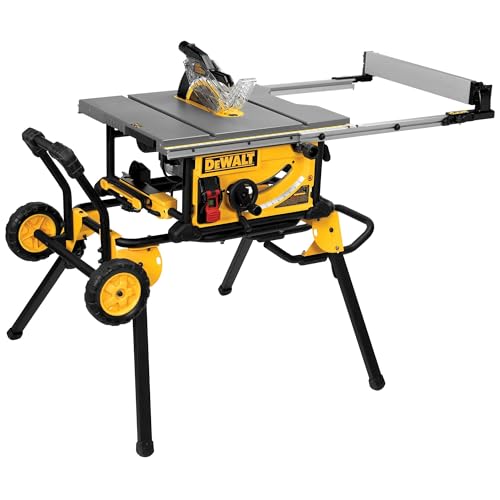
DEWALT 10-Inch Table Saw, 15-Amp (DWE7491RS)
The DWE7491RS offers rack and pinion fence that adjusts quickly and stays parallel, giving precise cuts on the go. Its 15-amp motor powers through hardwoods, and the rolling stand with wheels makes transport easy. Owners appreciate the large rip capacity and dust collection.
Pros
- Excellent fence accuracy
- Powerful for its class
- Portable with stand
Cons
- Noisy operation
- Dust collection could be better

Bosch 10-Inch Worksite Table Saw with Gravity-Rise Stand (4100XC-10)
Bosch’s 4100XC-10 features a square lock rip fence that stays parallel and a gravity-rise stand for quick setup. The soft start motor reduces startup jerk, and the large aluminum table provides a stable work surface. Its 15-amp motor handles demanding cuts.
Pros
- Smooth soft start
- Stable stand
- Accurate fence
Cons
- Dust bag is ineffective
- Miter gauge is basic
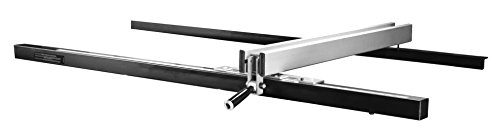
Delta 10-Inch Professional Table Saw with 30-Inch Fence System (36-725T2)
The Delta 36-725T2 blends cabinet saw stability with a portable price. Its 30-inch fence system locks securely, and the cast iron table reduces vibration. The 1.75 HP motor delivers enough power for most woodworking tasks. Owners report it holds alignment well.
Pros
- Affordable for features
- Stable cast iron top
- Accurate fence
Cons
- Assembly takes time
- Miter gauge is not precise

Grizzly Industrial G0771Z 10-Inch 3 HP Hybrid Table Saw
The Grizzly G0771Z offers a 3 HP motor that rips thick hardwoods effortlessly. Its cast iron wings and trunnion-mounted motor reduce flex, enhancing accuracy. The 30-inch Biesemeyer style fence is a favorite for its reliability. It requires 220V power.
Pros
- High power for demanding cuts
- Stable and heavy build
- Accurate fence
Cons
- Requires 220V outlet
- Large footprint
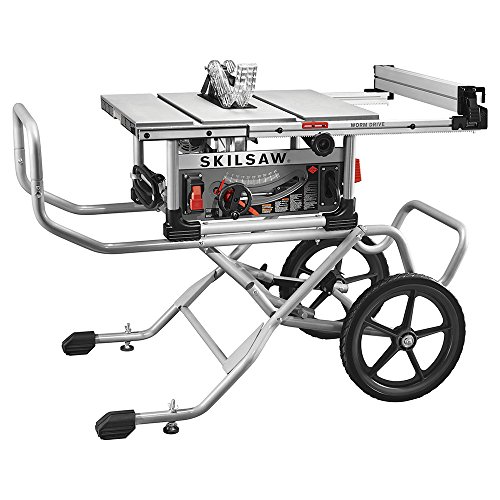
SKIL 10-Inch Heavy Duty Worm Drive Table Saw with Stand (TS6307-00)
The SKIL TS6307-00 provides a rack and pinion fence for accuracy at a low price. Its worm drive gearbox increases torque, and the dual voltage capability allows 120V or 240V operation. The rolling stand folds for storage, but the table is smaller.
Pros
- Very affordable
- Accurate fence for price
- Dual voltage flexibility
Cons
- Smaller table surface
- Less power for hardwoods
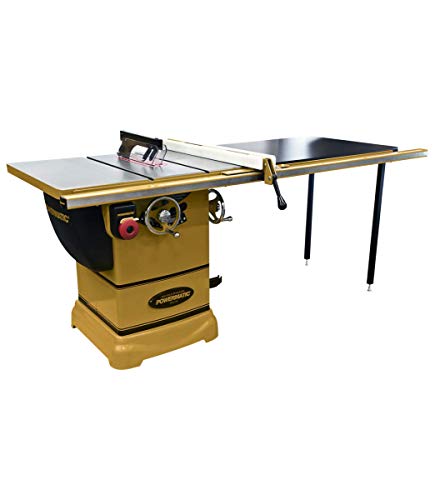
Powermatic 10-Inch 1.75 HP Cabinet Table Saw (PM1000)
The Powermatic PM1000 is built for the serious woodworker. Its precision-ground cast iron top and Accu-Fence system provide exceptional accuracy. The 1.75 HP motor runs quietly, and the cabinet base reduces vibration. Owners appreciate the smooth adjustments.
Pros
- Exceptional build quality
- Smooth, accurate fence
- Low vibration
Cons
- High price
- No safety brake like SawStop
How they stack up
| # | Model | Motor | Best for | Score | Price |
|---|---|---|---|---|---|
| 1 | SawStop PCS175-TGP236 1.75 HP Professional Cabinet Saw | 1.75 HP, 110V/220V | Best overall for safety and accuracy | 9.6 | Check price |
| 2 | DEWALT 10-Inch Table Saw, 15-Amp (DWE7491RS) | 15-Amp | Best portable precision for job sites | 9.2 | Check price |
| 3 | Bosch 10-Inch Worksite Table Saw with Gravity-Rise Stand (4100XC-10) | 15-Amp | Best for smooth operation and stability | 9.0 | Check price |
| 4 | Delta 10-Inch Professional Table Saw with 30-Inch Fence System (36-725T2) | 1.75 HP | Best value for hybrid performance | 8.9 | Check price |
| 5 | Grizzly Industrial G0771Z 10-Inch 3 HP Hybrid Table Saw | 3 HP, 220V | Best for heavy-duty projects | 8.8 | Check price |
| 6 | SKIL 10-Inch Heavy Duty Worm Drive Table Saw with Stand (TS6307-00) | 15-Amp, dual voltage | Best for budget-conscious beginners | 8.2 | Check price |
| 7 | Powermatic 10-Inch 1.75 HP Cabinet Table Saw (PM1000) | 1.75 HP, 110V/220V | Best for premium precision and durability | 9.4 | Check price |
What to look for
Frequently asked questions
What is the difference between a contractor saw and a cabinet saw?
Contractor saws have the motor hanging off the back, while cabinet saws enclose the motor in a cabinet. Cabinet saws are heavier, more stable, and often more accurate, but they cost more.
Do I need a 220V saw for precision work?
Not necessarily. Many precision saws run on 120V and perform well. However, 220V models can deliver more power and smoother cuts, especially for thick hardwoods.
How important is the fence system?
The fence is the most critical feature for precision. A high quality fence locks parallel and stays square, ensuring accurate and repeatable cuts.
What safety features should I look for?
Look for a riving knife, blade guard, anti kickback pawls, and a paddle switch for quick shut off. Some saws offer flesh sensing technology that stops the blade instantly.
Can I use a jobsite saw for fine woodworking?
Yes, but with limitations. Jobsite saws are lighter and less stable, so they may not hold alignment as well. For fine joinery, a heavier hybrid or cabinet saw is better.
How often should I align my table saw?
Check alignment every few months or after moving the saw. You should also verify when you notice cuts becoming less accurate.
What blade should I use for precision cuts?
Use a sharp, high quality blade with a high tooth count (60 to 80) for crosscuts and a combination blade for general use. A flat top grind blade is best for ripping.
Are used table saws a good option?
Used saws can be a great value if they are in good condition. Check for rust, alignment, and runout. However, new saws come with warranties and current safety features.
What is the best way to measure accuracy?
Use a dial indicator to measure blade runout and fence parallel. For cuts, use a precision square to check 90 degree angles.
Does a larger table improve precision?
Yes, a larger table provides more support for large panels, reducing flex and improving cut accuracy. It also gives you more space for jigs.
The bottom line
For most woodworkers, the SawStop PCS175-TGP236 is the clear choice because it combines top tier precision with unmatched safety. If you need portability, the DEWALT DWE7491RS offers excellent accuracy on the move. For those on a budget, the Delta 36-725T2 provides a stable platform at a lower cost. Avoid compromising on fence quality, as it directly impacts your cut accuracy.