Top Premium Internal Sound Cards for Audiophiles and Gamers
The Sound Blaster AE-9 leads our list for audiophiles who need reference-grade sound. It offers a dedicated ESS Saber DAC and swappable op-amps, but it takes two PCIe slots. For gamers, the ASUS Xonar SE is a strong alternative with 7.1 virtual surround.
Built-in motherboard audio has improved, but dedicated sound cards still offer superior signal-to-noise ratios, lower distortion, and advanced processing. For audiophiles, content creators, and serious gamers, a premium card can be a worthwhile upgrade.
We analyzed specifications, user feedback, and professional reviews to identify the best options currently available. Our picks span different price points and feature sets to cover a range of needs.
How to choose
The top picks, ranked

Creative Sound Blaster AE-9
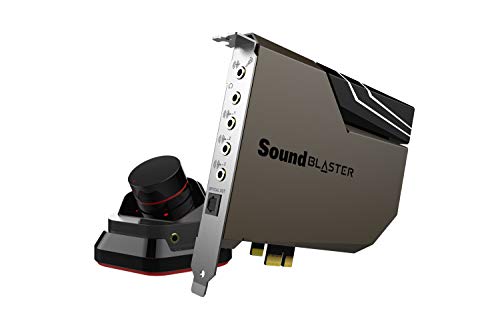
The Sound Blaster AE-9 is Creative’s flagship internal sound card. It features a dedicated PCIe audio controller and an external audio control module (ACM) with a built-in microphone array. The card uses an ESS Sabre 9038Q2M DAC and supports up to 32-bit/384kHz playback. It offers a signal-to-noise ratio of 129 dB, making it one of the cleanest cards available. The swappable op-amp design lets users customize the sound signature. However, it requires two PCIe slots and is quite large.
Pros
- Outstanding audio clarity
- Swappable op-amps for tuning
- External ACM with mic and headphone amp
Cons
- Large footprint needs two slots
- Premium price

ASUS Essence STX II
The ASUS Essence STX II is a legendary sound card known for its powerful headphone amplifier. It uses a 8-channel Cirrus Logic CS4398 DAC and supports up to 24-bit/192kHz. The card features a swappable op-amp design and includes a dedicated headphone amp that can drive high-impedance headphones. It also has a detachable front panel with volume control and mic input. The card is longer than standard and may require careful case selection.
Pros
- Powerful headphone amp
- Swappable op-amps
- Detachable I/O panel
Cons
- Older chipset
- Large PCB length
EVGA Nu Audio Card
The EVGA Nu Audio Card is designed for music enthusiasts and producers. It features an AKM AK4493 DAC and a Xilinx FPGA chip for audio processing. The card offers a balanced output and a dedicated headphone amplifier. It supports up to 32-bit/384kHz and has a signal-to-noise ratio of 124 dB. The card’s minimalist design lacks RGB lighting, appealing to those who prefer a clean look.
Pros
- High-quality AKM DAC
- FPGA for custom audio processing
- Balanced outputs
Cons
- No virtual surround for gaming
- No external control module

Creative Sound Blaster ZxR
The Sound Blaster ZxR is a premium gaming sound card with a separate daughterboard for additional I/O. It uses a Burr-Brown PCM1794 DAC for the main channels and features a 116 dB SNR. The card includes a desktop audio control module with a microphone and headphone jacks. It supports 5.1 and 7.1 virtual surround sound and has a built-in headphone amplifier. The card is a bit older but still performs well.
Pros
- Excellent gaming surround
- Daughterboard for extra connections
- Desktop module included
Cons
- Lower SNR than newer cards
- No RGB lighting
ASUS Xonar SE
The ASUS Xonar SE is a more affordable option that still delivers quality audio. It uses a C-Media CMI8786 chip and offers 7.1 virtual surround sound. The card has a 116 dB SNR and supports 24-bit/192kHz playback. It includes a low-profile bracket for small form factor cases. While it lacks premium features like swappable op-amps, it offers solid performance for the price.
Pros
- Affordable price
- Supports 7.1 virtual surround
- Low-profile bracket included
Cons
- Not as high-end as others
- No external control module
HT Omega CLARO II
The HT Omega CLARO II is a premium sound card that still uses a PCI interface, making it suitable for older motherboards. It features a C-Media CM8888D chip and a 118 dB SNR. The card includes a break-out box with RCA and optical connections. It supports 7.1 surround sound and has a built-in headphone amplifier. Its analog outputs are gold-plated for better durability.
Pros
- Good for legacy PCI slots
- Break-out box included
- High-quality components
Cons
- PCI interface is outdated
- No modern software support

Creative Sound BlasterX AE-5 Plus
The Sound BlasterX AE-5 Plus is a single-slot sound card that offers excellent audio quality for gaming and multimedia. It uses a ESS Sabre 9018 DAC and supports 32-bit/384kHz. The card features a 122 dB SNR and includes a built-in headphone amplifier. It has Xamp discrete headphone amp technology and comes with customizable RGB lighting. It is a more compact alternative to the AE-9.
Pros
- Single-slot design
- Excellent audio quality
- RGB lighting
Cons
- No external control module
- Only 5.1 virtual surround
Side by side
| # | Model | DAC | Best for | Score | Price |
|---|---|---|---|---|---|
| 1 | Creative Sound Blaster AE-9 | ESS Sabre 9038Q2M | Audiophile-grade sound with swappable op-amps | 9.4 | Check price |
| 2 | ASUS Essence STX II | Cirrus Logic CS4398 | High-end headphone amplification | 9.1 | Check price |
| 3 | EVGA Nu Audio Card | AKM AK4493 | Neutral and detailed sound for music production | 9.0 | Check price |
| 4 | Creative Sound Blaster ZxR | Burr-Brown PCM1794 | Gamers who want a dedicated sound processor | 8.8 | Check price |
| 5 | ASUS Xonar SE | C-Media CMI8786 | Budget-conscious gamers seeking solid 7.1 virtual audio | 8.4 | Check price |
| 6 | HT Omega CLARO II | C-Media CM8888D | Legacy users who want a PCI slot card | 8.2 | Check price |
| 7 | Creative Sound BlasterX AE-5 Plus | ESS Sabre 9018 | Gamers who want premium audio without the size | 8.6 | Check price |
Frequently asked questions
Are internal sound cards still worth it?
Yes, for audiophiles and gamers who want superior audio quality and advanced features. Motherboard audio has improved, but dedicated cards offer better SNR, lower distortion, and more connectivity options.
What is the difference between PCIe and PCI sound cards?
PCIe is the modern interface with higher bandwidth. PCI is older and slower. Most new motherboards only have PCIe slots, so PCI cards are only useful for very old systems.
How many channels do I need for surround sound?
For gaming, 5.1 or 7.1 virtual surround is common. Physical 7.1 requires multiple analog outputs. Most premium cards support at least 5.1, and many offer virtual 7.1 via software.
What is a DAC and why does it matter?
DAC (Digital-to-Analog Converter) converts digital audio to analog signals. A higher quality DAC results in better sound accuracy. Look for well-known brands like ESS, AKM, or Cirrus Logic.
Can I use a sound card with a laptop?
No, internal sound cards are for desktop PCs. For laptops, consider an external USB DAC or sound card.
Do sound cards work with all operating systems?
Most support Windows. For Linux or macOS, driver support may be limited. Check the manufacturer’s website for compatibility.
How do I install a sound card?
Turn off your PC, open the case, insert the card into an available PCIe slot, and secure it. Then install drivers from the manufacturer’s website. Always follow anti-static precautions.
What is the advantage of swappable op-amps?
Swappable op-amps allow you to change the sound signature of the card. Different op-amps can add warmth, detail, or other tonal characteristics. This is a feature for audio enthusiasts who like to experiment.
The bottom line
For the best overall premium internal sound card, choose the Creative Sound Blaster AE-9. It delivers top-tier audio quality, extensive features, and customization options. If you’re a gamer on a budget, the ASUS Xonar SE offers solid performance without breaking the bank. For music producers, the EVGA Nu Audio Card provides a neutral and detailed sound profile. Ultimately, the AE-9 is the most complete package for those seeking uncompromising audio fidelity.


