Top Tier Modems for Serious Internet Users
For most high-end setups, the NETGEAR Nighthawk CM2000 stands out as the top pick. It is built for multi-gig cable plans, offering a 2.5G Ethernet port and future-proof DOCSIS 3.1. Its main advantage is that it can handle the fastest speeds most ISPs offer, but its limitation is that you need a compatible plan to truly benefit.
A premium modem is more than just a bridge between your ISP and your router. It is the foundation of your home network, and a top-tier model can ensure you get every megabit you pay for, even during peak hours. These devices often come with advanced chipsets, better heat management, and faster Ethernet ports.
We have selected seven of the best premium modems available today, each with its own strengths. Whether you prioritize multi-gig speeds, reliable connections for gaming, or compatibility with specific cable providers, this list has you covered.
Before you buy
What we recommend

NETGEAR Nighthawk CM2000
The NETGEAR Nighthawk CM2000 is a DOCSIS 3.1 modem that supports cable plans up to 2.5Gbps. It comes with a 2.5G Ethernet port, making it one of the few modems that can truly deliver multi-gig speeds. Users report excellent stability and compatibility with major ISPs like Xfinity and Spectrum.
Pros
- Supports up to 2.5Gbps speeds
- Built-in 2.5G Ethernet port
- Compact design with good heat dissipation
Cons
- Overkill for plans under 1Gbps
- No phone or MoCA support
Motorola MB8611
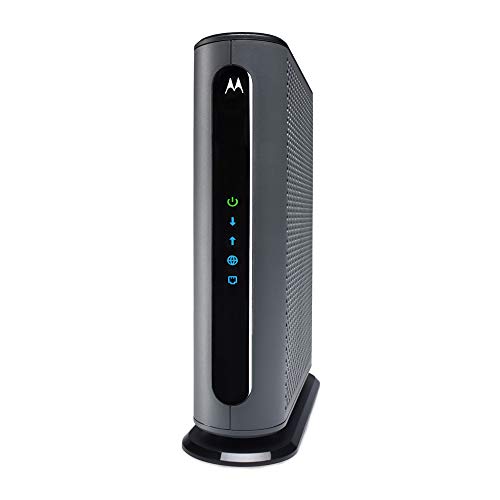
The Motorola MB8611 is a DOCSIS 3.1 modem with a 2.5G Ethernet port, designed for cable plans up to 1Gbps. It uses the Broadcom chipset, which is known for its stability and compatibility. Owners report consistent speeds and low latency, making it a favorite for gamers and streamers.
Pros
- Reliable Broadcom chipset
- Excellent throughput for gigabit plans
- Easy setup with most ISPs
Cons
- No link aggregation
- Slightly bulky design

ARRIS SURFboard S33
The ARRIS SURFboard S33 is a DOCSIS 3.1 modem that features a 2.5G Ethernet port, making it ready for multi-gig cable plans. It is a popular choice because it offers high performance at a competitive price. Users appreciate its easy setup and compatibility with major US cable providers.
Pros
- 2.5G Ethernet port for future speeds
- Works with all major US cable ISPs
- Compact and stackable design
Cons
- No built-in WiFi (modem only)
- Some users report firmware update issues

NETGEAR Nighthawk CM1200
The NETGEAR Nighthawk CM1200 is a DOCSIS 3.1 modem with four Gigabit Ethernet ports, two of which can be aggregated for speeds up to 2Gbps. It is ideal for gamers who want to combine connections for a more stable online experience. It supports cable plans up to 2Gbps with aggregation.
Pros
- Link aggregation support
- Multiple Gigabit ports for flexibility
- Strong performance for gaming
Cons
- No 2.5G port
- Requires compatible router for aggregation
Motorola MB8600
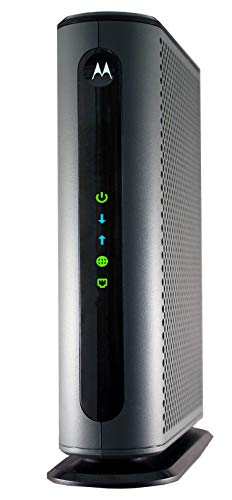
The Motorola MB8600 is a DOCSIS 3.1 modem that delivers up to 1Gbps speeds. It lacks a multi-gig Ethernet port, but it offers a single Gigabit port, which is sufficient for most gigabit plans. It is a reliable and affordable option for those who want DOCSIS 3.1 without extra features.
Pros
- Affordable DOCSIS 3.1
- Proven reliability
- Compact design
Cons
- No 2.5G port
- Single Ethernet port
ARRIS SURFboard SB8200
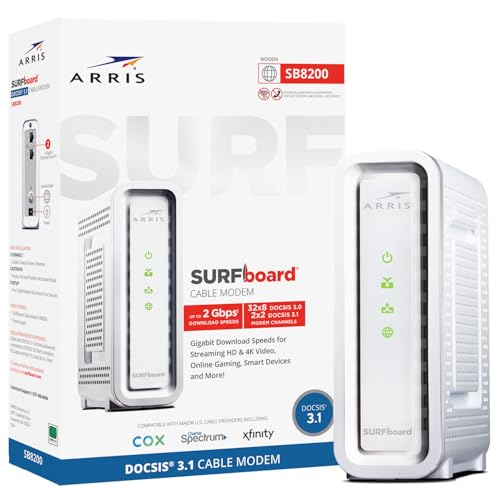
The ARRIS SURFboard SB8200 is a widely used DOCSIS 3.1 modem that supports gigabit speeds. It has two Gigabit Ethernet ports, but they cannot be aggregated, so you are limited to 1Gbps per device. It is known for its solid performance and easy setup, making it a trusted choice.
Pros
- Two Ethernet ports for flexibility
- Well-tested and widely compatible
- Good heat dissipation
Cons
- No link aggregation
- Outdated compared to newer models

NETGEAR CM1000
The NETGEAR CM1000 is a straightforward DOCSIS 3.1 modem that delivers up to 1Gbps speeds. It has a single Gigabit Ethernet port, which is fine for most users. It is compact and easy to set up, and it is compatible with all major US cable ISPs.
Pros
- Simple and reliable
- Small footprint
- Affordable for DOCSIS 3.1
Cons
- Single Ethernet port
- No multi-gig support
How they stack up
| # | Model | DOCSIS | Best for | Score | Price |
|---|---|---|---|---|---|
| 1 | NETGEAR Nighthawk CM2000 | 3.1 | Multi-gig internet plans | 9.4 | Check price |
| 2 | Motorola MB8611 | 3.1 | Gigabit plans with high reliability | 9.2 | Check price |
| 3 | ARRIS SURFboard S33 | 3.1 | Users wanting a 2.5G port and future-proofing | 9.0 | Check price |
| 4 | NETGEAR Nighthawk CM1200 | 3.1 | Gamers needing link aggregation | 8.8 | Check price |
| 5 | Motorola MB8600 | 3.1 | Budget-conscious users wanting DOCSIS 3.1 | 8.5 | Check price |
| 6 | ARRIS SURFboard SB8200 | 3.1 | Users with gigabit plans on Xfinity or Spectrum | 8.6 | Check price |
| 7 | NETGEAR CM1000 | 3.1 | Simple gigabit modem without extras | 8.3 | Check price |
Good to know
What is a premium modem?
A premium modem is a high-end cable modem that typically supports DOCSIS 3.1, offers faster Ethernet ports, and has better build quality and performance compared to budget models. They are designed for high-speed internet plans and demanding users.
Do I need a DOCSIS 3.1 modem?
If your internet plan is 1Gbps or faster, you should get a DOCSIS 3.1 modem. It is also a good investment for future-proofing, as ISPs are gradually shifting to DOCSIS 3.1. For slower plans, a DOCSIS 3.0 modem may suffice, but a 3.1 modem offers better performance.
Can I use any modem with my ISP?
No, you must use a modem that is approved by your ISP. Check your ISP’s website for a list of compatible modems. Using an unapproved modem may not work or could result in slower speeds.
What is the difference between a modem and a router?
A modem connects your home to the internet via your ISP, while a router distributes that internet connection to your devices, creating a local network. Some devices combine both functions, but many people prefer separate units for better performance and flexibility.
How do I set up a new modem?
Setting up a modem is usually straightforward: unplug your old modem, connect the new one to the cable outlet, plug in the power, and then connect it to your router or computer. You may need to activate it with your ISP by calling or using their app.
What does channel bonding mean?
Channel bonding allows a modem to use multiple downstream and upstream channels simultaneously. More channels mean higher potential speeds and better performance, especially during peak usage. DOCSIS 3.1 uses OFDM, which is even more efficient.
Is a modem with a 2.5G Ethernet port worth it?
If your internet plan exceeds 1Gbps, a 2.5G port is necessary to take full advantage. Even if your current plan is slower, a 2.5G port provides future-proofing. However, if your plan is 1Gbps or less, a Gigabit port is sufficient.
Can I use a modem with any router?
Yes, most modems have an Ethernet port that can connect to any router. Ensure your router has a Gigabit WAN port to avoid a bottleneck. Some modems with link aggregation require a router that supports it.
The bottom line
For most users, the NETGEAR Nighthawk CM2000 is the best premium modem because it offers the highest possible speeds with its 2.5G port and is built to last. If you are on a tighter budget but still want DOCSIS 3.1, the Motorola MB8600 is a solid choice. Ultimately, choose the CM2000 if you want the best performance and are willing to pay for it.