7 Pressure Washers Ranked by Cleaning Power
The Sun Joe SPX3000 is our top overall pressure washer for its strong cleaning power, dual detergent tanks and low weight. The gas-powered Simpson MSH3125 handles heavy-duty jobs, while the Karcher K5 is a premium electric pick for driveways and other stubborn surfaces.
If you want a quick recommendation, the Sun Joe SPX3000 is the pressure washer that fits most homeowners, balancing genuinely useful cleaning power with a light, easy-to-store design and a friendly learning curve.
Pressure washers are tricky to compare because cleaning speed depends on both pressure (PSI) and water flow (GPM), not PSI alone, and gas and electric models suit very different jobs. To rank these, we compared published specifications, manufacturer performance claims and recurring themes in verified owner feedback, weighting real cleaning units, durability and ease of use over headline PSI figures.
The best picks, ranked

Sun Joe SPX3000
The SPX3000 has become a go-to electric washer for good reason: it offers respectable pressure, two onboard detergent tanks and a light frame that is easy to move and store. Owners report it handles cars, patios and siding well, though the plastic fittings call for gentle handling.
Pros
- Strong value for everyday cleaning
- Two onboard detergent tanks
- Light and easy to store
Cons
- Plastic connectors feel less durable
- Hose is shorter than some rivals

Simpson MSH3125 MegaShot
Powered by a Honda GC190 engine, the MegaShot MSH3125 delivers the kind of pressure and flow that strips paint, cleans concrete and tackles large driveways. Owners value its cleaning speed, but it is heavier, louder and needs the routine engine care that gas machines require.
Pros
- Serious cleaning power for tough jobs
- Reliable Honda engine
- No power cord to limit range
Cons
- Heavy and loud
- Needs fuel and engine maintenance

Karcher K5
The K5 uses a water-cooled induction motor designed for quieter operation and a longer service life than universal-motor washers. Based on specifications it is built for regular driveway and patio cleaning, and owners appreciate the onboard hose reel, though it carries a premium position in the lineup.
Pros
- Durable water-cooled induction motor
- Convenient onboard hose reel
- Quieter than universal-motor models
Cons
- Positioned at a premium in the range
- Lower peak PSI than some rivals

Ryobi RY142300 Brushless
This Ryobi model uses a brushless induction motor for quieter, longer-lasting performance and includes onboard storage for hose and accessories. Owners report solid cleaning for cars and decks, and the upright cart design makes it easy to roll around the yard.
Pros
- Quiet, durable brushless motor
- Tidy onboard accessory storage
- Easy-rolling upright cart
Cons
- Lower flow rate than the Sun Joe
- Larger footprint to store
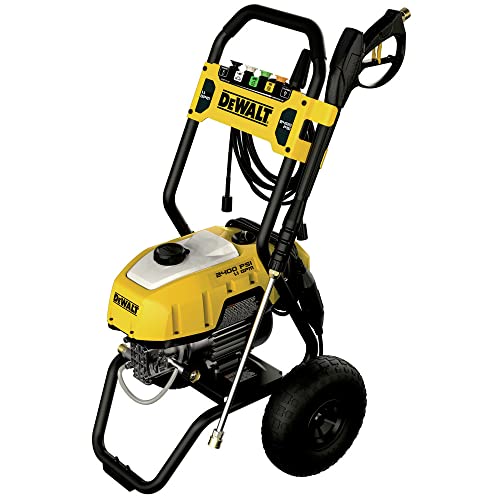
DeWalt DWPW2400
The DWPW2400 focuses on higher pressure in a relatively compact electric package, with a horizontal-axis design and metal spray wand. Owners like the four quick-connect nozzle tips and the manageable size, though the lower flow rate means it cleans large areas more slowly.
Pros
- High pressure for an electric model
- Compact and easy to handle
- Includes multiple quick-connect tips
Cons
- Low flow rate slows big jobs
- No onboard detergent tank

Westinghouse WPX3200
The WPX3200 brings gas-level pressure and flow at a friendlier position than premium engines, making it a practical choice for owners who want gas power without a top-tier badge. It includes five nozzle tips and a soap tank, though like all gas washers it needs regular upkeep.
Pros
- Strong gas power for the value
- Five quick-connect nozzle tips
- Onboard soap tank
Cons
- Requires engine maintenance
- Heavy to move on uneven ground

Greenworks GPW1950
The GPW1950 is a compact electric washer aimed at cars, outdoor furniture and other lighter tasks. Owners appreciate how easy it is to carry and set up, and while it will not strip concrete, it covers routine household cleaning without fuss.
Pros
- Lightweight and easy to set up
- Good for cars and furniture
- Simple, no-fuss operation
Cons
- Not suited to heavy grime
- Shorter hose limits reach
How they compare
| # | Model | Pressure | Best for | Score | Price |
|---|---|---|---|---|---|
| 1 | Sun Joe SPX3000 | 2030 PSI | Best overall | 9.4 | Check price |
| 2 | Simpson MSH3125 MegaShot | 3200 PSI | Best for heavy-duty jobs | 9.1 | Check price |
| 3 | Karcher K5 | 2000 PSI | Best premium electric | 8.9 | Check price |
| 4 | Ryobi RY142300 Brushless | 2300 PSI | Best brushless electric | 8.6 | Check price |
| 5 | DeWalt DWPW2400 | 2400 PSI | Best for portability | 8.4 | Check price |
| 6 | Westinghouse WPX3200 | 3200 PSI | Best gas value | 8.2 | Check price |
| 7 | Greenworks GPW1950 | 1950 PSI | Best for light cleaning | 8.0 | Check price |
How to choose
PSI vs GPM: what really cleans Cleaning power comes from two numbers working together: PSI (pressure) blasts grime loose, while GPM (water flow) rinses it away. Multiply them for a rough measure called cleaning units. A washer with moderate PSI and higher GPM often cleans faster than one with high PSI and low flow, so avoid judging by PSI alone.
Electric vs gas Electric washers are lighter, quieter, cheaper to maintain and fine for cars, decks and siding. Gas washers deliver much higher pressure and flow for driveways, concrete and paint prep, but they are heavier, louder and need fuel, oil and engine care. Choose based on your biggest recurring job, not the toughest one-off task.
Nozzles and attachments Most washers include several quick-connect tips rated by spray angle, from a narrow 0 degree jet to a wide 40 degree fan and a soap tip. Wider angles are gentler and safer for painted surfaces, while narrow tips concentrate power but can gouge wood or strip paint. A turbo or rotary nozzle speeds up tough jobs.
Durability and maintenance Look at pump and fitting materials, since brass connectors and metal wands outlast plastic. Induction and brushless motors run quieter and last longer than universal motors. For any washer, never run the pump dry, relieve pressure before disconnecting, and for gas models follow the engine oil and fuel guidance to avoid early wear.
Frequently asked questions
How much PSI do I need for a pressure washer?
For cars and outdoor furniture, 1300 to 1900 PSI is plenty. Decks, siding and patios suit 2000 to 2800 PSI. Concrete, driveways and paint prep benefit from 3000 PSI or more, which usually means a gas model.
Is electric or gas better for home use?
Electric is better for most homeowners because it is lighter, quieter and needs little maintenance, handling cars, decks and siding easily. Gas is better if you regularly clean large concrete areas or need maximum power away from an outlet.
What does GPM mean and why does it matter?
GPM is gallons per minute, the volume of water the washer moves. Higher GPM rinses away loosened grime faster, so it strongly affects cleaning speed. A balanced combination of PSI and GPM cleans more efficiently than high PSI alone.
Can a pressure washer damage my car or deck?
Yes, if you use too narrow a nozzle or hold the tip too close. Use a wider 25 or 40 degree tip, keep a safe distance, and test on a small area first. Wood decks and painted surfaces need extra care.
Do I need hot or cold water?
Nearly all consumer pressure washers, including every model here, use cold water from a garden hose. Hot-water machines exist for grease and industrial cleaning but are heavier, pricier and usually unnecessary for home use.
How do I maintain a pressure washer?
Never run the pump dry, relieve pressure before disconnecting hoses, and store it where it will not freeze. Gas models also need regular oil changes, fuel stabilizer for storage and occasional spark-plug checks.
What is the difference between the nozzle tips?
Tips are rated by spray angle. A 0 degree tip is a narrow, powerful jet, 15 and 25 degree tips balance power and coverage, 40 degree is a gentle wide fan, and the black soap tip lowers pressure to apply detergent.
Can I use any detergent in a pressure washer?
Use only detergents labeled safe for pressure washers, applied through the low-pressure soap tip. Household cleaners and bleach can damage pump seals and are not designed for the machine’s flow, so avoid them.
Why is my pressure washer losing pressure?
Common causes include a clogged nozzle, a kinked hose, low water supply, air in the pump or a worn seal. Clearing the tip and confirming full water flow from the tap resolves most sudden pressure drops.
The verdict
The Sun Joe SPX3000 is the pressure washer we would recommend to most homeowners for its balance of cleaning power, value and easy storage. Choose the gas Simpson MSH3125 for heavy concrete and driveway work, or the Karcher K5 if you want a durable, quieter premium electric machine.