Top AV Receivers for Serious Home Theaters
The Denon AVR-X6800H leads our list for professional use, offering 11.4 channels and Audyssey MultEQ XT32 for precise calibration. It suits large, complex systems but costs more than many alternatives.
Upgrading to a professional AV receiver means getting precise sound calibration, robust amplification, and flexible connectivity for complex home theaters.
We compared top models from Denon, Marantz, Yamaha, and others to find the best options for enthusiasts and custom installers.
Our top picks

Denon AVR-X6800H
The Denon AVR-X6800H delivers 11.4 channels with Audyssey MultEQ XT32, Dirac Live upgrade capability, and extensive connectivity for professional setups.
Pros
- High channel count for immersive audio
- Advanced calibration with Dirac upgrade
- Solid build quality and ample connectivity
Cons
- Premium price
- Large and heavy chassis

Marantz Cinema 40
Marantz Cinema 40 offers 9.4 channels, Audyssey MultEQ XT32, and high-current amplifiers known for a musical sound signature.
Pros
- Renowned Marantz musical tone
- High-quality internal components
- Excellent phono stage for vinyl
Cons
- Fewer channels than some rivals
- Higher price for the channel count

Yamaha RX-A8A
Yamaha RX-A8A features 11.2 channels, YPAO with multi-point measurement, and Surround:AI technology that optimizes sound in real time.
Pros
- Surround:AI enhances dialogue and immersion
- High power output
- Excellent build quality
Cons
- YPAO may not be as advanced as Audyssey
- User interface can be complex
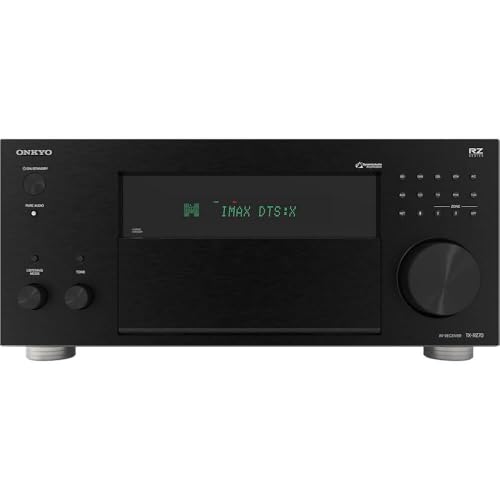
Onkyo TX-RZ70
Onkyo TX-RZ70 offers 11.2 channels with built-in Dirac Live room correction, THX Certified, and robust amplification for professional use.
Pros
- Dirac Live included at no extra cost
- THX Certified for reference quality
- Good value for features
Cons
- No Auro-3D support
- Heavier than some competitors

Anthem MRX 1140
Anthem MRX 1140 uses ARC Genesis room correction, 11.2 channels, and high-quality amplifiers for precise, detailed sound.
Pros
- ARC Genesis is highly regarded
- Clean, detailed amplification
- Excellent for mixed-use systems
Cons
- No Dirac or Audyssey options
- Higher price point
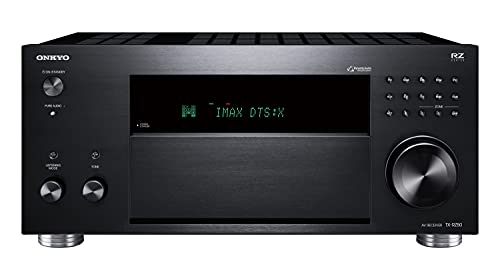
Pioneer Elite VSX-LX505
Pioneer Elite VSX-LX505 provides 9.2 channels, Dirac Live (upgradable), and solid performance at a more accessible price.
Pros
- Lower cost for Dirac capability
- Good channel count for the price
- Reliable Elite build
Cons
- Less power than higher-end models
- Limited analog inputs
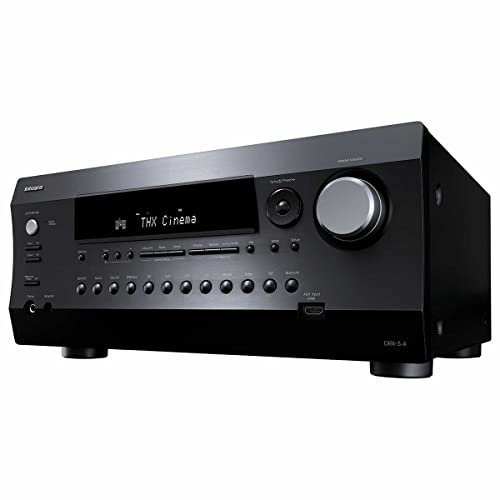
Integra DRX-8.4
Integra DRX-8.4 is designed for custom installs with 11.2 channels, THX Certified, and extensive control options including IP and IR.
Pros
- Ideal for smart home integration
- THX Certified
- Multiple trigger and control ports
Cons
- No Audyssey support
- Premium pricing
What matters most
Side by side
| # | Model | Channels | Best for | Score | Price |
|---|---|---|---|---|---|
| 1 | Denon AVR-X6800H | 11.4 | Large theaters needing 11.4 channels | 9.6 | Check price |
| 2 | Marantz Cinema 40 | 9.4 | Music and movie blending with warm sound | 9.3 | Check price |
| 3 | Yamaha RX-A8A | 11.2 | Yamaha fans wanting surround AI | 9.1 | Check price |
| 4 | Onkyo TX-RZ70 | 11.2 | Dirac Live without extra cost | 9.0 | Check price |
| 5 | Anthem MRX 1140 | 11.2 | Anthem room correction excellence | 9.0 | Check price |
| 6 | Pioneer Elite VSX-LX505 | 9.2 | Budget-minded professionals | 8.7 | Check price |
| 7 | Integra DRX-8.4 | 11.2 | Custom installs with multi-zone | 8.8 | Check price |
Questions worth asking
Do I need a professional AV receiver for a home theater?
If you have a dedicated room with multiple speakers and want precise calibration, yes. Professional models offer better room correction and build quality.
What is the difference between Audyssey and Dirac?
Audyssey is user-friendly and effective. Dirac offers more customization and precision, often preferred by enthusiasts. Both correct frequency response and time alignment.
How many channels do I need?
For a standard 5.1 system, any receiver works. For Dolby Atmos, you need at least 7.1.2. For 9.2.4, you need 11 channels. Choose based on your speaker setup.
Can a professional receiver power all speakers without external amps?
Yes, many models provide enough power for typical home speakers. For demanding speakers or very large rooms, external amplification may be needed.
What is HDMI 2.1 and do I need it?
HDMI 2.1 supports 8K resolution, higher refresh rates, and features like eARC. If you have a new TV and gaming console, it is beneficial.
Are all professional receivers compatible with smart home systems?
Most support IP control, RS-232, and triggers. Some integrate with Control4, Crestron, and others. Check specifications for your system.
What is the benefit of pre-outs?
Pre-outs allow you to connect external power amplifiers, giving you flexibility to upgrade your amplification without replacing the receiver.
How important is build quality?
Professional receivers are built to last with better components and cooling. This ensures reliable performance over time, especially with heavy use.
Can I use a professional receiver for music listening?
Yes, they often include high-quality DACs and phono stages. Marantz and Yamaha are known for good musicality.
What is the warranty on these receivers?
Most come with a 3-year warranty, but some brands like Anthem offer longer. Check with the manufacturer.
Final word
For most professional setups, the Denon AVR-X6800H is the smartest choice. It offers the best combination of channels, calibration, and connectivity. If you want Dirac without extra cost, choose the Onkyo TX-RZ70.