How to Choose a Camping Tent That Actually Lasts
Coleman’s Skydome 6-Person tent wins for family car camping, with sealed seams and a freestanding dome that shrug off steady rain. Backpackers get more from the MSR Hubba Hubba NX 2-Person, since its low packed weight suits multi-day trail use. Winter trips call for the 4-season Marmot Thor 2P instead.
Coleman’s Skydome 6-Person tent tops this list for families who want fast setup without a learning curve. Sealed seams and a freestanding dome keep steady rain outside through a full weekend. Fiberglass poles, though, flex more than aluminum once wind picks up beyond a moderate gust.
Picking a tent gets confusing because a 3-season dome and a 4-season mountaineering shelter solve different problems, and spec sheets rarely say which trip needs which. Season rating, pole material, waterhead figures and packed weight were compared across each listing here. Owner feedback on seam leaks, guy-line strength and wear after repeated trips shaped the ranking too.
How to choose
3-Season vs 4-Season Tents: What Actually Changes Most tents sold today carry a 3-season rating, built for spring through fall in calm to moderately windy conditions. A 4-season tent adds extra poles, heavier fabric and steeper wall angles to shed snow load and resist sustained wind. Buying that extra capability for a trip that never needs it adds weight and heat retention. Match the rating to the coldest, windiest trip actually planned, not the one imagined.
How Much Tent Capacity Do You Actually Need? Rated capacity assumes sleeping bags placed shoulder to shoulder with no gear inside. A six-person tent comfortably fits four adults once pads, bags and a duffel join them. Solo or duo backpackers benefit from tighter floor plans since less material means less packed weight on the trail. Families car camping can afford extra square footage, since weight barely matters when the tent travels by trunk.
Waterproofing and Setup Speed Matter More Than Fabric Name A denier number alone doesn’t guarantee dry gear inside; seam construction and rainfly coverage matter just as much. Inverted or taped seams stop water pooling at stitch lines, a common failure point on cheaper tents. Hub pole systems with color-coded clips pitch noticeably faster than pole sleeves, which matters when weather arrives before camp is set. Vestibule size also decides whether wet boots and packs stay outside the sleeping area.
Can a Budget Tent Survive Frequent Weekend Use? Frame material separates tents built for occasional trips from ones built for a full camping season. Steel or hybrid steel-aluminum frames add weight but resist bending from repeated setup better than pure fiberglass. UV-resistant coated fabric holds color and waterproofing longer under regular sun exposure. Owners who camp most weekends report longer service life from mid-range aluminum-pole tents than from the cheapest fiberglass options.
What we recommend

Coleman Skydome 6-Person Camping Tent
A single freestanding dome with color-coded poles cuts setup time when a party unpacks gear after dark. Inverted seams and a welded floor make up the WeatherTech system, keeping steady rain outside. Floor space tightens once cots or a full duffel join two adults and two kids.
Pros
- Freestanding dome pitches without staking first
- Inverted seams and a welded floor block steady rain
- Wide awning-style door eases gear access
Cons
- Fiberglass poles flex more than aluminum in gusty wind
- Cots or larger bags crowd the rated floor space
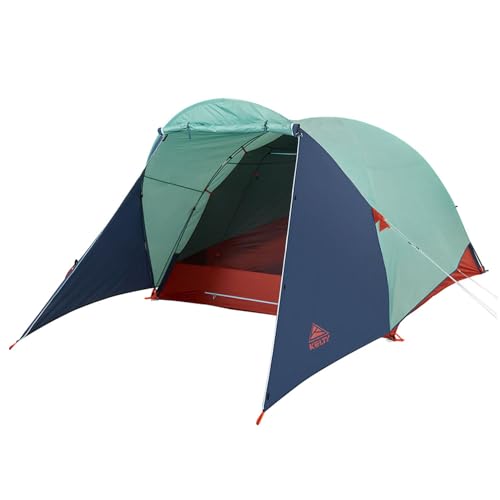
Kelty Discovery Basecamp 6
Near-vertical walls keep headroom consistent from wall to wall, unlike domes that taper sharply at the edges. Aluminum poles resist bending better than the fiberglass common on cheaper family tents. A factory-taped, welded floor pairs with a rainfly that covers both doors.
Pros
- Vertical walls add usable headroom and floor space
- Aluminum poles outlast fiberglass under repeated setup
- Two doors cut nighttime foot traffic over sleepers
Cons
- Rainfly coverage stops short of full ground level
- Packed size runs bulkier than similarly rated domes
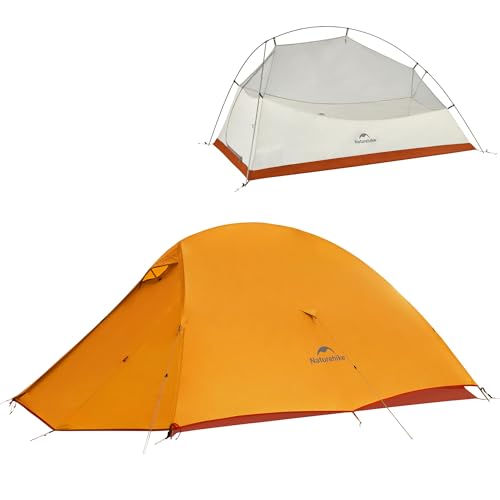
Naturehike Cloud Up 2 Person Tent
20D ripstop nylon and aluminum poles bring packed weight closer to backpacking tents than typical budget models manage. A double-layer build separates inner mesh from the rainfly, cutting condensation on humid nights. Vestibule space fits boots and a pack, little else.
Pros
- Packed weight rivals pricier backpacking tents
- Double-layer build limits interior condensation
- Compact stuff sack slips easily inside a pack
Cons
- Single vestibule limits gear storage
- Seam sealing needs occasional reapplication over time

MSR Hubba Hubba NX 2-Person Tent
DAC Featherlite aluminum poles shave ounces without giving up pole strength. Two doors and two vestibules let each occupant manage gear without climbing over a tentmate. Floor space runs narrow for campers wanting to spread out fully.
Pros
- Low packed weight suits multi-day trail use
- Dual doors and vestibules add convenience for two
- Freestanding design pitches on rock or platforms
Cons
- Interior width feels narrow for taller campers
- Cost per pound runs higher than car-camping alternatives

Marmot Thor 2P
Extra poles and reinforced guy-out points shed snow load and hold steady in sustained wind, unlike 3-season tents built for calmer conditions. Heavier ripstop fabric and a full-coverage rainfly trade weight for protection well below freezing. Setup takes longer than a simple dome because of the added structure.
Pros
- Reinforced poles handle snow load and high wind
- Full-coverage rainfly blocks driving rain and spindrift
- Large vestibule stores boots and packs out of weather
Cons
- Packed weight runs heavier than 3-season backpacking tents
- Warmth and structure go unused on mild summer trips

NEMO Aurora Highrise 4 Person Tent
A vertical-wall hub design pitches in one motion, with color-coded clips replacing sleeves for faster assembly. Standing headroom near the center suits campers who dress standing up rather than crouching in a low dome. Rated for four, it fits closer to two adults and kids once pads and bags are inside.
Pros
- Hub pole system pitches faster than sleeve designs
- Vertical walls give near-standing headroom at center
- Large mesh panels improve airflow in warm weather
Cons
- Rated capacity feels tight for four adults with gear
- Rainfly doors need separate staking for full coverage
Eureka! Copper Canyon LX 6
A steel-and-aluminum hybrid frame pairs with heavier fabric built for repeated weekend trips rather than occasional use. Near-vertical walls and a center height around six foot eight let most adults stand upright while changing. Extra frame weight makes this a car-camping tent, not a trailhead carry.
Pros
- Hybrid frame withstands frequent setup and teardown
- Near-vertical walls allow standing room throughout
- Large windows and door panels improve ventilation
Cons
- Heavier frame rules out backpacking trips
- Packed size takes up significant trunk or storage space
How they stack up
| # | Model | Capacity | Best for | Score | Price |
|---|---|---|---|---|---|
| 1 | Coleman Skydome 6-Person Camping Tent | Sleeps 6 | Best overall | 9.4 | Check price |
| 2 | Kelty Discovery Basecamp 6 | Sleeps 6 | Best value | 9.2 | Check price |
| 3 | Naturehike Cloud Up 2 Person Tent | Sleeps 2 | Best budget | 8.9 | Check price |
| 4 | MSR Hubba Hubba NX 2-Person Tent | Sleeps 2 | Best for backpacking | 8.7 | Check price |
| 5 | Marmot Thor 2P | Sleeps 2 | Best for winter and 4-season conditions | 8.4 | Check price |
| 6 | NEMO Aurora Highrise 4 Person Tent | Sleeps 4 | Best for easy setup | 8.2 | Check price |
| 7 | Eureka! Copper Canyon LX 6 | Sleeps 6 | Best for frequent heavy use | 8.0 | Check price |
Good to know
How do I know what season rating a tent needs?
Match the rating to the coldest, windiest trip planned, not the average one. A 3-season tent covers spring through fall in calm to moderate wind. Anyone facing snow load or sustained high wind needs a 4-season design with reinforced poles.
What tent size fits a family of four?
Rated capacity assumes bodies with no gear inside, so a family of four is often more comfortable in a six-person tent. That extra room fits pads, bags and a duffel without crowding the sleeping area. Tents rated exactly for four often feel tight once gear joins everyone.
Does a heavier tent frame mean better durability?
Generally yes for frequent use, since steel or hybrid frames resist bending better than fiberglass under repeated setup. That durability adds packed weight, which makes heavier frames impractical for backpacking. Occasional campers rarely need the extra weight.
Can a 3-season tent handle light snow?
A well-built 3-season tent handles a light, dry dusting that melts off quickly. Sustained snow load or wet, heavy snow stresses fiberglass and lighter aluminum poles past their design limits. Anyone camping regularly in snow should choose a 4-season tent instead.
Which lasts longer, aluminum or fiberglass tent poles?
Aluminum poles resist bending and fatigue better than fiberglass over repeated setup and teardown. Fiberglass keeps initial costs lower but tends to splinter or crack sooner, especially in cold weather. Frequent campers usually get more service life from aluminum-pole tents.
Is a high waterhead rating enough for a dry tent?
Waterhead rating measures fabric resistance, but seam construction determines whether water actually gets in. A high-rated fabric with untaped seams still leaks at the stitching. Inverted or factory-sealed seams matter as much as the fabric number itself.
What’s the difference between freestanding and non-freestanding tents?
Freestanding tents hold their shape from the pole structure alone, so they pitch on rock, platforms or sand without stakes. Non-freestanding designs rely on staking and guy-lines for shape, which usually saves pole weight. Backpackers on variable terrain generally prefer freestanding designs for flexibility.
How long does a camping tent last with regular use?
A mid-range aluminum-pole tent used most weekends typically holds up for several camping seasons before fabric or waterproofing needs attention. Storage habits matter too, since packing a tent away wet accelerates mildew and fabric breakdown. Rinsing off dirt and drying fully before storage extends service life noticeably.
Our take
Coleman’s Skydome 6-Person tent earns the top recommendation here, since its freestanding setup and sealed seams handle family trips in typical 3-season weather without a steep learning curve. Backpackers who prioritize packed weight should pick the MSR Hubba Hubba NX 2-Person instead. Anyone facing snow or sustained high wind needs the 4-season protection of the Marmot Thor 2P over any 3-season option on this list.


