Precision Cutting Tools for Serious Sewists
For most sewists, the Gingher 8-Inch Knife Edge Dressmaker’s Shears are the top pick. They offer a perfect balance of sharpness, durability, and comfort, making them ideal for everyday cutting of multiple fabric layers. Their main limitation is that they require regular oiling at the pivot to maintain smooth action.
Professional fabric scissors are essential for anyone who sews regularly. They differ from household scissors in blade geometry and steel quality, enabling clean cuts without fraying. A good pair can last decades with proper care.
We evaluated popular models from trusted brands, focusing on blade sharpness, comfort, and versatility. Whether you are a quilter, tailor, or crafter, this guide helps you choose the right tool for your needs.
The top picks, ranked

Gingher 8-Inch Knife Edge Dressmaker’s Shears
Gingher shears are legendary among sewists for their precision-forged steel blades. They cut through multiple layers of cotton, wool, and denim with ease. The bent handle design keeps the blades flat on the table, reducing hand strain. Owners report that they stay sharp for years with occasional honing.
Pros
- Exceptionally sharp out of the box
- Comfortable for prolonged use
- Durable construction
Cons
- Requires oiling at pivot
- Pricey compared to basic shears

Fiskars Classic Cut 9-Inch Bent Shears
Fiskars Classic Cut shears offer reliable performance at an accessible price. The stainless steel blades are precision-ground for a smooth cut, and the bent handles reduce hand fatigue. Ideal for cutting multiple layers of fabric or crafting materials. Users note that they are not as heavy-duty as premium brands but are excellent for daily sewing tasks.
Pros
- Affordable price
- Lightweight and easy to handle
- Sharp blades for the cost
Cons
- May dull faster than premium steel
- Not suitable for very thick layers

KAI 7250D 9-Inch Dressmaker Shears
KAI shears are crafted in Japan using high-carbon stainless steel. The blades are angled to slice through several layers of fabric with minimal effort. The handles are ergonomically designed for both right- and left-handed users. Owners praise their ability to cut clean lines without snagging. A favorite among quilters and professionals.
Pros
- Cuts multiple layers effortlessly
- Comfortable grip
- Retains sharpness well
Cons
- Higher price point
- Micro-serrated edge may mark some fabrics
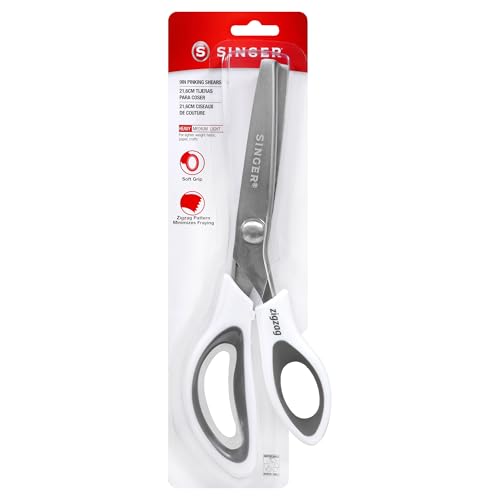
PINKING SHEARS – Professional Pinking Shears by Singer
Singer’s professional pinking shears feature a serrated blade that cuts a zigzag pattern, preventing fabric edges from fraying. The stainless steel blades are hardened for durability. The comfortable handles reduce hand strain, and the shears work well on cotton, linen, and synthetic blends. Perfect for seam finishing and decorative edges.
Pros
- Clean zigzag cuts
- Sturdy construction
- Comfortable grip
Cons
- Not for general cutting
- Can be difficult to sharpen

Havel’s 8-Inch Commercial Shears
Havel’s Commercial Shears are known for their razor-sharp blades and fine tip, allowing for precise cuts in tight areas. The high-carbon steel blades are hardened for long-lasting edge retention. The ergonomic handles are designed for reduced hand fatigue. Ideal for applique, embroidery, and delicate fabric cutting.
Pros
- Ultra-sharp point for detail work
- Lightweight
- Balanced feel
Cons
- Not ideal for cutting thick materials
- Handle may be small for large hands

LDH 9-Inch Heavy Duty Titanium Scissors
LDH titanium-coated scissors are designed for heavy-duty cutting. The blades are coated with titanium for extra hardness and corrosion resistance. They slice through leather, denim, and multiple layers with ease. The ergonomic handles provide a comfortable grip. Users appreciate the included protective sheath.
Pros
- Tough blades for heavy materials
- Titanium coating resists rust
- Comfortable handles
Cons
- Heavier than other shears
- Coating may wear off over time

Fiskars RazorEdge 8-Inch SoftGrip Scissors
Fiskars RazorEdge scissors feature a titanium-bonded blade that stays sharp longer. The SoftGrip handles are designed to reduce hand fatigue. They are perfect for cutting fabric, thread, and paper. The blades are precision-ground for a clean cut. Users like the comfortable grip and the included protective cover.
Pros
- Very comfortable grip
- Sharp blades
- Good for left- and right-handed users
Cons
- Not as heavy-duty for thick layers
- Blades may loosen over time
What to look for
Compared at a glance
| # | Model | Blade Material | Best for | Score | Price |
|---|---|---|---|---|---|
| 1 | Gingher 8-Inch Knife Edge Dressmaker’s Shears | High-carbon stainless steel | All-around professional cutting | 9.6 | Check price |
| 2 | Fiskars Classic Cut 9-Inch Bent Shears | Stainless steel | Budget-friendly versatility | 9.0 | Check price |
| 3 | KAI 7250D 9-Inch Dressmaker Shears | High-carbon stainless steel | Effortless cutting through layers | 9.4 | Check price |
| 4 | PINKING SHEARS – Professional Pinking Shears by Singer | Stainless steel | Finishing seams and preventing fraying | 8.8 | Check price |
| 5 | Havel’s 8-Inch Commercial Shears | High-carbon steel | Precision work and detailed cutting | 9.1 | Check price |
| 6 | LDH 9-Inch Heavy Duty Titanium Scissors | Stainless steel with titanium coating | Cutting tough materials like leather and denim | 8.6 | Check price |
| 7 | Fiskars RazorEdge 8-Inch SoftGrip Scissors | Titanium-bonded stainless steel | Everyday sewing and crafting | 8.7 | Check price |
Good to know
What is the difference between fabric scissors and regular scissors?
Fabric scissors have sharper, more precisely angled blades that cut fabric cleanly without fraying. They are often made from higher quality steel and have a tighter pivot, allowing for more control.
How often should I sharpen my fabric scissors?
With regular use, you may need to sharpen them every few months. Signs of dullness include snagging or skipping. Some brands offer sharpening services.
Can I use fabric scissors to cut paper?
It is not recommended. Paper contains abrasive fibers that dull blades quickly. Reserve your fabric shears for fabric only.
Are bent-handle shears better than straight-handle?
Bent handles allow the blades to remain flat on the cutting surface, which reduces wrist strain and improves accuracy. They are preferred for most cutting tasks.
What does ‘knife edge’ mean on scissors?
A knife edge is ground on one side only, like a knife, allowing for a very sharp cut. It is common on professional fabric shears.
Can left-handed people use right-handed scissors?
Using right-handed scissors with your left hand can be uncomfortable and produce poor cuts. Look for scissors labeled ambidextrous or specifically for left-handed users.
How do I care for my scissors to make them last?
Clean after use, dry thoroughly, and store in a protective case. Oil the pivot occasionally. Have them sharpened by a professional when needed.
What size scissors should I buy?
8-inch shears are versatile for most tasks. Longer blades (9 inches) are better for cutting multiple layers, while shorter blades offer more control for detailed work.
Our pick
For the best overall performance and durability, choose the Gingher 8-Inch Dressmaker’s Shears. They are a worthy investment for any serious sewer. If you are on a budget, the Fiskars Classic Cut shears deliver solid quality without breaking the bank. For those who frequently cut through multiple layers, the KAI 7250D shears are exceptional. Ultimately, the Gingher shears provide the best balance of sharpness, comfort, and longevity, making them the recommended choice for professionals and enthusiasts alike.