Professional Fasteners Built for Demanding Work
For most professional jobs, the GRK Fasteners RSS Rugged Structural Screw is the top pick. It offers exceptional holding power and corrosion resistance, making it ideal for structural framing and decking. Its main limitation is the higher cost per screw compared to standard options.
Selecting the right fasteners is critical for structural integrity and long-term performance. Professional fasteners differ from standard ones in material quality, coating, and design, ensuring they withstand heavy loads and harsh conditions.
This roundup covers screws and anchors that professionals trust for demanding applications. From structural screws to concrete anchors, these fasteners deliver reliable results on the job site.
The best picks, ranked
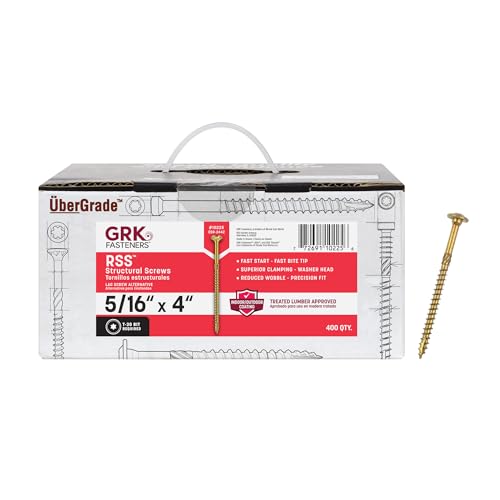
GRK Fasteners RSS Rugged Structural Screw
The GRK RSS screw is engineered for structural applications, offering superior holding power and corrosion resistance. Its patented thread design reduces driving torque, and the Torx drive ensures positive bit engagement. The climate-resistant coating makes it suitable for exterior use, though it costs more than standard structural screws.
Pros
- Extreme holding power
- Excellent corrosion resistance
- Reduces splitting
Cons
- Premium price
- May require pilot holes in hardwood

Simpson Strong-Tie Strong-Drive SDWS Framing Screw
Simpson Strong-Tie is a trusted name in structural connectors, and their SDWS screws deliver reliable performance. They feature a #3 point for reduced splitting and a serrated head that bites into the wood for a flush finish. The coating provides good corrosion resistance for interior or protected exterior use.
Pros
- Trusted brand
- Good holding strength
- Affordable for the quality
Cons
- Not for saltwater exposure
- Limited sizes
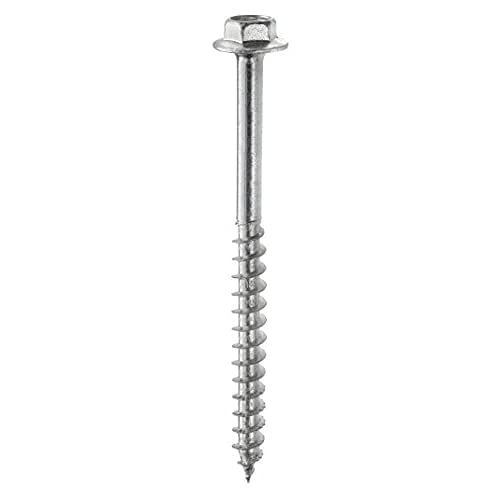
Spax Powerlag Structural Connector Screws
SPAX Powerlag screws are designed for heavy-duty timber connections, featuring a serrated head that prevents over-tightening and a multi-thread design for fast installation. They are available in larger diameters and lengths, making them ideal for log and timber construction. The exterior coating withstands moisture well.
Pros
- High shear strength
- Works well with hardwoods
- Easy to drive
Cons
- Need pre-drilling for large sizes
- Can be expensive

Tapcon Concrete Screws
Tapcon is the go-to screw for concrete, brick, and block. These screws cut their own threads into the base material, providing a secure hold. They come with a Phillips or hex drive and are available with different coatings, including stainless steel for corrosive environments. Users report that drilling the proper pilot hole is essential for best results.
Pros
- Reliable in masonry
- Removable
- Variety of sizes and materials
Cons
- Requires precise pilot holes
- May strip if over-torqued

FastenMaster LedgerLOK Heavy Duty Screw
FastenMaster LedgerLOK screws are specifically designed for attaching deck ledgers to house framing, a critical structural connection. They eliminate the need for through-bolts and are code listed for this application. The screws feature a corrosion-resistant coating and a serrated head to prevent over-driving. They are longer than typical structural screws and require a special driver bit.
Pros
- Specifically for ledgers
- High strength
- Corrosion resistant
Cons
- Long lengths need pre-drilling
- Only for ledger application

Hillman Fasteners Self-Drilling Screws
Hillman self-drilling screws are designed to drill their own pilot hole through metal, saving time and effort. They feature a sharp point and hardened steel construction. Available in various lengths and finishes, they are suitable for HVAC, roofing, and general metal fabrication. Some users find them prone to breakage when used with hard metals.
Pros
- Time-saving
- Versatile
- Good for thin metals
Cons
- Can break on hard metals
- Not for wood

Powers Fasteners Wedge-Bolt Expansion Anchors
Powers Wedge-Bolt anchors are a top choice for structural anchoring into concrete. They expand against the sides of the hole to provide a secure grip. The anchor is available in zinc plated, hot-dip galvanized, and stainless steel for various environments. These anchors handle high loads but are not removable once installed.
Pros
- Very high holding values
- Reliable expansion system
- Multiple material options
Cons
- Permanent installation
- Requires accurate drilling depth
How they stack up
| # | Model | Material | Best for | Score | Price |
|---|---|---|---|---|---|
| 1 | GRK Fasteners RSS Rugged Structural Screw | Carbon steel with climate-resistant coating | Structural framing and heavy-duty connections | 9.4 | Check price |
| 2 | Simpson Strong-Tie Strong-Drive SDWS Framing Screw | Carbon steel with proprietary coating | Framing and sheathing applications | 9.0 | Check price |
| 3 | Spax Powerlag Structural Connector Screws | Carbon steel, yellow zinc or stainless options | Timber framing and outdoor projects | 9.1 | Check price |
| 4 | Tapcon Concrete Screws | Carbon steel with blue coating or 304 stainless steel | Fastening to concrete and masonry | 8.8 | Check price |
| 5 | FastenMaster LedgerLOK Heavy Duty Screw | Carbon steel with TripleCote coating | Ledger boards and deck attachments | 9.0 | Check price |
| 6 | Hillman Fasteners Self-Drilling Screws | Hardened steel | Metal-to-metal connections | 8.5 | Check price |
| 7 | Powers Fasteners Wedge-Bolt Expansion Anchors | Carbon steel, stainless options | Heavy-duty anchoring in concrete | 9.2 | Check price |
What to look for
Frequently asked questions
What is the difference between a wood screw and a structural screw?
Structural screws are rated for load-bearing connections and have higher shear and tensile strength. They often have additional certifications. Wood screws are lighter duty and may not meet code for structural use.
Can I use regular screws for exterior deck boards?
You should use screws specifically rated for exterior use, such as those with corrosion-resistant coatings or stainless steel. Regular steel screws will rust and weaken over time when exposed to moisture.
How do I choose the right length of a concrete anchor?
The anchor must embed deep enough into the concrete to achieve the required pullout strength. A general rule is to use an anchor length that is at least the thickness of the fixture plus a minimum embedment depth specified by the manufacturer. For most applications, a 1-inch embedment is sufficient for light loads, but heavy loads require deeper embedment.
What does ‘climate-resistant’ mean for fasteners?
Climate-resistant coatings are designed to withstand moisture, temperature changes, and UV exposure without corroding. They are often tested to standards like ASTM B117 for salt spray resistance. Such fasteners are suitable for outdoor applications in most climates.
Are structural screws stronger than lag bolts?
In many cases, structural screws have comparable or higher load values than lag bolts of the same diameter, and they are easier to install because they do not require a separate pilot hole and washer. However, lag bolts are still used in some applications where through-bolting is needed.
Why do some fasteners require a pilot hole?
Pilot holes prevent the wood from splitting, especially near edges or when using large diameter screws. They also reduce the driving torque and help align the screw. For hardwoods, pilot holes are essential to avoid breaking the screw.
Can I reuse a wedge anchor after removing it?
Once a wedge anchor is installed, the expansion clip deforms and cannot be reused. Attempting to remove it may damage the concrete. For removable applications, consider using a concrete screw with a removable feature.
What is the advantage of a serrated head on a screw?
A serrated head bites into the material and helps prevent over-driving, which can strip the screw or damage the surface. It also improves the pullout resistance by distributing the load over a larger area.
How do I choose between a Phillips and Torx drive?
Torx drives provide better torque transfer and reduce cam-out, making them ideal for high-torque applications and where precision is needed. Phillips drives are common but can slip under high torque. For professional use, many prefer Torx for its reliability.
Are stainless steel fasteners always the best choice?
Stainless steel offers superior corrosion resistance, but it is more expensive and may have lower tensile strength than hardened carbon steel. For structural applications in harsh environments, stainless is worth the cost. For interior dry use, carbon steel is adequate and more economical.
Our pick
For most professional contractors, the GRK Fasteners RSS Rugged Structural Screw is the clear winner due to its outstanding holding power and corrosion resistance. If you are on a tighter budget but still need code-compliant performance, the Simpson Strong-Tie SDWS offers excellent value without sacrificing reliability.