Top Headphone Amps for Studio and Stage Pros
For most professional users, the Schiit Magni Unity stands out as the top pick. It offers exceptional transparency and power for its size, making it ideal for studio monitoring. Its main limitation is that it lacks balanced outputs, which some high-end setups might require.
Professional headphone amplifiers serve a different purpose than consumer models. They need clean power, reliable connectivity, and transparent sound reproduction for critical listening and mixing.
The market offers many choices, but not all are suited for demanding studio or broadcast environments. We looked at seven models that professionals commonly use and compared their specifications and performance.
The best picks, ranked

Schiit Magni Unity
The Schiit Magni Unity is a compact yet powerful headphone amplifier that delivers transparent sound with plenty of headroom. It features a clean gain stage and a robust build, making it a favorite among studio engineers and musicians.
Pros
- Exceptional clarity and detail
- Compact footprint for desktop use
- Plenty of power for demanding headphones
Cons
- No balanced input option
- Power supply is external and bulky
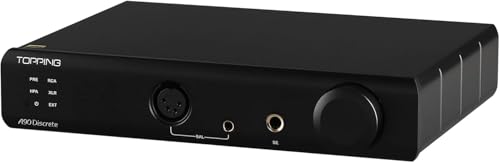
Topping A90 Discrete
The Topping A90 Discrete is a high-performance amplifier known for its ultra-low distortion and excellent channel separation. It handles a wide range of headphone impedances with ease, making it a versatile tool for professionals.
Pros
- Extremely low noise and distortion
- Balanced and single-ended inputs
- Strong build quality
Cons
- Larger footprint
- Higher price point
Drop + THX AAA 789
The Drop + THX AAA 789 amplifier uses THX AAA technology to provide clean, neutral amplification with minimal coloration. It offers balanced and single-ended connectivity, making it a popular choice among audio professionals.
Pros
- Accurate and uncolored sound
- Balanced output for long cable runs
- Wide gain settings
Cons
- Availability can be limited
- No internal power supply

RME ADI-2 DAC FS
The RME ADI-2 DAC FS is a professional-grade DAC and headphone amplifier with extensive DSP features. It offers parametric EQ, loudness, and crossfeed settings, making it a powerful tool for mastering and critical listening.
Pros
- Comprehensive EQ and DSP
- High-quality DAC section
- Remote control included
Cons
- Steep learning curve
- Premium price
Bryston BHA-1
The Bryston BHA-1 is a robust, fully balanced headphone amplifier designed for studio and broadcast environments. It offers outstanding build quality and a 20-year warranty, reflecting its professional pedigree.
Pros
- Exceptional build and reliability
- True balanced circuitry
- 20-year warranty
Cons
- Large and heavy
- Very expensive
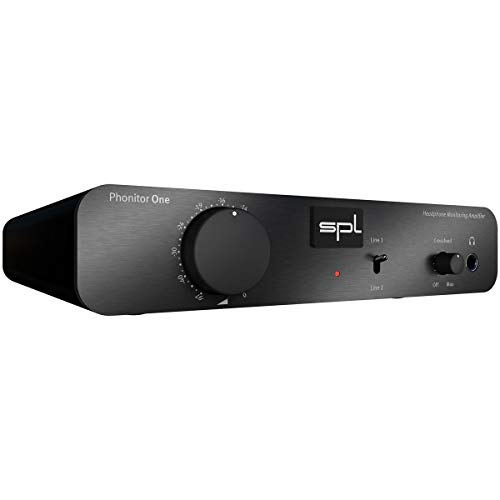
SPL Phonitor 2
The SPL Phonitor 2 is a professional monitoring amplifier with a unique 120-volt rail technology for high headroom. It includes a crossfeed function that simulates speaker listening, aiding in mix translation.
Pros
- Crossfeed for speaker-like imaging
- High voltage for clean peaks
- Transparent sound
Cons
- No balanced headphone output
- Monochrome interface

Rupert Neve Designs RNHP
The Rupert Neve Designs RNHP is a compact, high-current headphone amplifier designed for accurate monitoring. It features a discrete signal path and a robust enclosure, suitable for on-location work.
Pros
- Portable and durable
- High current output
- Neve signature sound
Cons
- No balanced inputs
- Limited gain range
Compared at a glance
| # | Model | Power Output | Best for | Score | Price |
|---|---|---|---|---|---|
| 1 | Schiit Magni Unity | 2.4W RMS per channel at 32 ohms | Studio monitoring and general professional use | 9.4 | Check price |
| 2 | Topping A90 Discrete | 6.35W RMS per channel at 32 ohms | High-impedance headphones and critical listening | 9.2 | Check price |
| 3 | Drop + THX AAA 789 | 6W RMS per channel at 16 ohms | Neutral reference monitoring | 9.0 | Check price |
| 4 | RME ADI-2 DAC FS | 1.5W RMS per channel at 32 ohms | All-in-one studio DAC/amp with EQ | 8.9 | Check price |
| 5 | Bryston BHA-1 | 1W RMS per channel at 600 ohms | Broadcast and mastering with balanced outputs | 8.8 | Check price |
| 6 | SPL Phonitor 2 | 2.2W RMS per channel at 32 ohms | Mixing and monitoring with crossfeed | 8.7 | Check price |
| 7 | Rupert Neve Designs RNHP | 1.2W RMS per channel at 32 ohms | Portable professional use | 8.6 | Check price |
What to look for
Good to know
What power output do I need for professional headphones?
For most professional headphones, an amplifier delivering at least 100mW at the headphone’s impedance is sufficient. For high-impedance models like 300 ohm, look for amps that output higher voltage, such as 1W or more. Our top picks exceed these needs.
Can I use a headphone amp with my audio interface?
Yes. Most audio interfaces have line outputs that can connect to a dedicated headphone amplifier. This often improves sound quality over the built-in headphone jack.
What is the difference between balanced and single-ended amplification?
Balanced amplification uses two signal paths per channel, which cancels noise over long cables and reduces crosstalk. It requires balanced cables and sources. Single-ended is more common and simpler. For most studio use, single-ended is fine unless you have long cable runs or need the extra channel separation.
Do I need a DAC in my headphone amp?
If your source is analog (like a mixer output), a separate amp is sufficient. If you listen from a computer, a DAC may improve sound. Many professional amps include a DAC section for convenience. The RME ADI-2 is an example.
How important is low distortion in a professional amp?
Low distortion ensures that the amplifier adds no color to the sound. For critical listening and mixing, distortion should be less than 0.01%. All the amps we compared have very low distortion ratings.
Can I use a headphone amp for in-ear monitors?
Yes, but be cautious with volume. In-ear monitors are very sensitive, so use low gain settings to avoid hearing damage. Some amps have multiple gain levels.
What is crossfeed and why is it useful?
Crossfeed mixes a small amount of the opposite channel’s signal to simulate speaker listening. This can help with mix translation because headphones completely isolate left and right. The SPL Phonitor 2 has a crossfeed feature.
Should I match impedance between amp and headphones?
A general rule is that the amplifier output impedance should be less than 1/8 of the headphone impedance to ensure consistent frequency response. Most solid-state amps have low output impedance, so this is rarely an issue.
Are expensive headphone amps worth it for professionals?
For professionals, accuracy and reliability are crucial. Expensive amps often provide better build quality, lower noise, and more features. However, mid-priced options like the Schiit Magni can be sufficient for many tasks.
Can I connect multiple headphones to one amp?
Some amplifiers have multiple headphone outputs. However, for simultaneous monitoring with separate volume controls, you might need a distribution amplifier. The models we reviewed have one or two outputs.
Final word
For most professionals, the Schiit Magni Unity offers the best balance of performance, price, and reliability. If you need balanced connectivity, the Drop + THX AAA 789 is a strong contender. For those who want an all-in-one solution with DSP, the RME ADI-2 DAC FS is worth the investment. Choose based on your specific workflow and connectivity needs.


