RV Vent Fans Built for the Long Haul
For most RV owners, the Maxxair Maxxfan Deluxe 7000K stands out as the top heavy-duty vent fan, offering whisper-quiet operation, integrated rain sensor, and reversible airflow for year-round comfort. Its main limitation is the higher price point, but the build quality and features justify the cost for serious travelers.
Ventilation is critical for comfort and safety in any RV. A heavy-duty vent fan moves stale air out and fresh air in, reducing humidity and odors.
We compared the most reliable models on the market, focusing on build quality, airflow efficiency, and features that matter for full-time use.
What matters most
Our top picks

Maxxair Maxxfan Deluxe 7000K
This fan is a favorite among RV owners for its powerful yet quiet motor and automatic rain sensor that closes the lid when it rains. It moves up to 900 CFM and includes a reversible function for intake or exhaust.
Pros
- Exceptionally quiet operation
- Automatic rain sensor
- Reversible airflow for intake/exhaust
Cons
- Price is higher than some competitors
- Remote can be finicky if not pointed directly

Fantastic Fan Endless Breeze 12V Fan
This is a versatile 12V fan that can be used on a table, hung from a ceiling, or mounted in a window. It’s not a direct replacement for a roof vent, but it’s great for extra airflow where you need it.
Pros
- Portable and easy to move
- Quiet operation
- Low power draw
Cons
- Not a permanent vent solution
- Lower airflow than roof fans

Camco 44217 Heavy Duty 12V Vent Fan
Camco is known for dependable RV accessories, and this fan is no exception. It offers three speeds, a built-in thermostat, and easy installation. It’s a solid choice for those who want a no-frills but sturdy fan.
Pros
- Affordable price point
- Includes thermostat
- Simple, reliable design
Cons
- No remote control
- Lid not insulated

Ventline 40951001 Manual RV Vent Fan
If you prefer a straightforward manual fan without electronics, this Ventline model is a workhorse. It features a 12V motor and a manual crank handle to open the vent. It’s built to last and easy to maintain.
Pros
- Very durable construction
- No electronics to fail
- Easy to install
Cons
- No thermostat or remote
- Lower airflow

Heng’s Vortex 14 Inch RV Vent Fan with Remote
This fan offers a powerful 850 CFM airflow and comes with a wireless remote that controls speed, thermostat, and open/close. The built-in rain sensor is a handy feature, and the fan is known for its quiet motor.
Pros
- Powerful airflow
- Wireless remote included
- Rain sensor automatic close
Cons
- Some users report remote range limitations
- Installation requires careful sealing
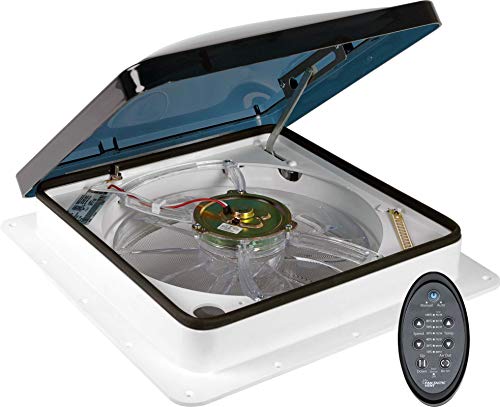
Dometic 2230 Roof Vent Fan
Dometic is a leading brand in RV climate control. This roof vent fan is designed to work seamlessly with their air conditioning units. It features a 14-inch fan with 3 speeds and a built-in thermostat.
Pros
- Trusted brand
- Thermostat control
- Quiet operation
Cons
- May require adapter for non-Dometic roofs
- Not as many features as higher-end models
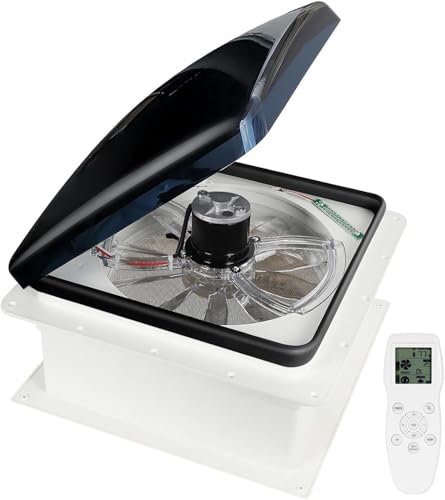
Fans Plus 12V High Velocity RV Vent Fan
This commercial-grade fan is designed for maximum airflow, moving up to 1000 CFM. It has a rugged metal housing and a powerful motor that can handle continuous use. Ideal for large motorhomes or toy haulers.
Pros
- Extremely high airflow
- Durable metal construction
- Built for continuous duty
Cons
- Installation may require cutting larger hole
- Noisy at highest speed
The lineup, side by side
| # | Model | CFM | Best for | Score | Price |
|---|---|---|---|---|---|
| 1 | Maxxair Maxxfan Deluxe 7000K | 900 | All-season use with rain sensor | 9.4 | Check price |
| 2 | Fantastic Fan Endless Breeze 12V Fan | 12V DC | Portable spot cooling | 8.7 | Check price |
| 3 | Camco 44217 Heavy Duty 12V Vent Fan | 700 | Budget-friendly reliability | 8.3 | Check price |
| 4 | Ventline 40951001 Manual RV Vent Fan | 500 | Simple manual operation | 8.0 | Check price |
| 5 | Heng’s Vortex 14 Inch RV Vent Fan with Remote | 850 | Remote convenience | 8.9 | Check price |
| 6 | Dometic 2230 Roof Vent Fan | 650 | Integration with Dometic systems | 8.5 | Check price |
| 7 | Fans Plus 12V High Velocity RV Vent Fan | 1000 | High airflow in large RVs | 8.8 | Check price |
Frequently asked questions
What is the difference between a vent fan and a roof vent?
A roof vent is simply an opening with a lid that can be opened manually. A vent fan has an electric motor that actively pulls air in or pushes it out, providing continuous ventilation even without wind.
Can I install a heavy-duty RV vent fan myself?
Yes, many RV owners install vent fans themselves. The process involves removing the old vent, cleaning the area, placing the new fan, and sealing it. If you are comfortable with basic tools and following instructions, it is a manageable DIY project.
Do all RV vent fans fit the same hole size?
Most standard RV vent fans fit a 14 x 14 inch rough opening. However, some high-velocity models may require a larger cutout. Always measure your existing opening and compare with the fan’s specifications before purchasing.
How do rain sensors work on vent fans?
Rain sensors detect moisture on the sensor located on the fan lid. When rain is detected, the sensor automatically closes the lid to prevent water from entering. This feature is useful if you leave the fan open while away.
Should I get a fan with a thermostat?
A thermostat allows the fan to automatically turn on or off based on the temperature inside the RV. This can help maintain a comfortable environment without manual adjustment. It’s a convenient feature for those who want automated climate control.
How much noise do heavy-duty vent fans make?
Noise levels vary. Fans with higher CFM ratings tend to be noisier, especially at maximum speed. Look for fans that advertise low sones or quiet operation. Many modern fans are designed to be surprisingly quiet even at high speeds.
Can I use a vent fan while driving?
Yes, most vent fans can be used while driving, but it’s important to ensure the fan is securely closed if you are not using it. Some fans have locks to keep the lid closed. Driving with the fan open can create drag and may not be safe.
What maintenance does an RV vent fan require?
Periodically clean the fan blades and the screen to prevent dust buildup. Check the sealant around the fan for cracks and reapply as needed. Lubricate the motor if the manufacturer recommends it. Most fans are low maintenance and last for years.
The bottom line
For most RV owners, the Maxxair Maxxfan Deluxe 7000K is the best all-around heavy-duty vent fan due to its balance of power, quietness, and smart features. If you are on a tight budget, the Camco 44217 offers dependable performance at a lower cost. For maximum airflow in a large rig, the Fans Plus 12V High Velocity fan is the top choice. Choose based on your specific RV size and budget, but any of these fans will improve your comfort significantly.


