Which Trekking Poles Hold Up on Rocky, Steep Trails?
Black Diamond Trail Ergo Cork Trekking Poles suit long-distance hikers who want an ergonomic grip and a clamp that holds under load. Leki Micro Vario Carbon poles fold small enough for scrambling or air travel. Cascade Mountain Tech Carbon Fiber Trekking Poles bring carbon-fiber weight without a premium price tag.
Black Diamond’s Trail Ergo Cork poles angle the grip to match a hand’s natural position on long descents, cutting the wrist strain flat grips cause over many miles. FlickLock external clamps hold length under repeated pressure without slipping. Their aluminum shafts weigh more than carbon alternatives, a tradeoff hikers focused on pack weight may not want.
Locking mechanisms fail in different ways than shaft materials do, so a pole that survives a rocky descent might still slip on a muddy one. We compared weight per pair, shaft material, locking mechanism, and collapsed length across seven models built for regular trail use.
The best picks, ranked

Black Diamond Trail Ergo Cork Trekking Poles
An angled cork grip lines up with a hand’s natural resting position, easing strain during descents that flat grips don’t address. FlickLock external clamps hold their set length under repeated pressure. Aluminum shafts add weight compared to carbon options but resist snapping on sharp rock.
Pros
- Angled cork grip reduces wrist strain on descents
- FlickLock clamps hold steady under repeated load
- Aluminum shaft resists snapping on rocky terrain
Cons
- Heavier per pair than carbon fiber alternatives
- Cork grip wears down faster than rubber over years

Leki Micro Vario Carbon Trekking Poles
Folding sections collapse to 15.7 inches, small enough to stow inside a daypack for scrambling or a flight. Carbon fiber shafts keep the pair under 17 ounces without giving up stiffness. An internal cord lock, not an external clamp, holds the folded sections together.
Pros
- Folds small enough to fit inside a pack
- Carbon fiber keeps swing weight low
- Quick to deploy for short scrambling sections
Cons
- Folding joints need more upkeep than telescoping locks
- Priced higher than telescoping aluminum poles

Black Diamond Distance Carbon Z Trekking Poles
Z-fold carbon sections shave pack weight down to 17.3 ounces per pair, aimed at hikers who count every ounce. Fixed-length sections mean no mid-hike adjustment, unlike a telescoping pole. Carbon absorbs trail vibration better than aluminum on rough ground.
Pros
- Among the lightest poles compared here
- Z-fold deploys faster than a telescoping lock
- Carbon shaft dampens vibration on rough trail
Cons
- Fixed length can’t adjust for steep terrain
- Not shareable between hikers of different heights
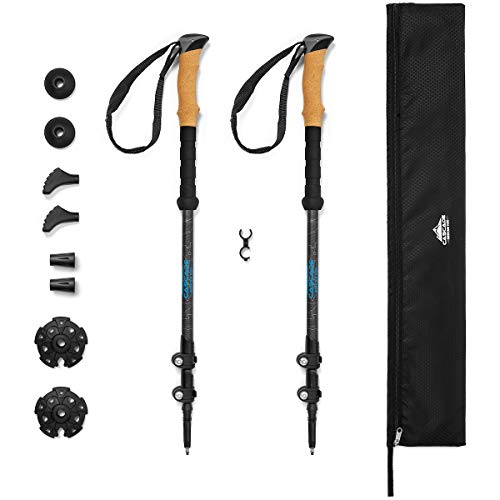
Cascade Mountain Tech Carbon Fiber Trekking Poles
Carbon fiber shafts here cost less than premium brands charge for the same material. A quick-lock lever adjusts length nearly as fast as an external clamp. Cork grips cover the upper handle section, helping manage sweat on warm climbs.
Pros
- Carbon fiber weight at a lower relative price
- Quick-lock lever adjusts length in seconds
- Cork grip section handles sweat better than plastic
Cons
- Lever lock feels less refined than Black Diamond’s FlickLock
- Tips wear faster on abrasive rock than premium tips

Montem Ultra Strong Trekking Poles
A thicker 7075 aluminum shaft carries the extra load from a heavier backpacking setup better than a lighter day-hiking pole. Interchangeable tips swap between rubber and metal points for trail or snow. Lever locks stay easy to operate even with gloves on.
Pros
- Reinforced aluminum handles heavier pack loads
- Interchangeable tips adapt to snow or bare trail
- Lever lock stays simple to operate with gloves
Cons
- Heavier per pair than carbon fiber options
- Collapsed length runs bulkier than folding poles

TrailBuddy Trekking Poles
A telescoping aluminum design targets occasional hikers who want reliable adjustment without paying for carbon or premium grips. Twist locks extend across a wide height range for sharing between hikers. Extra tip and basket attachments come included in the box.
Pros
- Lower price than premium aluminum or carbon poles
- Twist lock adjusts across a wide height range
- Extra tip and basket attachments included
Cons
- Twist locks loosen faster than lever or clamp designs
- Heaviest pair among the seven compared here
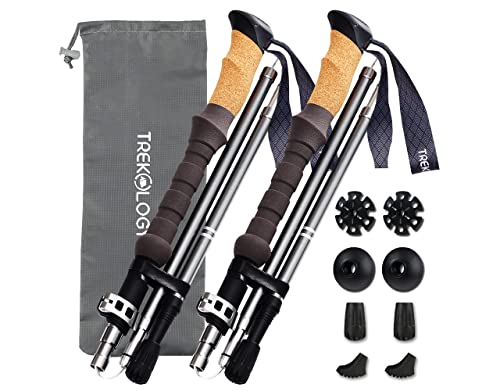
REI Co-op Trailmade Trekking Poles
Weight and price sit between budget twist-lock poles and premium carbon models. A lever lock holds length more securely than a twist lock under load. Foam grip extensions add traction for hikers stepping up to longer, steeper routes.
Pros
- Lever lock holds steadier than twist lock designs
- Lighter than most budget aluminum poles
- Foam grip extension aids traction on climbs
Cons
- Not as light as carbon fiber alternatives
- Fewer tip accessories included than the Montem set
How they compare
| # | Model | Shaft material | Best for | Score | Price |
|---|---|---|---|---|---|
| 1 | Black Diamond Trail Ergo Cork Trekking Poles | Aluminum | Best overall | 9.3 | Check price |
| 2 | Leki Micro Vario Carbon Trekking Poles | Carbon fiber | Best for travel and scrambling | 9.0 | Check price |
| 3 | Black Diamond Distance Carbon Z Trekking Poles | Carbon fiber | Best for ultralight hiking | 8.8 | Check price |
| 4 | Cascade Mountain Tech Carbon Fiber Trekking Poles | Carbon fiber | Best value | 8.5 | Check price |
| 5 | Montem Ultra Strong Trekking Poles | 7075 aluminum | Best for heavier pack loads | 8.3 | Check price |
| 6 | TrailBuddy Trekking Poles | Aluminum | Best budget | 8.1 | Check price |
| 7 | REI Co-op Trailmade Trekking Poles | Aluminum | Best for beginners transitioning to serious hikes | 8.0 | Check price |
How to choose
What shaft material changes on the trail Aluminum bends before it snaps, a failure mode some hikers treat as a safety margin on rocky terrain. Carbon fiber saves weight instead, found in poles like the Leki Micro Vario, but a sharp lateral hit can crack it outright. Neither material is objectively better; the choice depends on which failure mode worries a hiker more.
Which locking mechanism holds up best External lever clamps, like Black Diamond’s FlickLock, hold length better under repeated load than twist locks tend to. Twist locks can loosen gradually over a long descent, especially in wet conditions. Folding poles trade some of that adjustability for the smallest possible collapsed size.
Best for ultralight and fastpacking Counting every ounce points toward a Z-fold carbon design like the Black Diamond Distance Carbon Z. Fixed length is the tradeoff, since these poles can’t extend or shorten mid-hike. Hikers who need to change length often for climbs and descents should look elsewhere.
Best for heavier packs and multi-day trips Extra pack weight puts more stress on a pole shaft with every step. Reinforced aluminum, like the Montem Ultra Strong’s 7075 shaft, holds up better under that load than a carbon shaft built for fast day hiking. Interchangeable tips also matter more on multi-day trips that cross both trail and snow.
Questions worth asking
What is the difference between aluminum and carbon fiber trekking poles?
Aluminum tends to bend rather than snap on impact, while carbon fiber is lighter but can crack under a sharp sideways force, making the choice partly about which failure mode you’d rather risk.
Are folding trekking poles as strong as telescoping ones?
Folding poles like the Leki Micro Vario use internal cord tension and hold up well, though telescoping external lever locks generally give a more adjustable, field-repairable connection.
How much should trekking poles weigh per pair?
Serious hikers often look for 17 to 21 ounces per pair; ultralight carbon options can drop below 17 ounces, while reinforced aluminum poles built for heavier loads run closer to 21 ounces.
Do trekking poles help with knee pain on descents?
Poles help distribute impact to the arms and shoulders instead of the knees, though results vary by hiking style and how the pole length is adjusted.
Which locking mechanism is most reliable for trekking poles?
External lever clamps, such as Black Diamond’s FlickLock, resist slipping under load more consistently than twist locks, especially in wet or muddy conditions.
Can one pair of trekking poles fit hikers of different heights?
Adjustable telescoping poles, like the TrailBuddy or REI Co-op Trailmade, cover a wider height range than fixed-length Z-fold poles, making them easier to share.
Are cork grips better than foam or rubber on trekking poles?
Cork molds to hand shape over time and manages sweat well, foam feels softer initially, and rubber resists wear better in wet, cold conditions.
Which trekking poles work best for snow or winter trails?
Poles with interchangeable tips and baskets, like the Montem Ultra Strong, switch between standard trail tips and wider snow baskets across seasons.
Are carbon fiber trekking poles worth the extra cost over aluminum?
Carbon fiber shaves several ounces per pair, which matters most on long days or fastpacking trips, but aluminum still resists a hard impact better for the price.
The verdict
Black Diamond Trail Ergo Cork Trekking Poles are the strongest all-around choice for their ergonomic grip and dependable FlickLock clamps. Hikers who travel frequently or need to stow poles quickly should choose the folding Leki Micro Vario Carbon instead, and anyone carrying a heavier multi-day pack will hold up better with the reinforced Montem Ultra Strong.


