Professional-Grade Weight Benches for Serious Home Gyms
The Rep Fitness AB-4100 is our top pick for serious home lifters because it combines a 1,000-pound capacity with a zero-gap adjustable backrest and a compact footprint. Its main limitation is a 41-inch pad height that may be too high for shorter users.
A professional-grade weight bench is the backbone of a serious home gym. It must handle heavy loads, offer precise adjustments, and remain rock-solid during intense workouts. We compared the most sought-after benches on today’s market to help you choose.
Our selection includes flat, adjustable, and multi-purpose benches from brands like Rep Fitness, Rogue, and Ironmaster. Each model has been vetted for construction quality, stability, and real-world feedback from home lifters.
How to pick the right one
Our top picks

Rep Fitness AB-4100 Adjustable Bench
A zero-gap adjustable bench with a 1,000-pound weight capacity. It offers 11 backrest angles and 3 seat angles. The pad is dense foam with a grippy texture. Owners praise its stability during heavy pressing. It folds flat for storage, though at 113 pounds it is not lightweight.
Pros
- Zero-gap design prevents pinching
- Very stable with wide footprint
- Dense, comfortable pad
Cons
- Heavy to move around
- Pad height may be too tall for some
Rogue Adjustable Bench 3.0
This bench is built like a tank with a 3×3-inch 11-gauge steel frame. It has a 1,000-pound capacity and a ladder-style adjustment system. The pad is made of high-density foam. Owners like the minimal maintenance and rock-solid feel. It does not fold, so it requires dedicated space.
Pros
- Exceptionally sturdy construction
- Smooth ladder adjustments
- High-density pad with good grip
Cons
- Does not fold for storage
- Back pad gap can pinch if not aligned

Ironmaster Super Bench Pro
The Super Bench Pro offers 11 backrest positions and a unique quick-release adjustment. It has a 1,000-pound capacity and a compact design. The bench accepts many Ironmaster attachments, turning it into a multi-purpose station. Owners value its stability and ease of adjustment. The pad is firm and supportive.
Pros
- Quick-release adjustment mechanism
- Wide range of attachments available
- Compact footprint for home gyms
Cons
- Seat pad may be too narrow for some
- Requires assembly with tools

Titan Fitness Flat Bench (Heavy Duty)
A simple, no-nonsense flat bench with a 1,000-pound capacity. The frame is 11-gauge steel with a wide base for stability. The pad is 13 inches wide and 3 inches thick. Owners report it feels bombproof during max lifts. It has no adjustments, but that is fine for a flat bench.
Pros
- Very affordable for the quality
- Rock solid stability
- Comfortable thick pad
Cons
- No incline or decline adjustments
- Not as portable as folding models
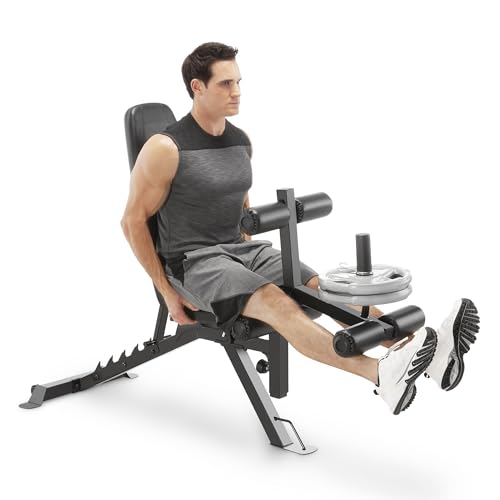
Marcy Adjustable Utility Bench
Marcy offers a cost-effective adjustable bench with a 600-pound capacity. It features 6 backrest positions and a 300-pound weight limit on the included leg developer. The frame is sturdy but not as massive as premium models. Owners find it ideal for moderate lifting at home.
Pros
- Very affordable price point
- Multiple incline positions
- Leg developer attachment included
Cons
- Lower weight capacity
- Pad is less dense than higher-end models

Bowflex SelectTech Adjustable Bench
This bench folds flat for easy storage and has a 600-pound capacity. It offers 6 backrest angles and 3 seat angles. The build is lighter than steel-heavy models, but it is stable for most home workouts. Owners appreciate its portability and space-saving design.
Pros
- Folds flat for storage
- Easy to move with front wheels
- Quick adjustment with pull pins
Cons
- Not as heavy-duty as steel frames
- Some users find pad too firm
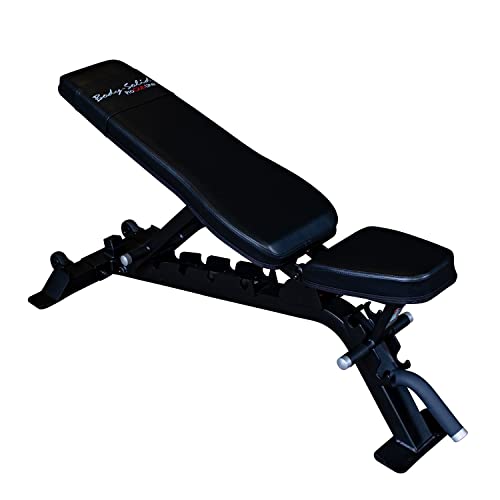
Body-Solid Pro Clubline Adjustable Bench
Body-Solid’s Pro Clubline bench has a 1,000-pound capacity and a 2×3-inch steel frame. It offers 7 backrest positions and a 3-position seat. The pad is 3 inches thick and covered in durable vinyl. Owners report it feels like a commercial gym bench. It does not fold, so it needs space.
Pros
- Commercial-grade construction
- Wide, comfortable pad
- Stable during heavy lifts
Cons
- Large footprint
- No wheels for easy moving
How they compare
| # | Model | Weight Capacity | Best for | Score | Price |
|---|---|---|---|---|---|
| 1 | Rep Fitness AB-4100 Adjustable Bench | 1,000 lbs | Best overall for most lifters | 9.4 | Check price |
| 2 | Rogue Adjustable Bench 3.0 | 1,000 lbs | Best for commercial-quality durability | 9.2 | Check price |
| 3 | Ironmaster Super Bench Pro | 1,000 lbs | Best for versatility and add-ons | 9.1 | Check price |
| 4 | Titan Fitness Flat Bench (Heavy Duty) | 1,000 lbs | Best for dedicated flat pressing | 8.8 | Check price |
| 5 | Marcy Adjustable Utility Bench | 600 lbs | Best budget professional option | 8.2 | Check price |
| 6 | Bowflex SelectTech Adjustable Bench | 600 lbs | Best for compact spaces | 8.0 | Check price |
| 7 | Body-Solid Pro Clubline Adjustable Bench | 1,000 lbs | Best for heavy duty incline work | 8.6 | Check price |
Frequently asked questions
What weight capacity do I need for a professional bench?
A bench with at least 1,000 pounds capacity is recommended for serious lifters. This covers the weight of the user, the barbell, and the plates. Even if you currently lift less, having a higher capacity ensures durability and safety for future progression.
Is an adjustable bench worth the extra cost?
Yes, if you want to perform incline and decline presses, an adjustable bench is essential. It offers more exercise variations and reduces the need for multiple benches. However, adjustable benches may have a slight stability trade-off compared to flat benches.
What is the difference between zero-gap and standard adjustable benches?
Zero-gap benches have a backrest that slides to meet the seat, eliminating the gap that can pinch skin or cause discomfort. Standard adjustable benches have a fixed gap, which can be annoying during workouts. Zero-gap designs are more comfortable but may cost more.
Can I bench press heavy weights on a foldable bench?
Yes, many foldable benches have high weight capacities, but they may not be as stable as non-folding models. Look for foldable benches with a wide base and sturdy locking mechanisms. Test the bench for wobble before purchasing.
How important is pad thickness and density?
Pad thickness and density affect comfort and support. A thick, dense pad prevents discomfort and provides a stable surface for lifting. Thin or soft pads can compress and cause instability, especially under heavy weights. Look for high-density foam or similar materials.
What is the ideal bench height?
The ideal bench height depends on your leg length. When your feet are flat on the floor, your thighs should be roughly parallel to the ground. Most benches are around 17 to 19 inches high. Some adjustable benches allow you to change the height slightly, but you can use plates under your feet if needed.
Are there any safety accessories I should use with a bench?
If you bench press alone, consider using a power rack or safety arms to catch the barbell if you fail a rep. A spotter is always helpful. Additionally, use collars to secure weights on the bar. Always warm up properly before heavy lifting.
How do I maintain my weight bench?
Wipe down the bench pad after each use with a mild cleaner. Check bolts and tighten them regularly. Keep the bench away from moisture to prevent rust. If the bench has moving parts, apply a silicone lubricant occasionally. Follow the manufacturer’s care instructions.
Final word
For most serious home lifters, the Rep Fitness AB-4100 is the best professional-grade bench due to its zero-gap adjustability, high capacity, and stable frame. If you need a flat bench for heavy pressing, the Titan Fitness Flat Bench offers outstanding value without sacrificing durability. For those who want a compact option, the Bowflex SelectTech is a good choice, but it lacks the raw stability of the top picks.


