Professional Jointers That Earn Their Place in Serious Shops
The Jet JJ-6CSDX stands out as the top professional jointer because it combines a powerful 1 HP motor with a segmented spiral cutterhead for quiet, smooth operation. Professionals appreciate its long 56 inch bed for flattening warped stock, though its price and weight require a dedicated space and budget. For those needing portability, the Cutech 4016CT-HP offers a strong alternative with a helical head and aluminum table at a lower cost.
A professional jointer is a cornerstone of any serious woodworking shop. It ensures boards are flat and edges are straight, which is critical for glue-ups and accurate milling. Choosing the right one involves balancing power, cutterhead design, and table length.
We compared seven models that are currently available from major brands. Each product was evaluated on its specifications and feedback from owners who use them daily. Our goal is to help you find a jointer that matches your workflow and budget.
The best picks, ranked

Jet JJ-6CSDX 6-Inch Jointer with 56-Inch Bed
This Jet model is a favorite among professionals due to its robust construction and segmented spiral cutterhead. The long bed supports long boards, and the fence tilts both ways for versatility. Owners report minimal snipe and a smooth finish right out of the box.
Pros
- Exceptional finish quality with quiet operation
- Long infeed/outfeed tables for stability
- Easy to adjust and maintain
Cons
- Heavy and requires a dedicated stand
- Premium price

Cutech 4016CT-HP 16-Inch Helical Head Jointer
The Cutech 4016CT-HP offers a helical cutterhead at a price that is hard to beat. It’s a 16-inch model, but the aluminum table is lighter than cast iron. Owners like the four-sided carbide inserts that can be rotated. The fence is sturdy and the dust collection works well.
Pros
- Helical head reduces tear-out
- Rotating inserts extend life
- Good value for the features
Cons
- Aluminum table may flex under heavy pressure
- Motor could be more powerful for deep cuts

Powermatic 8-Inch Jointer with Helical Cutterhead
Powermatic is known for industrial-grade machinery, and this 8-inch jointer is no exception. It features a powerful 2 HP motor and a spiral cutterhead with indexable carbide inserts. The parallelogram tables adjust precisely, and the fence is massive. It’s a workhorse that handles large stock with ease.
Pros
- Powerful motor for demanding tasks
- Accurate parallelogram adjustment
- Built to last for decades
Cons
- Requires 230V outlet
- Very expensive and heavy

Grizzly G0604 8-Inch Jointer
If you need an 8-inch jointer without breaking the bank, the Grizzly G0604 is a solid choice. It has a straight knife cutterhead, but owners say it performs well after proper setup. The cast iron tables are ground flat, and the fence is adjustable. It’s a no-frills machine that gets the job done.
Pros
- Wide 8-inch cutting capacity
- Long tables for stability
- Affordable for its size
Cons
- Straight knives require more maintenance
- Fence may need adjustment out of the box
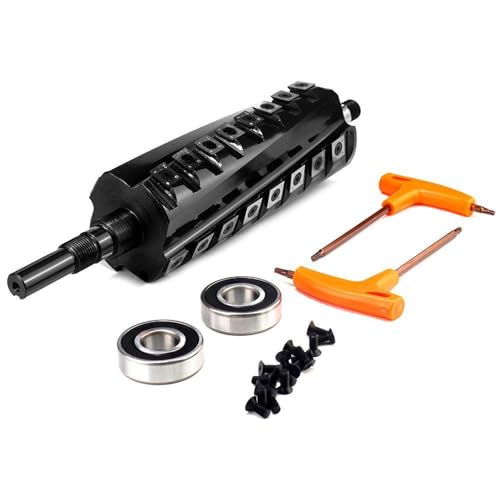
JET JJ-8DX 8-Inch Jointer with 3-Knife Cutterhead
The JET JJ-8DX is another professional-grade option with a straight knife cutterhead, but its strength lies in its precise parallelogram tables and a fence that stays square. It has a powerful 2 HP motor and a 74 inch bed, making it ideal for long boards. Owners appreciate the smooth adjustments and minimal vibration.
Pros
- Exceptional table alignment
- Powerful and quiet motor
- Sturdy fence with positive stops
Cons
- Straight knives need sharpening
- Requires 230V circuit
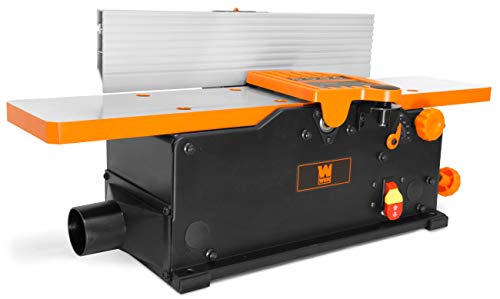
WEN 6552 6-Inch Benchtop Jointer
Not all professionals have huge shops. The WEN 6552 is a benchtop jointer that offers portability without sacrificing too much performance. It has a 10 amp motor and a 28 inch table. While not as large as floor models, it handles typical projects. Owners like the dust port and the affordable price.
Pros
- Lightweight and easy to store
- Affordable for pros on a budget
- Produces acceptable results for smaller pieces
Cons
- Short tables limit long board support
- Not as powerful as full-size models
Lagunamax 6-Inch Jointer with Helical Head
The Lagunamax (or Laguna) jointer is praised for its helical cutterhead that reduces noise and delivers a glass-smooth finish. It has a 1 HP motor and a 44 inch bed. The fence is robust and the dust collection is efficient. It’s a great choice for shops where noise is a concern.
Pros
- Quieter operation than straight knives
- Excellent surface finish
- Easy insert indexing
Cons
- Shorter bed than some competitors
- Price is higher than straight knife models
How they compare
| # | Model | Motor | Best for | Score | Price |
|---|---|---|---|---|---|
| 1 | Jet JJ-6CSDX 6-Inch Jointer with 56-Inch Bed | 1 HP, 115V | Best overall for professional shops | 9.4 | Check price |
| 2 | Cutech 4016CT-HP 16-Inch Helical Head Jointer | 1 HP, 110V | Best budget-friendly helical jointer | 8.8 | Check price |
| 3 | Powermatic 8-Inch Jointer with Helical Cutterhead | 2 HP, 230V | Best for heavy-duty professional use | 9.2 | Check price |
| 4 | Grizzly G0604 8-Inch Jointer | 1.5 HP, 110V/220V | Best for large capacity on a budget | 8.5 | Check price |
| 5 | JET JJ-8DX 8-Inch Jointer with 3-Knife Cutterhead | 2 HP, 230V | Best for precision and repeatability | 9.0 | Check price |
| 6 | WEN 6552 6-Inch Benchtop Jointer | 10 Amp, 110V | Best for small shops and portability | 8.0 | Check price |
| 7 | Lagunamax 6-Inch Jointer with Helical Head | 1 HP, 110V | Best for smooth finish and low noise | 8.7 | Check price |
What matters most
Frequently asked questions
What is the difference between a jointer and a planer?
A jointer flattens one face of a board and squares one edge, making it straight and true. A planer thicknesses the board, making the opposite face parallel to the first. They are used together to produce lumber that is flat, straight, and of consistent thickness.
Do I really need a helical cutterhead?
Helical cutterheads produce a finer finish, reduce tear-out on difficult grain, and are quieter. They also eliminate the need to set knives, as you simply rotate or replace inserts. For professional use, the benefits often justify the higher cost, especially if you work with hardwoods or figured woods.
How long should a jointer bed be?
Longer beds provide more support for long boards, reducing the risk of snipe and helping to flatten warped stock. For general cabinet making, a 56-inch bed is sufficient. For furniture or door building, longer beds, like 68 or 74 inches, are preferable.
Can I use a jointer on boards shorter than 12 inches?
Yes, but you must use push blocks and be extra cautious. Short boards can be dangerous because they can kick back or get pulled into the cutterhead. Always use push blocks and ensure the board is long enough to maintain control.
What safety features should I look for?
Key safety features include a blade guard that covers the cutterhead, a paddle switch that is easy to reach, and a brake that stops the cutterhead quickly. Some models have a riving knife or an anti-kickback device, though these are more common on table saws.
How often do I need to change or sharpen jointer knives?
It depends on usage. For heavy professional use, straight knives may need sharpening every few months. Helical inserts can last a year or more on average, and you can rotate them multiple times before replacing. Dull knives cause tear-out and burning, so check them regularly.
Can I joint boards wider than the jointer’s capacity?
No, you cannot joint a board wider than the cutterhead. However, you can joint one edge, then use a table saw to rip the board to the desired width, then joint the other edge. For flattening wide faces, you may need to use a planer or a hand plane.
What is snipe and how can I minimize it?
Snipe is a slight depression at the beginning or end of a board caused by the cutterhead digging in when the board is not fully supported. To minimize it, use longer tables, feed the board evenly, and keep the outfeed table slightly higher than the cutterhead. Some jointers have a snipe lock feature.
Is a benchtop jointer sufficient for professional work?
For light work or small projects, a benchtop model can suffice. However, for heavy use and larger boards, a floor-standing jointer with a longer bed and more power is recommended. Professional shops typically require the stability and capacity of full-size machines.
How important is dust collection on a jointer?
Very important. Jointers produce large amounts of chips and dust. A good dust collection port with a 4-inch diameter is standard on professional models. Connecting to a dust collector or shop vac keeps the work area clean and reduces health risks.
The verdict
For most professional woodworkers, the Jet JJ-6CSDX is the best all-around choice, offering a helical cutterhead, long bed, and proven reliability. If you need more capacity, the Powermatic 8-inch with helical head is worth the investment. Budget-conscious professionals should consider the Cutech 4016CT-HP for its helical head at a lower price, but be prepared for a lighter table. If your shop only has 110V, the Jet JJ-6CSDX or Cutech are excellent options. Ultimately, choose a jointer that matches your typical board sizes and electrical setup, and prioritize a helical cutterhead for better finish and lower maintenance.


