Cast Iron Kettlebells That Hold Up in a Busy Gym
Rogue’s single-cast kettlebell leads for handle diameter that stays consistent across every weight, useful once a gym stocks a full rack. Kettlebell Kings’ textured powder coat suits grip-focused lifters. Titan Fitness offers a lower entry cost for home gyms building a complete set.
Rogue’s single-cast kettlebell tops this list because handle diameter stays consistent across its full weight range, a detail that matters once a gym stocks multiple sizes for different lifters. Kettlebell Kings’ textured powder coat bell suits grip training specifically. Titan Fitness gives anyone building a full rack from scratch a lower-cost entry point.
A kettlebell that flakes coating or wobbles on its base turns into a liability once dozens of lifters use it daily. Casting method decides long-term durability, since single-piece cast iron resists cracking better than seamed or filled designs. We compared listed handle diameter, coating type, base flatness, and casting method, then weighed owner reports covering chipping, rust resistance, and grip feel after months of use.
How to choose
What separates a gym-grade kettlebell from a basic one Single-cast iron construction, consistent handle diameter across the weight range, and a durable powder coat finish separate gym-grade bells from budget options. A bell that chips or wobbles within months ends up costing more than paying up front for better casting.
Why handle diameter matters as you size up Competition-style kettlebells hold the same handle diameter at every weight, so a lifter’s grip pattern stays constant while sizing up. Budget kettlebells often widen the handle as weight increases, which can throw off technique during progressive loading.
Coating types and how they affect grip Textured powder coat improves grip once hands sweat, though it feels more abrasive on bare skin during high-rep sets. Smooth powder coat and enamel stay gentler on skin but turn slick with sweat. Vinyl coatings on lighter bells mainly protect flooring rather than improve grip.
Base stability for floor-based movements A wide, flat base matters most for floor exercises like renegade rows and floor presses, where a narrow or rounded base tips over easily. Sculpted, non-standard shapes trade base stability for varied training stimulus, better suited to advanced lifters than beginners.
The top picks, ranked

Rogue Kettlebell
A single-piece iron casting skips the weld seams weaker bells rely on, lowering the risk of cracking after years of daily swings and cleans. Handle diameter stays the same across the weight range, so lifters do not relearn grip when moving up in size. Flat gray powder coat resists chipping better than painted finishes.
Pros
- Consistent handle diameter across the full range
- Single-cast build resists cracking over years
- Powder coat resists chipping under daily use
Cons
- Costs more than basic cast iron bells
- Handle feels wide for smaller hands

Kettlebell Kings Powder Coat Kettlebell
Textured powder coat improves grip during high-rep swings and snatches, especially once palms sweat mid-session. A wide handle window fits two-handed swings without pinching. Color-coded bands by weight speed up identification in a rack holding a full range of sizes.
Pros
- Textured coating grips well once hands sweat
- Color coding speeds up finding the right weight
- Wide handle window suits two-handed swings
Cons
- Texture feels abrasive against bare skin
- Priced above smooth-coat alternatives
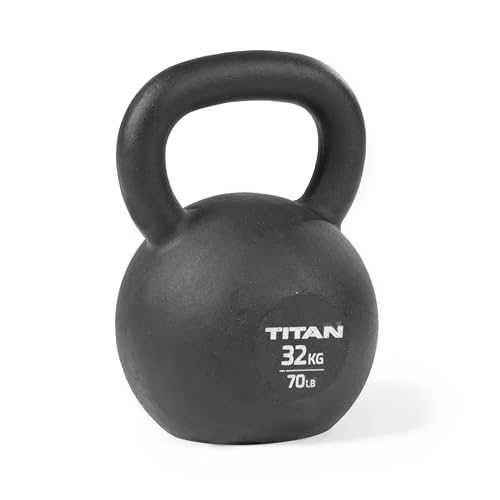
Titan Fitness Cast Iron Kettlebell
A wide, flat base keeps this bell stable during floor exercises like renegade rows, where a narrow base tips easily. Cast iron construction handles daily gym use at a lower cost than premium competition brands. Handle diameter shifts slightly between weight increments, a common tradeoff at this price point.
Pros
- Wide base adds stability for floor exercises
- Lower cost suits building a full rack
- Durable cast iron holds up to daily use
Cons
- Handle diameter varies between weight sizes
- Enamel paint chips faster than powder coat

REP Fitness Kettlebell
A flat-bottom profile stands solidly on hard flooring or a rubber mat, useful for renegade rows and floor presses. REP’s iron casting resists denting better than thinner-walled bells on garage gym flooring. Sizing runs in standard pound increments rather than kilogram, worth checking against an existing rack.
Pros
- Flat-bottom base stands solidly on any floor
- Iron casting resists denting in garage gyms
- Powder coat holds up to daily training
Cons
- Pound-only sizing may not fit kilogram programming
- Handle diameter grows more at heavier weights

CAP Barbell Cast Iron Kettlebell
A straightforward cast iron build covers the basics without competition-grade extras like color coding or textured coating. It suits home gyms buying a single bell or two rather than outfitting a full commercial rack. Vinyl-coated versions at lighter weights cut down on floor noise and impact.
Pros
- Low cost for occasional or home use
- Vinyl-coated lighter weights reduce floor noise
- Simple construction holds up without extras
Cons
- No color coding for quick weight identification
- Handle finish feels rougher than premium coatings

Yes4All Cast Iron Kettlebell
A wide flat base forgives lifters still developing kettlebell technique, resisting tips during setup and rack position. Vinyl coating on lighter weights protects flooring in home settings. Heavier cast iron versions use standard enamel rather than powder coat.
Pros
- Wide base suits lifters still learning technique
- Vinyl coating protects home flooring
- Affordable across a wide range of weights
Cons
- Enamel on heavier bells chips faster
- Not built for high-volume commercial gym use
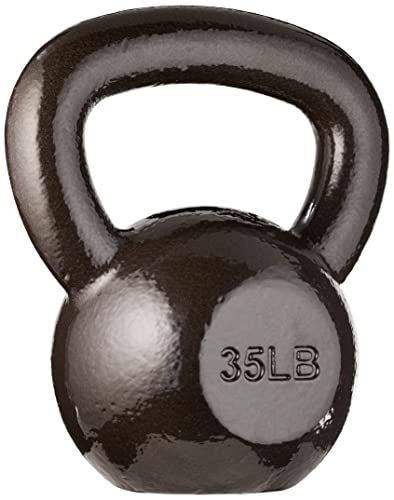
Onnit Primal Kettlebell
Sculpted, animal-inspired shapes shift the bell’s center of mass away from a standard round kettlebell, forcing extra stabilization during swings and carries. That suits lifters looking to add variety to established kettlebell programming. Odd-shaped bells rack less cleanly than standard round designs.
Pros
- Shifted center of mass raises stabilization demand
- Distinct shapes add variety to programming
- Cast iron build holds up over years of use
Cons
- Non-standard shape racks less cleanly than round bells
- Not ideal for lifters prioritizing pure consistency
How they stack up
| # | Model | Material | Best for | Score | Price |
|---|---|---|---|---|---|
| 1 | Rogue Kettlebell | Single-cast iron | Best overall | 9.4 | Check price |
| 2 | Kettlebell Kings Powder Coat Kettlebell | Cast iron | Best for grip training | 9.2 | Check price |
| 3 | Titan Fitness Cast Iron Kettlebell | Cast iron | Best value | 8.9 | Check price |
| 4 | REP Fitness Kettlebell | Cast iron | Best for home gym racks | 8.7 | Check price |
| 5 | CAP Barbell Cast Iron Kettlebell | Cast iron | Best budget | 8.4 | Check price |
| 6 | Yes4All Cast Iron Kettlebell | Cast iron | Best for beginners building a set | 8.1 | Check price |
| 7 | Onnit Primal Kettlebell | Cast iron | Best for stabilization and grip variety | 8.0 | Check price |
Common questions
What makes a kettlebell professional grade?
Single-cast iron construction, consistent handle diameter across the weight range, a coating that resists chipping, and a flat stable base together define a competition or gym-grade kettlebell.
Is powder coat better than enamel paint on a kettlebell?
Generally yes for durability, since powder coat resists chipping and flaking better than enamel under repeated impacts and daily gym use. Enamel-coated bells do cost less.
Why do kettlebell handles vary in diameter between brands?
Casting method and manufacturing standards differ by brand. Competition-style bells hold one handle diameter across every weight, while budget bells often widen the handle as weight increases.
What kettlebell weight should a beginner start with?
Many beginners start in the 8 to 12 kilogram range for women and 12 to 16 kilogram range for men, though prior strength training experience should shift that starting point.
Are cast iron kettlebells better than vinyl-coated ones?
For serious training, yes, since cast iron handles daily impact and floor drops better. Vinyl coating mainly suits lighter home-use bells where reducing floor noise matters more than commercial durability.
How do you maintain a cast iron kettlebell?
Wipe down handles after sweaty sessions to prevent rust, store bells off damp concrete floors, and touch up chipped coating before rust spreads under the finish.
Kettlebell vs dumbbell, which is better for training?
A kettlebell’s offset handle and center of mass suit ballistic moves like swings, cleans, and snatches. A dumbbell’s balanced design suits more controlled, symmetrical lifts instead.
Do competition kettlebells all stay the same size regardless of weight?
Yes, competition kettlebells keep a uniform outer size across weights, changing only internal density, unlike standard cast iron bells that grow physically larger as weight increases.
What is the best kettlebell for grip training?
Textured powder coat bells with a wide handle window, like competition-style designs, hold up best once hands sweat during high-rep swings and snatches.
Our pick
Rogue’s kettlebell earns the top recommendation for gyms stocking a full weight range, since consistent handle diameter keeps technique steady as lifters progress. Anyone prioritizing grip endurance in high-rep training should pick Kettlebell Kings instead, where the textured coating pays off directly. Home gym owners building a full rack on a budget get the best cost per bell from Titan Fitness, accepting some handle diameter variation as the tradeoff.