Top Professional Portable Radios for Clear, Reliable Team Communication
For most professional teams, the Motorola Solutions RDU4100 stands out with its rugged build, clear audio, and reliable 20+ hour battery life, though it lacks GPS and Bluetooth. If you need long-range performance, the Kenwood NX-1300 offers exceptional coverage but requires a license. For budget-conscious buyers, the BTECH DMR-6X2 Pro provides advanced digital features at a lower cost, but programming is more complex.
Reliable communication is non-negotiable for teams in construction, security, event management, and public safety. Consumer walkie-talkies often fall short on range, durability, and battery life when the job gets tough.
Professional portable radios are engineered for demanding environments. They offer clearer audio, longer battery life, and robust construction. This roundup compares top models to help you choose the right one for your team.
How to choose
The top picks, ranked

Motorola RDU4100
The Motorola RDU4100 is a UHF two-way radio built for professional use. It delivers crisp audio and has a sturdy design that withstands drops and dust. Users report excellent range in urban environments, and the battery easily lasts a full shift.
Pros
- Clear audio even in noisy settings
- Rugged, water and dust resistant
- Long battery life
Cons
- No Bluetooth or GPS
- Limited channel capacity (e.g., 10 channels)
Kenwood NX-1300
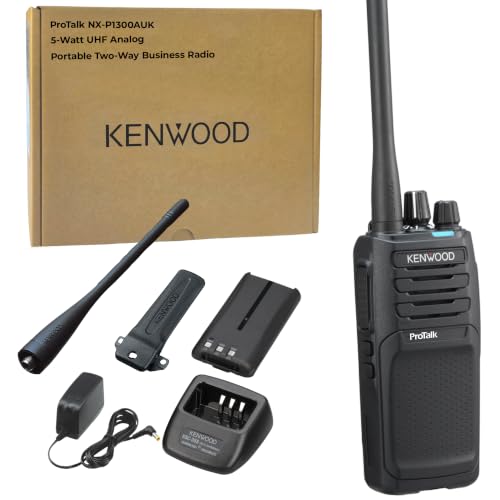
The Kenwood NX-1300 is a VHF digital radio that offers outstanding range and clear digital audio. It is built to military standards for shock and vibration. Professionals in rural or large campus settings appreciate its extended coverage.
Pros
- Exceptional signal range
- Digital audio reduces background noise
- Rugged and reliable
Cons
- Requires an FCC license
- Higher price point

BTECH DMR-6X2 Pro
The BTECH DMR-6X2 Pro is a dual-band digital mobile radio that offers both analog and DMR digital modes. It is a favorite among hobbyists and small businesses due to its affordability and feature set. Users note that programming requires a learning curve.
Pros
- Dual band for flexibility
- Digital and analog compatible
- Lower cost than competitors
Cons
- Programming is complex
- Build quality not as rugged as top-tier

Icom IC-F4029SDR
The Icom IC-F4029SDR is a UHF digital radio with built-in GPS and Bluetooth. It supports both analog and NXDN digital protocols. This radio is ideal for teams that need location tracking and wireless audio accessories.
Pros
- Integrated GPS for tracking
- Bluetooth for wireless headsets
- Clear digital audio
Cons
- Requires license for NXDN
- Premium price
Midland GXT1000VP4
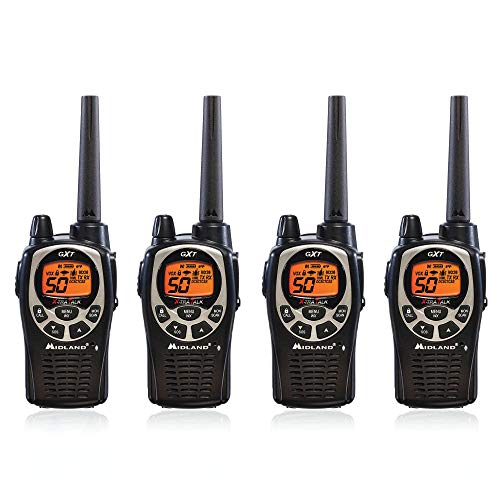
The Midland GXT1000VP4 is a 50-channel GMRS radio with a 36-mile range claim. It is waterproof and floats, making it perfect for marine and outdoor work. Users appreciate its powerful weather alerts and long battery life.
Pros
- Floats and waterproof
- Weather alerts
- Good value for the price
Cons
- Maximum range only in ideal conditions
- Limited channels compared to business radios

Vertex Standard VX-231
The Vertex Standard VX-231 is a simple, durable UHF analog radio. It offers clear audio and easy operation, making it a solid choice for teams that don’t need digital features. It is known for its rugged construction and long battery life.
Pros
- Simple to operate
- Solid audio quality
- Rugged build
Cons
- No digital modes
- Limited features

Retevis RT29
The Retevis RT29 is an affordable UHF radio designed for professional use. It offers good range for local communication and includes a headset option. Users note that it is easy to program and reliable for daily operations.
Pros
- Very affordable
- Easy to program
- Good for short-range use
Cons
- Battery life shorter
- Less rugged than premium models
Compared at a glance
| # | Model | Frequency | Best for | Score | Price |
|---|---|---|---|---|---|
| 1 | Motorola RDU4100 | UHF 403-470 MHz | Best overall for job sites and security teams | 9.4 | Check price |
| 2 | Kenwood NX-1300 | VHF 136-174 MHz | Best for wide-area coverage and licensed users | 9.1 | Check price |
| 3 | BTECH DMR-6X2 Pro | VHF/UHF (136-174, 400-520 MHz) | Best budget-friendly digital option | 8.9 | Check price |
| 4 | Icom IC-F4029SDR | UHF 450-520 MHz | Best for advanced users needing GPS and Bluetooth | 9.0 | Check price |
| 5 | Midland GXT1000VP4 | UHF GMRS (462 MHz) | Best for outdoor and recreational professional use | 8.6 | Check price |
| 6 | Vertex Standard VX-231 | UHF 400-470 MHz | Best for reliable analog performance | 8.4 | Check price |
| 7 | Retevis RT29 | UHF 400-470 MHz | Best for small businesses on a tight budget | 8.1 | Check price |
Common questions
Do I need a license to operate professional portable radios?
Most business-band radios require an FCC license. However, some models operate on MURS or FRS frequencies that do not require a license. GMRS radios require a license if you exceed power limits. Check the radio’s frequency band and consult the FCC rules.
What is the difference between UHF and VHF for professional use?
VHF (136-174 MHz) signals travel farther in open areas but have trouble penetrating buildings. UHF (400-520 MHz) works better indoors and in urban environments. Choose based on your typical work environment.
How far can professional portable radios communicate?
Range varies based on terrain, weather, and antenna. In open areas, 5-watt radios can reach up to several miles. In buildings, range may drop to a few hundred feet. The advertised range is often optimistic; real-world performance depends on conditions.
Are digital radios worth the extra cost?
Digital radios provide clearer audio, longer battery life, and better privacy. They also support advanced features like GPS and text messaging. If your team relies heavily on radio communication, digital is a worthwhile investment.
Can I use a ham radio for professional purposes?
No, amateur (ham) radios are licensed for personal use only. Using them for business is illegal. Professional radios are designed for commercial use and comply with FCC regulations.
What battery life should I expect?
Most professional radios offer 12 to 20 hours of battery life on a single charge. High-capacity batteries can extend that. Consider buying spare batteries for all-day shifts.
How do I program a professional radio?
Many radios require programming software and a cable connected to a computer. Some models have front-panel programming, but it’s often limited. For complex setups, you may need a professional dealer to program your radios.
Are these radios compatible with each other?
Analog radios from different brands are often compatible if they operate on the same frequency and use the same signaling. Digital modes like DMR and NXDN are not cross-compatible. Stick to one brand or protocol for your team.
What is IP rating and why does it matter?
IP (Ingress Protection) rating indicates resistance to dust and water. IP54 means limited dust protection and water splashes. IP67 means full dust protection and submersion up to a meter. Choose a higher rating for harsh environments.
Can I use a professional radio with a headset?
Yes, most professional radios support headsets via a 2-pin or 3.5mm connector. Some models offer Bluetooth for wireless headsets. Check the radio’s accessories compatibility.
The verdict
For most professional teams, the Motorola RDU4100 is the best choice because it balances durability, audio quality, and ease of use without requiring a license. If you need maximum range and are willing to obtain licenses, the Kenwood NX-1300 is superior. Budget-conscious buyers should consider the BTECH DMR-6X2 Pro, but be prepared for a steeper learning curve.
You might also need

The Top Professional Internal Hard Drives for Serious Workloads

Top Wireless Routers for Fast, Reliable Whole-Home Coverage

Top Portable Xbox Racing Games for Play Anywhere
