Professional Rotary Tools for Serious Craftsmen
The Dremel 4300-5/40 is the top pick for most professionals. It offers variable speed up to 35,000 RPM and a quick-change chuck, making it versatile for cutting, grinding, and polishing. Its main limitation is the corded design, which restricts portability.
Rotary tools are essential for precision work in woodworking, metalworking, and jewelry making. Professionals need tools that deliver consistent power, precise speed control, and durability for daily use.
This roundup compares top-rated models from Dremel, Bosch, and other trusted brands. We analyzed specifications and user feedback to help you choose the right tool for your workshop.
What to look for
What we recommend
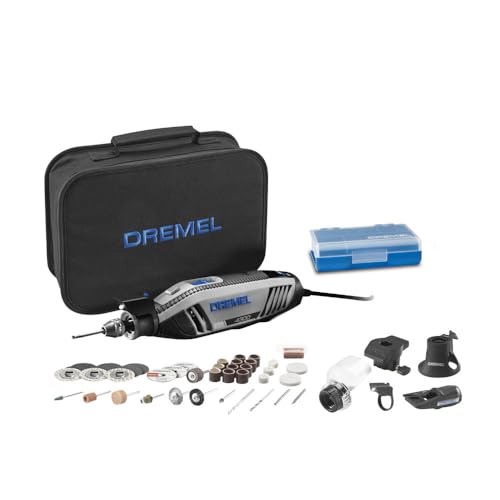
Dremel 4300-5/40
The Dremel 4300 is a professional-grade rotary tool with a powerful motor and electronic feedback for constant speed under load. Its quick-change chuck allows fast accessory swaps without a wrench.
Pros
- Constant speed under load
- Quick-change chuck
- Includes 40 accessories and storage case
Cons
- Corded design limits portability
- Pricier than similar models

Dremel 8260
The Dremel 8260 is a brushless cordless rotary tool with a 12V battery. It delivers up to 35,000 RPM and features a wireless charging system. Owners report long battery life and smooth operation.
Pros
- No cord, high mobility
- Brushless motor increases runtime
- LED light for visibility
Cons
- Battery adds weight
- Replacement batteries cost extra

Dremel 3000
The Dremel 3000 offers a variable speed range of 10,000 to 32,000 RPM and a slim ergonomic body. It is a reliable workhorse for everyday tasks, though its collet system requires a wrench for changes.
Pros
- Affordable price point
- Lightweight and comfortable
- Includes 30 accessories
Cons
- Slower max speed than 4300
- Accessory changes require wrench

Bosch PR20EVS
The Bosch PR20EVS is a compact palm router with variable speed from 8,000 to 25,000 RPM. It is ideal for edge work, but it can also be used with rotary bits. Its base is transparent for visibility.
Pros
- Excellent for precision work
- Clear base for visibility
- Soft start for smooth operation
Cons
- Not a traditional rotary tool
- Limited to routing applications

Proxxon 38481
The Proxxon 38481 is a compact rotary tool with a powerful motor and electronic speed control from 5,000 to 20,000 RPM. It is known for its low vibration and quiet operation.
Pros
- Very low vibration
- Quiet operation
- Precise speed control
Cons
- Lower top speed
- Smaller chuck capacity
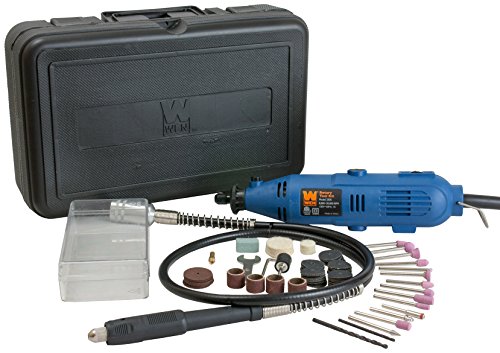
WEN 2305
The WEN 2305 offers a variable speed of 10,000 to 33,000 RPM and comes with a flexible shaft. It is a budget-friendly option that performs well for general tasks, though it lacks some premium features.
Pros
- Includes flexible shaft
- Much lower price
- Suitable for hobbyists and pros
Cons
- Less durable over time
- No quick-change chuck

DeWalt DW660
The DeWalt DW660 is a single-speed rotary tool with a powerful 6.5 Amp motor. It is designed for heavy-duty applications like grinding and cutting. It lacks speed control but offers high torque.
Pros
- Very high power
- Built to withstand abuse
- Comfortable grip
Cons
- Only one speed, not variable
- Bulky and heavy
How they stack up
| # | Model | Speed | Best for | Score | Price |
|---|---|---|---|---|---|
| 1 | Dremel 4300-5/40 | 5,000-35,000 RPM | Best overall for versatility | 9.4 | Check price |
| 2 | Dremel 8260 | 5,000-35,000 RPM | Best cordless professional | 9.2 | Check price |
| 3 | Dremel 3000 | 10,000-32,000 RPM | Best value for pros on a budget | 8.8 | Check price |
| 4 | Bosch PR20EVS | 8,000-25,000 RPM | Best for precision routing | 8.6 | Check price |
| 5 | Proxxon 38481 | 5,000-20,000 RPM | Best for fine detail work | 8.5 | Check price |
| 6 | WEN 2305 | 10,000-33,000 RPM | Best for DIY professionals | 8.2 | Check price |
| 7 | DeWalt DW660 | 30,000 RPM (fixed) | Best for heavy-duty grinding | 8.0 | Check price |
Questions worth asking
What is the difference between a rotary tool and a Dremel?
Rotary tool is a generic term; Dremel is a popular brand that makes rotary tools. Many people use the name Dremel to refer to any rotary tool.
How do I choose the right rotary tool for my projects?
Consider the power, speed range, chuck type, and whether you need cordless. Also think about the materials you will work with and the level of detail required.
Can I use a rotary tool for cutting metal?
Yes, with the right cutting discs. Ensure you use a speed suitable for metal and wear safety goggles.
What is the best RPM for rotary tools?
For most tasks, a range of 10,000 to 35,000 RPM is sufficient. Lower speeds for plastics and wood, higher speeds for metal and glass.
Are cordless rotary tools as powerful as corded ones?
Generally, corded tools have more consistent power, but modern cordless brushless motors offer comparable performance for many tasks. Battery life is a consideration.
How often should I replace the brushes in a rotary tool?
If your tool has brushes, they may need replacement after 100-200 hours of use. Cordless models with brushless motors do not require this maintenance.
Can I use a rotary tool for engraving glass?
Yes, use diamond or carbide bits at a low speed to avoid cracking. Practice on scrap glass first.
What safety precautions should I take when using a rotary tool?
Always wear safety goggles and a dust mask. Use a secure grip and avoid loose clothing. Keep the tool away from water and flammable materials.
How do I change accessories on a quick-change chuck?
Simply pull back the collar, insert the accessory, and release. For collet type, you need to loosen the collet nut with a small wrench.
Is a flexible shaft necessary for rotary tools?
It is not necessary but helpful for intricate work where you need more control and less weight in your hand.
The verdict
For most professionals, the Dremel 4300-5/40 is the best investment because of its reliability, speed control, and quick-change chuck. If you need portability, choose the Dremel 8260. For budget-conscious users, the Dremel 3000 offers excellent value without sacrificing quality.