Professional Tape Measures That Survive Jobsite Reality
For most pros, the Stanley Fatmax is the clear winner. It offers the best combination of durability, standout, and readability. Its main limitation is the weight, which some users find tiring on long vertical work.
A tape measure is the most used tool on any jobsite. Professional-grade models go beyond simple measurement; they endure drops, resist dirt, and provide clear readings in all conditions. Choosing the right one can save time and reduce errors.
In this roundup, we analyze the top contenders favored by contractors and tradespeople. We focus on standout length, blade durability, and practical features that make daily work easier. Whether you need a lightweight option for finish work or a heavy-duty tool for framing, these selections cover the spectrum.
Our top picks

Stanley Fatmax 25 ft Tape Measure
The Stanley Fatmax is a legendary workhorse. Its 11-foot standout lets you measure without support, and the impact-resistant case handles drops. The blade is coated for wear resistance, and the clear markings are easy to read. Owners report it lasts for years on tough job sites.
Pros
- Excellent standout reduces need for support
- Durable case withstands drops
- Clear, easy-to-read markings
Cons
- Heavier than some competitors
- Belt clip can loosen over time

Milwaukee 25 ft Magnetic Tape Measure
Milwaukee’s magnetic tape measure is a favorite among metal workers and HVAC pros. The magnetic hook grips steel studs and beams, freeing your hands. It features a 14-foot standout, which is exceptional. The blade is coated with nylon for protection, and the case is rubberized for a secure grip.
Pros
- Powerful magnets hold securely
- Long standout for high reach
- Comfortable grip
Cons
- Magnet can pick up metal shavings
- Hook may not fit tight corners

DeWalt 35 ft Tape Measure
When you need to measure wide spans, the DeWalt 35-foot tape delivers. It offers a 13-foot standout, which is impressive for a longer blade. The case is durable with a rubber grip, and the blade has a clear, easy-to-read scale. Ideal for construction, surveying, and other big jobs.
Pros
- Long blade covers large distances
- Solid standout for a 35-foot tape
- Durable construction
Cons
- Bulky and heavy
- Hook may be less accurate for inside measurements

Komelon Self-Lock 25 ft Tape Measure
Komelon offers professional performance at an accessible price. The self-lock mechanism holds the blade in place without a thumb lock, which is handy when you need repeated measurements. The blade is nylon-coated, and the case is impact-resistant. While not as rugged as premium options, it holds up well for light to medium duty.
Pros
- Affordable price point
- Self-lock feature is convenient
- Lightweight and easy to carry
Cons
- Shorter standout
- Case not as durable as pricier models

Lufkin Shockforce Nite Eye 25 ft Tape Measure
The Lufkin Shockforce Nite Eye features a blade with high-contrast markings and a glow-in-the-dark coating. This helps when working in dim attics or outdoor dusk. The case is armored with a shock-absorbing grip, and the blade has a 10-foot standout. It’s a solid choice for electricians and plumbers who often work in darker spaces.
Pros
- Glow markings improve low-light readability
- Shock-absorbing case
- Good standout
Cons
- Glow may fade over time
- Slightly heavier than standard tapes
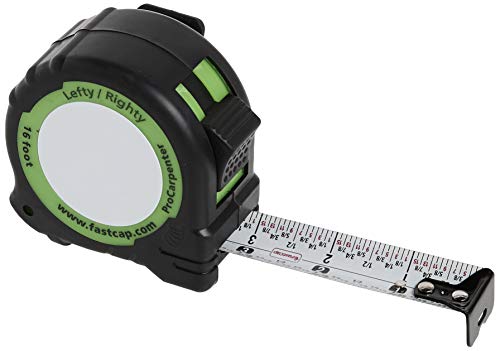
FastCap PSTRV Tape Measure 16 ft
FastCap’s tape measure is designed for woodworkers and finish carpenters. It features a patented reverse-reading blade that shows measurements from left to right, ideal for cutting. The case is compact and includes a pencil sharpener and a True-Zero hook for accurate inside measurements. The blade is 1 inch wide for stability.
Pros
- Reverse markings save time on cuts
- Compact and lightweight
- Includes pencil sharpener
Cons
- Shorter length may not suit all jobs
- Hook can be less durable than standard

Tajima G-LOC 25 ft Tape Measure
Tajima is a premium Japanese brand known for precision. The G-LOC features a comfortable grip and a smooth blade action. The blade is coated with a matte finish to reduce glare, and the hook is designed to grab on both sides. It offers a 10-foot standout and a durable case. Professionals who value accuracy and comfort often choose Tajima.
Pros
- Comfortable handle reduces fatigue
- Matte blade reduces glare
- High accuracy and precision
Cons
- Higher price point
- Hook may seem sharp for some users
The lineup, side by side
| # | Model | Blade Length | Best for | Score | Price |
|---|---|---|---|---|---|
| 1 | Stanley Fatmax 25 ft Tape Measure | 25 feet | All-around durability and standout | 9.4 | Check price |
| 2 | Milwaukee 25 ft Magnetic Tape Measure | 25 feet | Magnetic attachment on metal surfaces | 9.1 | Check price |
| 3 | DeWalt 35 ft Tape Measure | 35 feet | Long measurements on large projects | 8.9 | Check price |
| 4 | Komelon Self-Lock 25 ft Tape Measure | 25 feet | Budget-friendly value | 8.6 | Check price |
| 5 | Lufkin Shockforce Nite Eye 25 ft Tape Measure | 25 feet | High visibility in low light | 8.8 | Check price |
| 6 | FastCap PSTRV Tape Measure 16 ft | 16 feet | Finish carpentry and precision marking | 8.5 | Check price |
| 7 | Tajima G-LOC 25 ft Tape Measure | 25 feet | Precision and ergonomic comfort | 9.0 | Check price |
Before you buy
Questions worth asking
What is the best tape measure for professional use?
The Stanley Fatmax is widely regarded as the best all-around professional tape measure. It offers a balance of durability, standout, and readability that suits most trades.
How long should a professional tape measure be?
For most professionals, 25 feet is the standard. It covers most tasks without being too bulky. For large projects, 30 or 35 feet may be necessary, but those are heavier.
What does standout mean on a tape measure?
Standout is the maximum length the blade can extend before bending. A longer standout allows you to measure without support, which is essential when working alone.
Are magnetic tape measures worth it?
If you work with metal studs, steel beams, or HVAC components, a magnetic hook is extremely useful. It frees your hands and increases accuracy. For other trades, the magnet may not be essential.
How do I ensure accurate inside measurements?
Look for a tape with a True-Zero hook. The hook slides slightly to compensate for its own thickness, giving accurate measurements on both inside and outside dimensions.
What is the difference between a class 1 and class 2 tape measure?
Class 1 tapes have a lower tolerance for error, meaning they are more accurate. Class 2 tapes have a slightly higher tolerance. For most construction, class 2 is sufficient, but for precision work, class 1 is preferred.
How do I care for a tape measure to extend its life?
Keep it clean and dry. Wipe the blade with a cloth to remove debris. Avoid letting the tape snap back forcefully, as this can damage the hook and blade. Store it in a dry place.
Can I repair a broken tape measure?
Some models have replaceable blades, but most are not easily repairable. If the hook is bent or the blade is damaged, it may be more cost-effective to replace the tape.
What is the best tape measure for left-handed users?
Many tapes have markings on both sides or a blade that can be reversed. Look for a tape with a symmetrical hook and clear markings on both edges. The FastCap is popular among lefties due to its reverse-reading option.
Are expensive tape measures worth the price?
Premium tapes like Tajima or Milwaukee offer better ergonomics, durability, and accuracy. If you use a tape daily, the investment pays off in comfort and longevity. For occasional use, a mid-range tape may suffice.
Our take
For the majority of professionals, the Stanley Fatmax is the tape to buy. It delivers proven durability and performance at a reasonable cost. If you frequently work with metal, the Milwaukee magnetic model is a worthy alternative. For those who prioritize comfort and precision, the Tajima is an excellent premium choice. Skip the cheap tapes if you depend on your measuring tool every day; a reliable tape is worth the investment.


