Top Quality Fry Pans for Serious Home Cooks
The All-Clad D3 Stainless Steel Fry Pan takes the top spot for overall quality. It delivers exceptional heat control and durability, making it a favorite among serious cooks. Its main advantage is its tri-ply construction that heats evenly and resists warping. The main limitation is that it requires some skill to prevent sticking, especially with eggs.
A quality fry pan is the cornerstone of any kitchen. Whether you are searing a steak or flipping a crepe, the right pan makes all the difference. But with so many options, how do you choose?
We compared leading fry pans that are currently sold on Amazon. We looked at materials, construction, and real owner reports. Here is what we found to help you make an informed choice.
The top picks, ranked

All-Clad D3 Stainless Steel Fry Pan
This tri-ply pan has a bonded aluminum core that heats evenly and quickly. The stainless steel surface is non-reactive and can handle high oven heat. Owners report that it sears beautifully and lasts for decades. It is dishwasher safe, but hand washing is recommended to maintain its appearance.
Pros
- Even heating and excellent heat retention
- Durable stainless steel surface
- Oven safe to 600 degrees F
Cons
- Requires proper preheating to prevent sticking
- Heavier than some other pans

Zwilling J.A. Henckels Spirit Nonstick Fry Pan
This pan features a durable nonstick coating that is free of PFOA and other harmful chemicals. The aluminum body heats quickly and evenly. The ergonomic handle stays cool on the stove. Owners appreciate the effortless food release and simple hand washing.
Pros
- Excellent nonstick performance
- Lightweight and easy to handle
- PFOA-free coating
Cons
- Not for high-heat searing
- Coating may wear over time

Le Creuset Toughened Nonstick Fry Pan
Le Creuset is known for its enameled cast iron, but this fry pan showcases their nonstick expertise. It has a heavy-gauge aluminum body with a PFOA-free nonstick coating. The pan is incredibly sturdy and heats evenly. Owners love the comfortable handle and the fact that it is metal-utensil safe, a rare feature for nonstick.
Pros
- Metal utensil safe
- Very durable nonstick surface
- Heats evenly
Cons
- Not induction compatible
- Expensive

GreenPan Valencia Pro Ceramic Nonstick Fry Pan
This pan uses a ceramic nonstick coating made from sand, which is free of PFAS, PFOA, lead, and cadmium. The hard-anodized body provides excellent heat distribution. The coating is surprisingly durable and can withstand higher temperatures than typical nonstick. Owners report that it performs well and is easy to clean.
Pros
- Free of harmful chemicals
- Withstands high heat
- Induction compatible
Cons
- Coating may degrade faster than traditional nonstick
- Not as slick as traditional nonstick

Made In Blue Carbon Steel Fry Pan
Carbon steel is favored by professional chefs for its ability to achieve a natural nonstick surface when seasoned. This pan is lightweight yet durable, and it can handle very high temperatures. It is excellent for searing and oven use. Owners note that it requires regular seasoning to maintain its performance.
Pros
- Extremely high heat tolerance
- Develops natural nonstick over time
- Lightweight for its durability
Cons
- Requires seasoning and maintenance
- Not dishwasher safe
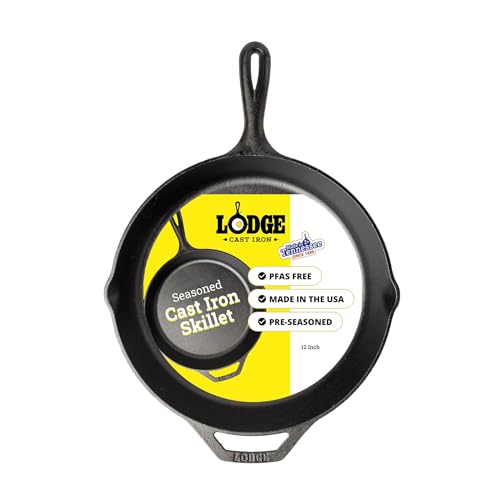
Lodge Cast Iron Skillet
Cast iron is the original fry pan and remains a favorite for its superior heat retention and ability to go from stovetop to oven. This pre-seasoned skillet is versatile and can be used for frying, baking, and even grilling. Owners report that it improves with age and can last a lifetime.
Pros
- Exceptional heat retention
- Naturally nonstick when seasoned
- Very affordable
Cons
- Heavy and requires strength to handle
- Requires careful maintenance to prevent rust

Scanpan Classic Induction Fry Pan
This Danish-made pan features a unique nonstick coating that is reinforced with titanium, making it exceptionally scratch-resistant. The aluminum core ensures fast and even heating. It is safe to use with metal utensils and is oven safe. Owners appreciate its robustness and long-lasting nonstick performance.
Pros
- Highly scratch-resistant
- Metal utensil safe
- Oven safe to 500 degrees F
Cons
- Heavier than some nonstick pans
- Hand washing recommended
How to choose
How they compare
| # | Model | Material | Best for | Score | Price |
|---|---|---|---|---|---|
| 1 | All-Clad D3 Stainless Steel Fry Pan | Stainless steel with aluminum core | Professional-grade searing and versatility | 9.4 | Check price |
| 2 | Zwilling J.A. Henckels Spirit Nonstick Fry Pan | Aluminum with nonstick coating | Low-fat cooking and easy cleanup | 9.2 | Check price |
| 3 | Le Creuset Toughened Nonstick Fry Pan | Aluminum with reinforced nonstick | Everyday cooking with a premium feel | 9.0 | Check price |
| 4 | GreenPan Valencia Pro Ceramic Nonstick Fry Pan | Hard-anodized aluminum with ceramic coating | Eco-friendly nonstick cooking | 8.8 | Check price |
| 5 | Made In Blue Carbon Steel Fry Pan | Carbon steel | High-heat cooking and natural nonstick | 8.7 | Check price |
| 6 | Lodge Cast Iron Skillet | Cast iron | Rustic cooking and heat retention | 8.6 | Check price |
| 7 | Scanpan Classic Induction Fry Pan | Aluminum with titanium-reinforced nonstick | Durability and scratch resistance | 8.5 | Check price |
Frequently asked questions
What is the best material for a fry pan?
The best material depends on your cooking style. For searing and oven use, stainless steel or cast iron are great. For everyday cooking with easy cleanup, nonstick is convenient. Carbon steel offers a balance between weight and performance.
Is a nonstick fry pan safe to use?
Modern nonstick pans are safe when used correctly. Avoid overheating them above 500 degrees F, as some coatings can break down. Look for PFOA-free and PFAS-free coatings for added peace of mind.
How do I season a cast iron or carbon steel pan?
Seasoning involves applying a thin layer of oil to the pan and heating it until the oil polymerizes. This creates a natural nonstick surface. Repeat this process several times for best results, and maintain it by oiling after each use.
Can I use metal utensils on any fry pan?
Only use metal utensils on pans that are specifically marked as metal-utensil safe, like the Scanpan or Le Creuset Toughened Nonstick. On standard nonstick, metal utensils can scratch the coating.
What size fry pan should I buy?
For most households, a 10-inch fry pan is versatile for cooking for one or two people. If you often cook for a family, consider a 12-inch pan. Smaller 8-inch pans are good for eggs and omelets.
Are fry pans oven safe?
Many fry pans are oven safe up to a certain temperature. Check the manufacturer’s specifications. Stainless steel and cast iron can typically handle high heat, while nonstick pans often have a lower limit around 400-500 degrees F.
Why does food stick to my stainless steel pan?
Food sticks to stainless steel if the pan is not hot enough or if you do not use enough oil. Preheat the pan for a few minutes, then add oil and wait until it shimmers before adding food. This creates a nonstick effect.
How do I clean a fry pan properly?
Let the pan cool before washing. Use warm soapy water and a soft sponge for nonstick and stainless steel. For cast iron, avoid soap and instead scrub with hot water and a stiff brush, then dry and oil. Always dry pans thoroughly to prevent rust.
Final word
For most home cooks, the All-Clad D3 Stainless Steel Fry Pan is the best investment because it offers unmatched durability and performance that will last for years. If you prefer nonstick convenience, the Zwilling Spirit is a top choice for its reliable coating and ease of use. For those who want a pan that can handle high-heat searing and develop a natural nonstick surface, the Made In Blue Carbon Steel is a fantastic option. Choose the one that fits your cooking habits and you will not be disappointed.


