Quilting Fabric Guide: Precuts, Yardage and Weave
Robert Kaufman Kona Cotton Solids ranks highest overall, valued for a tight 68 square weave and over 300 solid shades. AK-Trading Fat Quarter Bundles fit tight budgets with broad print variety. Moda Jelly Roll strips suit strip piecing best. The comparison weighed fiber content, weave density, cut size and precut format across seven lines.
Robert Kaufman Kona Cotton Solids tops this comparison for its tight 68 square weave and library of over 300 solid shades. Piecers building color-blocked quilts or precise sashing benefit most from its flat, consistent hand. Print lovers should look elsewhere, since the line skips patterns entirely.
Precut formats, thread counts and fiber blends make quilting fabric confusing to compare from photos alone. We weighed cut size, weave density, fiber content and owner feedback on shrinkage and fraying across seven widely stocked lines, then sorted overall picks from niche-use options.
How to pick the right one
How quilting fabric is sold Four formats cover most quilting cotton listings: continuous yardage, fat quarters, jelly rolls and charm packs. Yardage gets cut to order by the yard, useful for backing or single-fabric projects. Fat quarters measure roughly 18 by 21 inches, giving more usable width than a quarter yard cut from the bolt. Jelly rolls bundle 2.5 inch strips, while charm packs bundle 5 inch squares, both pulled from one coordinated collection.
Fiber content and weave density explained Nearly all quilting-weight cotton runs 100% cotton at 44 to 45 inches wide. Weave density, measured in threads per square inch, spans about 68 square on standard lines up to 78 square or higher on premium solids like Century Solids. Denser weaves resist fraying and hold crisper points, though they can shrink slightly more, so a test swatch before cutting helps. Batik fabric uses a separate hand-dyed process that produces an even tighter cloth.
Matching precut format to a project Rail fence and string quilts move faster with a jelly roll’s precut 2.5 inch strips. Postage-stamp layouts and quilt-alongs suit a charm pack’s 5 inch squares better, since no initial cutting is needed. Larger blocks, applique or sashing usually call for fat quarters or yardage instead, because precut pieces cap the maximum finished block size.
Choosing fabric for specific techniques or budgets Dense batik weave holds up best under fusible applique, resisting fraying at small cut edges. Color-blocked or ombre-style quilts benefit from a solids line with a wide tonal range, like Kona Cotton or Century Solids. Stretching a budget across a large quilt often means mixing a value fat quarter assortment for scrap blocks with plain yardage for backing.
The best picks, ranked

Robert Kaufman Kona Cotton Solids Bundle
Kona Cotton is a solid quilting-weight cotton woven at 68 threads per square inch, tight enough to hold crisp seams and sharp points. Color options exceed 300 solid shades, so matching or blending tones rarely requires switching brands. Listings ship as fat quarters or precut squares depending on the bundle chosen.
Pros
- Over 300 solid shades in a single line
- 68 square weave resists fraying at seam allowances
- Consistent hand across every color
Cons
- Solids only, no printed patterns available
- Fat quarter cuts limit single-block yardage

AK-Trading 100% Cotton Fat Quarter Bundle
AK-Trading bundles assorted 18 by 22 inch fat quarters in packs of 25 or 40 pieces. Florals, tonals and novelty prints mix together instead of one designer collection. Scrap quilts and practice blocks benefit most, according to owner feedback, since matching yardage is not sold separately.
Pros
- Large piece count lowers cost per fat quarter
- Wide color and print mix in one purchase
- Fits scrap quilts and sampler blocks well
Cons
- Prints skip a single coordinated collection
- Print placement varies piece to piece
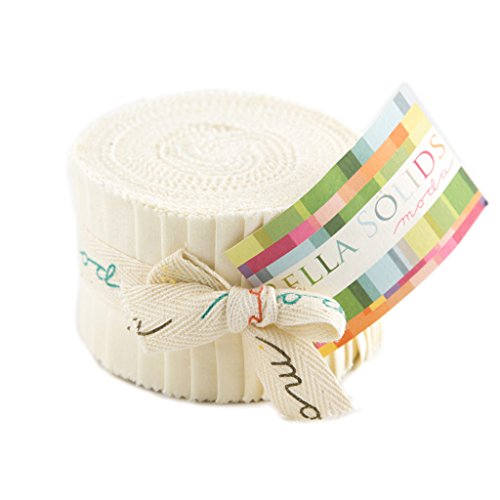
Moda Fabrics Jelly Roll (2.5 inch Strip Bundle)
Forty strips, each 2.5 inches wide by the fabric width, make up a Moda Jelly Roll from one coordinated designer collection. Rolled packaging means strips need pressing flat before cutting begins. Standard strip width across the whole line speeds up rail fence and strip-pieced patterns.
Pros
- Coordinated prints skip color-matching guesswork
- 2.5 inch width fits strip-piecing patterns directly
- Selvage-to-selvage cuts reduce leftover waste
Cons
- Rolled packaging leaves crease lines needing a press
- Narrow strips limit large applique or block centers

Riley Blake Designs Charm Pack (5 inch Squares)
Forty-two squares, cut to 5 by 5 inches, ship in a Riley Blake Charm Pack from one collection mixing prints and coordinating solids. New quilters skip the initial cutting step entirely with this square format. Since collections rotate seasonally, matching background yardage for borders often needs a separate purchase.
Pros
- Precut squares skip measuring for new sewists
- Compact size suits travel projects and quilt-alongs
- Coordinated collection simplifies layout planning
Cons
- 5 inch squares cap finished block size
- Backing and border yardage sold separately

Timeless Treasures Cotton Fabric by the Yard
Continuous yardage, not a fixed precut bundle, is how Timeless Treasures sells its quilting cotton, so buyers cut exactly what a pattern calls for. Tonal blenders, novelty prints and holiday themes fill the catalog at 44/45 inch width. Backing, borders and single-fabric projects are the most common uses owners report.
Pros
- Buy only the exact yardage a project needs
- Wide catalog of tonal and novelty prints
- Works well for backing and border fabric
Cons
- No bundled color coordination included
- Dye lot can shift slightly between separate orders

Andover Fabrics Century Solids Fat Quarter Bundle
Century Solids weaves at 78 threads per inch, denser than the roughly 68 count typical of standard quilting cotton. Warm and cool tones span the tonal palette, built for shading within a single quilt top. Bundles ship in sets of 24 to 40 fat quarters depending on the listing.
Pros
- 78 square weave gives a smoother, denser hand
- Tonal range supports shading and gradient designs
- Fat quarter format suits small-scale piecing
Cons
- Solid-only line skips printed pattern options
- Higher thread count benefits from prewashing to control shrinkage

Hoffman Fabrics Bali Batiks Fat Quarter Bundle
A dense, hand-dyed weave gives Bali Batiks resistance to fraying at cut edges, useful for fusible applique. Mottled coloring reads as texture rather than a directional print, so blocks piece together without matching a repeat. Curated colorway groupings ship as fat quarter bundles.
Pros
- Dense weave resists fraying during fusible applique
- Mottled hand-dyed look skips directional repeat matching
- Tight weave holds crisp edges on small applique pieces
Cons
- Costs more per yard than printed quilting cottons
- Color can vary between dye lots on reorders
The lineup, side by side
| # | Model | Fiber content | Best for | Score | Price |
|---|---|---|---|---|---|
| 1 | Robert Kaufman Kona Cotton Solids Bundle | 100% cotton | Best overall | 9.4 | Check price |
| 2 | AK-Trading 100% Cotton Fat Quarter Bundle | 100% cotton | Best value | 9.1 | Check price |
| 3 | Moda Fabrics Jelly Roll (2.5 inch Strip Bundle) | 100% cotton | Best for strip piecing | 8.8 | Check price |
| 4 | Riley Blake Designs Charm Pack (5 inch Squares) | 100% cotton | Best for beginners | 8.5 | Check price |
| 5 | Timeless Treasures Cotton Fabric by the Yard | 100% cotton | Best budget | 8.3 | Check price |
| 6 | Andover Fabrics Century Solids Fat Quarter Bundle | 100% cotton | Best for color blending | 8.1 | Check price |
| 7 | Hoffman Fabrics Bali Batiks Fat Quarter Bundle | 100% cotton | Best for batik and applique projects | 8.0 | Check price |
Common questions
What is the difference between fat quarters and quarter yards?
A fat quarter is cut 18 by 21 inches from a half yard, while a quarter yard is cut 9 by 44 inches straight off the bolt. Cutting squares or blocks from a single piece gets easier with the fat quarter’s wider shape.
Which quilting fabric is best for beginners?
Charm packs suit new quilters well, since 5 inch squares arrive precut and color-coordinated already. Riley Blake Charm Packs skip the initial measuring and cutting step, so a first quilt can focus on piecing technique.
Can quilting cotton be used for garments?
Structured garments like shirts or aprons work fine with quilting-weight cotton, though it feels stiffer than apparel-weight cotton. Shape holds well thanks to the tighter weave, but drape falls short of lighter cotton lawn or voile.
How much fabric do you need for a queen size quilt?
A queen quilt top, roughly 90 by 90 inches, generally needs about 8 to 9 yards of assorted quilting cotton for the top alone. Backing yardage gets calculated separately, and exact amounts shift with block size and layout.
Is Kona Cotton better than Moda fabric for piecing?
Solid colors and a consistent 68 square weave define Kona Cotton, while Moda’s collections center on coordinated prints sold as yardage or precuts like jelly rolls. Whether a project needs solids or printed pattern coordination decides which fits better.
What thread count matters for quilting fabric?
Standard quilting cotton runs about 68 threads per square inch, while premium solids lines like Century Solids reach 78 square. A denser, smoother hand comes with higher counts, though basic piecing does not require it.
Do you need to prewash quilting fabric before cutting?
Prewashing strips sizing and preshrinks fabric, mattering most on denser weaves or batiks that shrink more than average. Many piecers skip prewashing standard quilting cotton and square up the quilt after it is finished instead.
What is the difference between a jelly roll and a charm pack?
2.5 inch wide strips cut the width of the fabric make up a jelly roll, suited to strip piecing. Charm packs bundle 5 inch squares instead, suited to patchwork squares and postage-stamp layouts.
What is the best quilting fabric for scrap quilts?
AK-Trading’s Fat Quarter Bundle works well for scrap quilts, since 25 or 40 mixed prints arrive in one purchase without a single coordinated collection. Buyers stretching a tight budget across many blocks get more variety per dollar this way.
Our pick
Robert Kaufman Kona Cotton Solids stays the strongest overall pick for a dependable solid with a wide color range and tight weave. Scrap quilt builders on a budget should choose AK-Trading’s Fat Quarter Bundle instead, since its per-piece cost beats a curated designer line. Fusible applique projects call for Hoffman’s Bali Batiks over either, thanks to its fray-resistant, dense weave.