Which RC Drone Is Right for a First Time Flyer?
The Holy Stone HS210 is our top pick because altitude hold and full prop guards make first flights forgiving. The Potensic A20 is the gentlest starter for younger children, and the Ryze Tello is the best choice once a child is ready to learn real flying.
The Holy Stone HS210 is the drone we would put in most children’s hands first, because altitude hold does the hardest part of flying for them and full prop guards survive the inevitable wall. Younger children do better with the slower Potensic A20, and the Ryze Tello is the step up for a child who has stopped crashing and wants to actually learn to fly.
Buying a first drone is difficult because the listings lead with camera resolution, which is close to irrelevant for a beginner, and bury the features that decide whether the drone is fun or frustrating. Altitude hold, one key takeoff, prop guards and the number of batteries in the box matter far more. We compared seven widely available models on safety design, flight time, control assistance and what parents report about durability after a few weeks of crashes.
Before you buy
Altitude hold is the feature that makes a drone flyable Without it, a beginner has to manage throttle constantly while also steering, and the result is a drone that shoots into the ceiling or drops onto the floor within seconds. Altitude hold uses a barometric or vision sensor to maintain height automatically, leaving the child only to steer. Every drone we would recommend for a beginner has it, and the difference between a drone with it and one without is the difference between a toy that gets used and one that sits in a cupboard.
Guards and weight matter more than camera resolution First flights end in collisions, so full prop guards are not optional. They protect the drone, the furniture and small fingers. Light weight also helps, since a very light drone does far less damage when it hits something and is less likely to hurt anyone. Camera quality on drones in this class is modest regardless of the number printed on the box, so treat a camera as a bonus rather than a deciding factor.
Count the batteries, because flight time is short Most small drones fly for five to ten minutes on a charge and then need thirty to ninety minutes to recharge. A drone with one battery gives a child a very short experience followed by a long wait, which is a reliable way to kill enthusiasm. Models that include two or three packs, such as the Holy Stone HS210 and SNAPTAIN SP350, effectively triple the useful session. Extra batteries are cheap and worth buying alongside.
Know the rules before flying outdoors Registration requirements depend on the drone’s weight and where you live. In the United States, drones below 250 grams flown recreationally are generally exempt from registration, which covers most of the models here, but rules change and local restrictions still apply near airports, over people and in national parks. An adult should always supervise outdoor flights, and a calm day makes the difference between a good first experience and a drone in a tree.
What we recommend
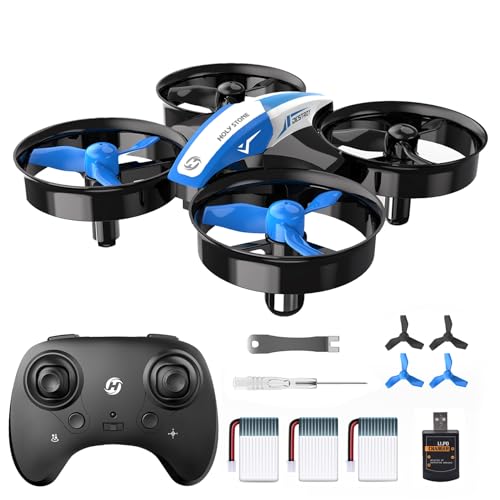
Holy Stone HS210 Mini Drone
The HS210 gets the beginner formula right: altitude hold keeps it at a steady height so a child only has to steer, headless mode removes the confusion of which way the drone is facing, and one key takeoff and landing handles the two hardest moments. Three batteries in the box turn a five minute novelty into a proper session. Parents report it survives repeated indoor crashes thanks to full prop guards and a light frame.
Pros
- Three batteries give a real session length
- Altitude hold makes it easy to control
- Full guards survive indoor crashes
Cons
- No camera on this model
- Too light for anything but very calm outdoor air

Potensic A20 Mini Drone
The A20 is deliberately gentle at its lowest speed setting, which is the right characteristic for a five or six year old who is still learning that the sticks are proportional. Altitude hold, headless mode and one key takeoff all feature, and the whole airframe is small and light enough that a collision does no damage. Parents report it is the least intimidating drone here, and that the higher speed settings keep it interesting as skills improve.
Pros
- Slowest speed setting suits very young pilots
- Grows with the child through three speeds
- Small and light enough for indoor use
Cons
- Short flight time per battery
- Very susceptible to any breeze outdoors

Ryze Tello (Powered by DJI)
The Tello uses DJI flight control technology, which means it holds position with vision positioning far more steadily than any toy drone and behaves predictably in the air. It streams video to a phone, supports simple programming through Scratch, and is genuinely educational rather than just entertaining. Parents report it is the drone a child keeps using after the novelty of others wears off, and note that flying it well takes more attention than a basic toy.
Pros
- Far more stable than toy grade drones
- Longest flight time in this group
- Programmable, so it teaches as well as entertains
Cons
- Requires a phone to use the camera features
- Prop guards are sold separately

DEERC D20 Mini Drone
The D20 adds a camera with live streaming to a phone while keeping the beginner assists that matter, so a child can fly and take video without needing two separate drones. It includes two batteries, gesture controlled photos and trick flips that keep younger pilots entertained. Parents report the camera quality is modest, which is what to expect at this size, and that the guards handle indoor collisions well.
Pros
- Camera and streaming at a low price
- Two batteries in the box
- Trick flips keep interest up
Cons
- Camera quality is basic
- Streaming range is short

SNAPTAIN SP350 Drone
The SP350 is slightly larger and heavier than the pocket sized minis, which makes it more composed in light outdoor air where the tiniest drones simply blow away. It ships with three batteries, prop guards and a set of assist features including altitude hold and circle fly. Parents report it is a reasonable step between indoor toys and serious drones, though like all drones in this class it should stay grounded on a windy day.
Pros
- More stable outdoors than pocket minis
- Three batteries for longer sessions
- Good range of automatic flight modes
Cons
- Too large to fly comfortably indoors
- Still grounded by moderate wind

Syma X20 Pocket Drone
Syma has been making entry level drones for years and the X20 is one of the simplest, a genuinely pocket sized quadcopter with altitude hold, one key takeoff and enclosed motors. Its size means it is best suited to indoor flying in a living room or hallway. Parents report it is a very cheap way to find out whether a child enjoys flying, with the honest caveat that flight time is short and it is not built for outdoor conditions.
Pros
- Cheapest way to test the interest
- Truly pocket sized for travel
- Simple controls with few settings
Cons
- Very short flight time
- Indoor use only in practice
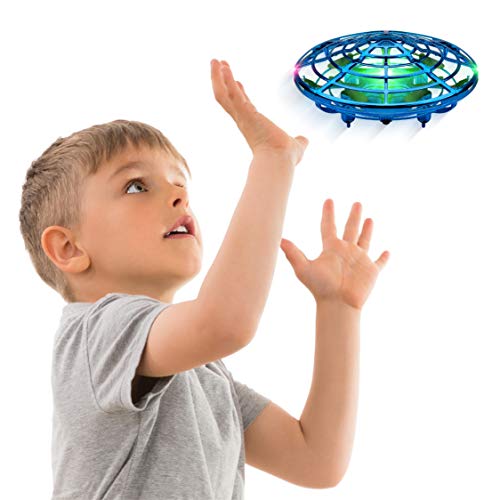
Force1 Scoot Hand Operated Drone
The Scoot removes the controller entirely, flying on infrared sensors that respond to hands beneath and around it, so a very young child can play without any stick skills at all. The full cage around the props means fingers and furniture are safe. Parents report it is the easiest option for preschoolers and a good stepping stone, while noting it is a toy rather than a drone a child will learn piloting from.
Pros
- No controller skills needed at all
- Full cage protects fingers and furniture
- Very quick to charge and restart
Cons
- Not a drone for learning to pilot
- Indoor only and easily confused by bright light
Side by side
| # | Model | Flight time | Best for | Score | Price |
|---|---|---|---|---|---|
| 1 | Holy Stone HS210 Mini Drone | Around 7 minutes per battery | Best overall | 9.4 | Check price |
| 2 | Potensic A20 Mini Drone | Around 5 to 6 minutes per battery | Best for young children | 9.2 | Check price |
| 3 | Ryze Tello (Powered by DJI) | Around 13 minutes per battery | Best for learning to fly | 9.0 | Check price |
| 4 | DEERC D20 Mini Drone | Around 10 minutes total across batteries | Best with a camera | 8.8 | Check price |
| 5 | SNAPTAIN SP350 Drone | Around 7 to 8 minutes per battery | Best for outdoor play | 8.6 | Check price |
| 6 | Syma X20 Pocket Drone | Around 5 minutes per battery | Best budget | 8.3 | Check price |
| 7 | Force1 Scoot Hand Operated Drone | Hand motion via infrared sensors | Best for the youngest kids | 8.0 | Check price |
Frequently asked questions
What age is right for a first drone?
Hand controlled toys like the Force1 Scoot suit children from around four with supervision. Simple altitude hold drones such as the Potensic A20 work well from about six. More capable models like the Ryze Tello suit older children of roughly ten and up who are ready to learn genuine flight control.
Do kids drones need to be registered?
In the United States, recreational drones weighing under 250 grams generally do not require registration, and most beginner drones fall well below that. Rules differ by country and change over time, so check your national aviation authority before flying outdoors, and be aware that airspace restrictions apply regardless of weight.
How long do these drones fly on a charge?
Typically five to ten minutes for small toy drones, with the Ryze Tello reaching around thirteen. Recharging usually takes between thirty and ninety minutes. This is why the number of included batteries matters so much for keeping a child engaged.
Can these drones be flown outside?
Small light drones are strongly affected by wind and are really designed for indoor or very calm outdoor conditions. Slightly larger models like the SNAPTAIN SP350 cope better in light air. Anything more than a gentle breeze will carry a beginner drone away, so calm days and open spaces are the rule.
What is headless mode?
Normally a drone’s controls are relative to the front of the aircraft, so once it turns around the steering feels reversed. Headless mode makes the controls relative to the pilot instead, so pushing forward always moves the drone away from you. It removes the single most confusing part of learning to fly.
Are the cameras on kids drones any good?
They are modest. A 720p camera on a small drone with no gimbal produces shaky footage that is fun to watch but not much more. Treat it as an entertaining extra rather than a reason to choose one drone over another, and prioritise flight assistance and battery count instead.
What happens when a propeller breaks?
Propellers are consumable and most drones ship with spares, since they are the part that breaks first. Replacements are inexpensive and clip or screw on in seconds. Checking that spare props are available for a specific model before buying is worthwhile, as some cheaper brands have limited parts support.
Is a drone with a controller better than a hand controlled one?
For learning to fly, yes. Controller based drones teach the stick skills that transfer to more capable aircraft later. Hand controlled toys like the Scoot are better for very young children who simply want something fun and safe, and are best seen as a stepping stone rather than a first step in piloting.
The bottom line
The Holy Stone HS210 is the drone we would buy for most children, because three batteries, altitude hold and full prop guards cover everything a beginner needs and nothing they do not. For a younger child, the slower Potensic A20 is less intimidating and just as forgiving. Once a child can fly confidently, the Ryze Tello is the natural next step and the only drone here that will keep teaching them something.