Top Rechargeable Thermal Cameras for Pros and DIYers
The FLIR One Edge Pro is our top pick for most people because it pairs with your smartphone, offers a solid 160 x 120 resolution, and has a built-in rechargeable battery. Its main advantage is the wireless connection that lets you inspect tight spots without touching the phone. The main limitation is that it requires a smartphone, so it is not a standalone device.
Thermal cameras have become essential tools for electricians, home inspectors, and DIY enthusiasts. They reveal hidden heat patterns, moisture issues, and electrical faults that are invisible to the naked eye.
Rechargeable models eliminate the hassle of constantly buying batteries. They offer convenience and sustainability, making them ideal for regular use. This guide compares top models to help you find the right one for your work or hobbies.
Our top picks
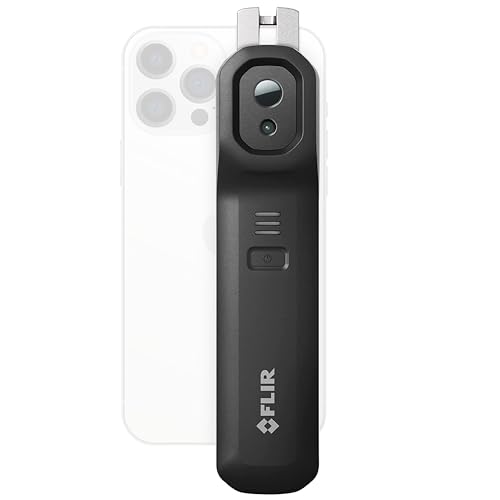
FLIR One Edge Pro
The FLIR One Edge Pro connects wirelessly to your phone, giving you flexibility to place it away from the device. It captures 160 x 120 thermal resolution with MSX blending for sharper images. The camera is rugged with an IP54 rating and has a built-in rechargeable battery that lasts up to 4 hours of continuous use.
Pros
- Wireless design allows remote positioning
- MSX image blending improves detail
- Rugged build with IP54 rating
Cons
- Requires a smartphone for operation
- Limited to iOS and Android

HTI HT-18
The HTI HT-18 is a standalone thermal camera with a 2.4-inch TFT screen. It offers a thermal resolution of 80 x 60, which is lower but sufficient for basic inspections. The built-in rechargeable battery provides up to 6 hours of use. It includes a micro SD slot for image storage and a USB charging port.
Pros
- Affordable price point
- Long battery life
- Standalone operation
Cons
- Lower thermal resolution
- Limited measurement features

FLIR C5
The FLIR C5 is a pocket-sized thermal camera with a 3.5-inch touchscreen. It delivers 160 x 120 resolution and features FLIR’s patented MSX technology for enhanced detail. The camera is built to withstand drops and has an IP54 rating. Its rechargeable battery lasts up to 4 hours and charges via USB-C.
Pros
- High image quality with MSX
- Durable and portable design
- Large touchscreen for easy navigation
Cons
- Higher price than entry-level models
- No interchangeable lenses

Seek Thermal CompactPRO
The Seek Thermal CompactPRO is a smartphone-attached thermal camera with a 320 x 240 thermal resolution, which is higher than many competitors. It plugs directly into your phone’s USB-C or Lightning port and uses the Seek app for viewing and analysis. The camera has a wide field of view and a temperature range up to 626°F.
Pros
- High resolution for the price
- Compact and portable
- Easy app integration
Cons
- Drains phone battery
- No standalone operation

UNI-T UTi260B
The UNI-T UTi260B combines a thermal camera with a 2-megapixel visible light camera for picture-in-picture mode. It features a 256 x 192 thermal resolution, delivering sharper images. The 3.5-inch LCD screen rotates for comfortable viewing. Its rechargeable battery lasts up to 8 hours and includes a fast-charging feature.
Pros
- Dual camera for better context
- High temperature range
- Long battery life
Cons
- Heavier than pocket models
- Software can be clunky

PerfectPrime IR0005
The PerfectPrime IR0005 is a standalone thermal camera with a 2.4-inch display and a thermal resolution of 220 x 160. It offers multiple palettes and a laser pointer for precise targeting. The rechargeable battery provides up to 5 hours of operation. It also includes a micro SD slot for saving images and videos.
Pros
- Laser pointer for accuracy
- Multiple color palettes
- Video recording capability
Cons
- Screen is small
- No Wi-Fi connectivity

FLIR TG267
The FLIR TG267 is a thermal camera with a built-in flashlight and laser targeting. It has a thermal resolution of 160 x 120 and a bright LED torch for illuminating dark areas. The camera is designed for electrical inspections and features a large 2.4-inch display. Its rechargeable battery lasts up to 5 hours and charges via USB-C.
Pros
- Built-in flashlight for dark areas
- Laser pointer for spot measurement
- Sturdy design
Cons
- No touchscreen
- Lower resolution than some rivals
How they stack up
| # | Model | Thermal Resolution | Best for | Score | Price |
|---|---|---|---|---|---|
| 1 | FLIR One Edge Pro | 160 x 120 | Smartphone users who want a portable thermal camera | 9.4 | Check price |
| 2 | HTI HT-18 | 80 x 60 | Budget-conscious users needing a standalone unit | 8.7 | Check price |
| 3 | FLIR C5 | 160 x 120 | Professionals who need a compact, high-quality camera | 9.1 | Check price |
| 4 | Seek Thermal CompactPRO | 320 x 240 | Smartphone users who want high resolution on a budget | 8.9 | Check price |
| 5 | UNI-T UTi260B | 256 x 192 | HVAC and electrical professionals who need a visible camera | 8.8 | Check price |
| 6 | PerfectPrime IR0005 | 220 x 160 | Home inspectors who need a robust, all-in-one tool | 8.5 | Check price |
| 7 | FLIR TG267 | 160 x 120 | Electricians who need a thermal camera with a flashlight | 8.2 | Check price |
What to look for
Good to know
What is the difference between thermal resolution and visible resolution?
Thermal resolution refers to the number of pixels in the thermal sensor, like 160 x 120. Higher thermal resolution provides more detail in temperature differences. Visible resolution is for the regular camera used for reference images.
Can a thermal camera see through walls?
No, thermal cameras detect surface temperatures, not what is behind walls. They can reveal temperature differences on the surface that may indicate insulation gaps, moisture, or electrical issues.
How accurate are rechargeable thermal cameras?
Most consumer thermal cameras have an accuracy of plus or minus 2 degrees Celsius or 2 percent of the reading. Higher-end models may offer better accuracy. Always calibrate the camera to the ambient temperature for best results.
What is the best thermal resolution for home use?
For most home inspections, a resolution of 160 x 120 is sufficient to detect moisture and insulation issues. If you need more detail, consider 256 x 192 or higher, but they are more expensive.
Do thermal cameras work in the dark?
Yes, thermal cameras do not need visible light. They detect infrared radiation emitted by objects, so they work in complete darkness.
Can I use a thermal camera to detect electrical faults?
Yes, thermal cameras are commonly used to identify overloaded circuits, loose connections, and overheating components. Look for hot spots on breakers, wires, and motors.
How long does it take to charge a rechargeable thermal camera?
Charging times vary. Many models take 2 to 4 hours for a full charge. Some support quick charging, which can reach 80 percent in about an hour.
Are smartphone thermal cameras as good as standalone models?
Smartphone thermal cameras are more portable and often cheaper, but they rely on your phone’s battery and processing power. Standalone models have dedicated screens and longer battery life, making them more suitable for professional use.
Our pick
For most users, the FLIR One Edge Pro offers the best blend of portability, image quality, and ease of use. If you prefer a standalone device and have a tighter budget, the HTI HT-18 is a reliable choice. Professionals who need high-resolution imaging should invest in the FLIR C5 or UNI-T UTi260B.