Spill-Resistant Water Bowls for Reptile Travel Carriers
Zoo Med ReptiRamp Bowl suits reptiles that need a low-slope entry point rather than climbing over a tall rim. Exo Terra Water Dish Small packs flat into tight carrier space. Mr. Peanut’s Collapsible Silicone Bowl folds to half an inch thick for short trips.
Zoo Med ReptiRamp Bowl works best for reptiles that struggle to climb into deep dishes, thanks to a textured ramp that resists slipping in transit. It does not collapse for storage, so owners with minimal carrier space may prefer a folding option instead.
Travel carriers rarely fit a full-size enclosure bowl, and spills soak bedding fast, so we compared collapsibility, tip resistance, and material safety across bowls marketed for reptile transport and short-term housing.
How to pick the right one
What to look for in a travel water bowl Capacity should match trip length, since a small dish needs refilling more often on long drives. Material affects durability, and resin or silicone outlasts thin plastic under chewing or scratching. A low profile reduces spill risk when a carrier shifts during transport.
Collapsible versus rigid bowls Collapsible silicone bowls like the Mr. Peanut’s model save carrier space but tip more easily on bumpy rides. Rigid resin dishes such as the Zoo Med Repti Rock hold their shape and resist tipping, though they take up more room. Short trips favor collapsible designs, while multi-day travel favors a stable rigid bowl.
Matching bowl shape to species Amphibians and small geckos need shallow, wide dishes for easy entry, which is why the Fluker’s Repta Bowl works well. Bearded dragons and larger lizards benefit from a stable wide base like the Zoo Med Repti Rock. Turtles need reinforced rims that resist claw scratching, and the Exo Terra Turtle Bowl provides that.
Reducing spills during transport Keeping bowl height under 1.5 inches cuts down on splashing when a carrier moves suddenly. Wedging the bowl into a carrier corner limits sliding during the trip. Filling it only two-thirds full leaves room for movement without overflow.
What we recommend

Zoo Med ReptiRamp Bowl
A shallow ramp leads into the water area, helping smaller reptiles and amphibians enter without climbing a tall rim. Textured ramp surface resists slipping during transit. Durable resin construction holds up against scratching claws.
Pros
- Ramp helps small or weak climbers
- Textured surface resists slipping
- Easy to clean between trips
Cons
- Not collapsible for storage
- Rigid shape takes up carrier space

Exo Terra Water Dish Small
This dish sits flat and low, cutting tip-over risk during car rides. Rounded edges protect snouts and claws inside a moving carrier. Its neutral color blends into most enclosure setups once travel ends.
Pros
- Low profile reduces tipping
- Rounded edges are gentle on skin
- Fits small travel carriers easily
Cons
- Small capacity needs frequent refilling
- No lid to block splashing

Mr. Peanut’s Collapsible Silicone Bowl
Folding down to about half an inch thick, this bowl fits a side carrier pocket when empty. Food-grade silicone resists cracking under chewing from larger lizards. Popping it open takes seconds at a rest stop.
Pros
- Folds nearly flat for storage
- Chew-resistant silicone material
- Quick to set up during stops
Cons
- Softer sides tip more easily
- Not ideal for reptiles that dig
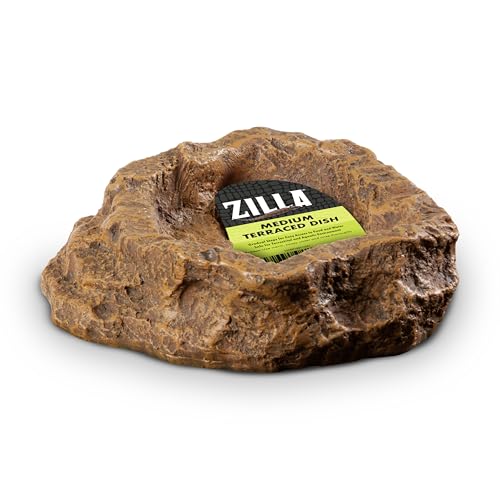
Zilla Reptile Water Dish Small
Sized for hatchlings and small geckos, this basic plastic dish suits short trips well. Lightweight construction keeps overall carrier weight down. Its simple shape wipes clean without special tools.
Pros
- Very lightweight for carriers
- Low price for occasional trips
- Simple to clean quickly
Cons
- Small capacity limits use for larger reptiles
- Plastic can crack over time

Zoo Med Repti Rock Water Dish Medium
Rock-textured resin gives this dish a wide, stable base that resists tipping when a bearded dragon climbs in. A natural finish disguises the bowl inside temporary travel enclosures. Sixteen ounces of capacity outlasts compact travel dishes on longer trips.
Pros
- Wide base resists tipping
- Larger capacity for bigger reptiles
- Natural look blends with decor
Cons
- Takes up more carrier space
- Heavier than plastic travel dishes

Fluker’s Repta Bowl Small
Shallow and wide, this dish gives amphibians enough surface area for soaking without deep water. A wide rim eases entry for frogs and small turtles. Smooth interior surfaces avoid scraping delicate skin.
Pros
- Wide shallow shape suits soaking
- Easy entry for amphibians
- Smooth surface protects skin
Cons
- Shallow depth unsuited for deep-water species
- Lighter weight tips more in transit

Exo Terra Turtle Bowl
A reinforced rim withstands scratching from turtle claws better than standard reptile dishes. Its rounded interior mimics a shallow pond shape for basking turtles during short moves. A wide footprint keeps the bowl stable on uneven carrier floors.
Pros
- Reinforced rim resists claw damage
- Stable on uneven surfaces
- Sized well for young turtles
Cons
- Not suitable for fully aquatic setups
- Heavier than basic travel dishes
The lineup, side by side
| # | Model | Material | Best for | Score | Price |
|---|---|---|---|---|---|
| 1 | Zoo Med ReptiRamp Bowl | Resin | Best overall | 9.2 | Check price |
| 2 | Exo Terra Water Dish Small | Polyresin | Best for tight carriers | 8.9 | Check price |
| 3 | Mr. Peanut’s Collapsible Silicone Bowl | Food-grade silicone | Best space-saving | 8.7 | Check price |
| 4 | Zilla Reptile Water Dish Small | Plastic | Best budget | 8.5 | Check price |
| 5 | Zoo Med Repti Rock Water Dish Medium | Resin | Best for larger reptiles | 8.8 | Check price |
| 6 | Fluker’s Repta Bowl Small | Plastic | Best for amphibians | 8.6 | Check price |
| 7 | Exo Terra Turtle Bowl | Polyresin | Best for turtles | 8.7 | Check price |
Common questions
What is the best water bowl for traveling with a reptile?
The Zoo Med ReptiRamp Bowl works well for most reptiles because its ramp helps smaller animals enter without climbing, while still resisting tipping.
Do collapsible bowls work for reptile travel?
Yes, collapsible silicone bowls like the Mr. Peanut’s model save space in a carrier, though they tip more easily than rigid dishes.
How full should a travel water bowl be?
Filling a bowl about two-thirds full reduces spilling if the carrier shifts during a car ride.
Can the same bowl work for a turtle and a lizard?
Turtles need reinforced rims to resist claw scratching, so a dish built for lizards like the Exo Terra Water Dish may wear out faster under turtle use.
Which material is safest for reptile water bowls?
Food-grade silicone and resin, found in bowls like the Mr. Peanut’s Silicone Bowl and Zoo Med Repti Rock, resist chewing damage better than thin plastic.
How often should a travel water bowl get refilled?
Small 4 to 8 ounce bowls need refilling every few hours on long trips, while larger 14 to 16 ounce dishes last longer between stops.
Is a shallow or deep bowl better for travel?
Shallow bowls under 1.5 inches tall reduce spill risk and suit most species better during transport than deeper dishes.
What size bowl fits a small travel carrier?
Compact dishes like the Zilla Reptile Water Dish or Exo Terra Water Dish Small fit tight carrier space without crowding the animal.
Collapsible vs rigid bowl, which travels better for reptiles?
Collapsible bowls save space but tip more on bumpy rides, while rigid resin dishes hold their shape at the cost of extra carrier room.
Our take
Zoo Med ReptiRamp Bowl offers the strongest mix of stability and easy entry for most reptiles on short to medium trips. Owners with very limited carrier space should pick the Mr. Peanut’s Collapsible Silicone Bowl instead, accepting a slightly higher tip risk. Turtle owners should go straight for the Exo Terra Turtle Bowl, since its scratch-resistant rim outlasts standard dishes.


