RV Covers That Survive Sun, Rain and Storage Season
The Classic Accessories PermaPRO RV Cover is our top pick for its breathable multi layer top and strong seams. The ADCO SFS AquaShed Travel Trailer Cover is the choice for wet climates, and the Camco ULTRAGuard Supreme RV Cover offers the toughest fabric for exposed long term storage.
The Classic Accessories PermaPRO RV Cover leads this roundup because it pairs a breathable multi layer top panel with reinforced corners, which is the combination that prevents both UV damage and trapped moisture. The ADCO SFS AquaShed Travel Trailer Cover is the better choice where rain is constant, and the Camco ULTRAGuard Supreme RV Cover is the most rugged option for a rig parked in full exposure all year.
Most RV covers fail for one of two reasons: the fabric is not breathable, so condensation rots the surface it was meant to protect, or it is not properly tensioned, so wind flaps it into abrasion damage. Thickness is not the same as protection. We compared fabric constructions, published UV treatments, venting layouts, seam reinforcement, tie down systems and access zipper placement, then weighed those against what owners report after one and two seasons outdoors.
The shortlist, ranked

Classic Accessories PermaPRO RV Cover
The PermaPRO uses a heavier multi layer top panel where sun and rain hit hardest, with lighter breathable fabric on the sides so moisture escapes. Reinforced corners take the abrasion from ladders and corner trim, which is where cheap covers tear first. Zippered panels give access to doors without removing the cover.
Pros
- Breathable construction limits trapped condensation
- Reinforced corners resist abrasion damage
- Zip panels allow access without full removal
Cons
- Side fabric is lighter than premium rivals
- Fitting alone on a large rig is awkward
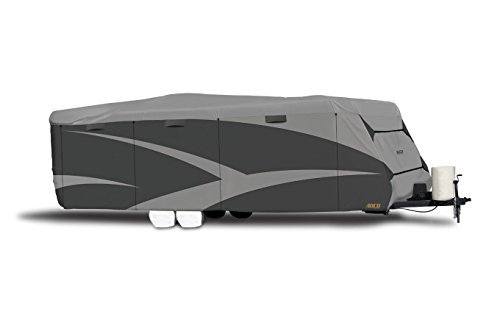
ADCO SFS AquaShed Travel Trailer Cover
The AquaShed fabric is engineered to shed water while still allowing vapour to pass, which is exactly what you need in a region with long wet seasons. ADCO reinforces the corners and includes cinching straps that hold tension in wind. It is a well finished cover from a specialist that only makes RV covers.
Pros
- Excellent rain shedding without sealing moisture in
- Specialist brand with strong fit accuracy
- Good tensioning system for windy sites
Cons
- Higher cost than general purpose covers
- Heavier to handle when wet

Camco ULTRAGuard Supreme RV Cover
Camco builds the ULTRAGuard Supreme for rigs that sit outdoors year round, using a heavy top panel bonded for tear resistance and reinforced stress points. Air vents reduce ballooning in wind, which is a common cause of seam failure. The extra weight makes fitting more of a two person job.
Pros
- Among the most durable fabrics here
- Vents reduce wind ballooning
- Well reinforced at high stress points
Cons
- Heavy and cumbersome to install
- Bulky to store when not in use

RVMasking Heavy Duty Travel Trailer Cover
RVMasking undercuts the established brands while offering a multi layer top panel and a generous set of straps and buckles. Owners report good first and second season performance, with the usual caveat that value covers rarely match premium fabrics after several years. Included accessories such as tire covers and a storage bag add practical value.
Pros
- Strong specification for the money
- Useful accessories included
- Plenty of access zippers
Cons
- Long term durability trails premium brands
- Fit is looser on some trailer profiles
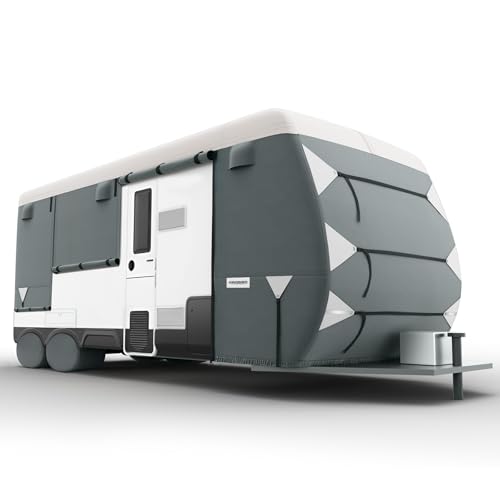
KING BIRD Travel Trailer RV Cover
KING BIRD includes more tie down points than most covers at this level, which matters because wind flap is the main killer of RV covers. The four layer top gives reasonable UV protection and the side fabric breathes. Adjustable straps with buckles let you cinch the cover tight against the body.
Pros
- More tie down points than typical rivals
- Good value multi layer top
- Vents help release trapped air
Cons
- Zippers feel light in cold weather
- Sizing runs generous on shorter trailers

Leader Accessories Travel Trailer RV Cover
Leader Accessories keeps things simple with a lighter cover that one person can manage. It suits seasonal storage rather than continuous year round exposure. Based on specifications the fabric is thinner than heavy duty options, so expect a shorter service life in harsh sun.
Pros
- Manageable weight for solo installation
- Low cost seasonal protection
- Adequate breathability
Cons
- Thinner fabric wears faster in strong sun
- Fewer reinforcement points

Classic Accessories OverDrive PolyPRO 3 RV Cover
The PolyPRO 3 is the step down from the PermaPRO and is aimed at shorter storage periods rather than permanent outdoor life. It keeps the same integrated strap system and access panels while using lighter fabric throughout. For a rig stored under partial shelter it is a sensible economy.
Pros
- Same strap system as the pricier PermaPRO
- Lighter and easier to fit
- Good option under partial shelter
Cons
- Less UV durability than heavier covers
- Not the choice for full year exposure
How they stack up
| # | Model | Top | Best for | Score | Price |
|---|---|---|---|---|---|
| 1 | Classic Accessories PermaPRO RV Cover | Multi layer, breathable | Best overall | 9.4 | Check price |
| 2 | ADCO SFS AquaShed Travel Trailer Cover | AquaShed water repellent top | Best for wet climates | 9.2 | Check price |
| 3 | Camco ULTRAGuard Supreme RV Cover | Heavy duty bonded fabric | Best for long term storage | 9.0 | Check price |
| 4 | RVMasking Heavy Duty Travel Trailer Cover | Multi layer polypropylene | Best value heavy duty | 8.8 | Check price |
| 5 | KING BIRD Travel Trailer RV Cover | Four layer construction | Best for windy sites | 8.6 | Check price |
| 6 | Leader Accessories Travel Trailer RV Cover | Three layer fabric | Best budget | 8.3 | Check price |
| 7 | Classic Accessories OverDrive PolyPRO 3 RV Cover | Three layer top | Best for short seasons | 8.0 | Check price |
How to choose
Breathability beats thickness The single most damaging thing a cover can do is trap moisture against the roof and sidewalls. Non breathable tarps and plastic sheeting create condensation that leads to staining, mildew and in bad cases delamination. Quality covers use a heavier top panel where sun exposure is highest and a lighter, more permeable fabric on the sides so vapour escapes. If a cover advertises waterproof rather than water resistant and breathable, treat that as a warning.
Measure the rig, not the model name Cover sizes are sold in length bands, and the number that matters is bumper to bumper length including any rear ladder, spare tire carrier or bike rack you leave mounted. Also check height, since a cover sized only by length may sit short on a tall fifth wheel. Buying one band too large is safer than one too small, because a tight cover tears at the corners and a slightly loose one can be cinched down.
Prepare the surface before covering Anything sharp under the cover will work a hole through it within a season. Remove or pad awning arms, antenna bases, gutter spouts and ladder ends, and check for loose trim screws. Wash and dry the RV first, since grit trapped under fabric acts as sandpaper every time the wind moves it. Owners consistently report that padding sharp points is what determines whether a cover lasts two seasons or five.
Tension and wind management A flapping cover destroys itself and can scuff paint and decals. Use every strap provided, run them under the chassis where the design allows, and re tension after the first windy day since covers settle. Vents matter too, allowing air to escape rather than balloon the fabric. In consistently windy locations, prioritise the number of tie down points over fabric weight.
Frequently asked questions
Do I really need an RV cover?
If your RV is stored outdoors for months at a time, a cover meaningfully slows UV damage to decals, seals and rubber roofing, and keeps debris off. Under a covered structure the benefit is smaller. The main risk of not covering is degraded roof sealant and faded, chalky sidewalls.
Can an RV cover damage the paint?
It can if the fabric is abrasive, if grit is trapped underneath, or if wind allows constant flapping. Wash the RV first, pad any sharp protrusions, and tension the cover properly. Breathable fabrics with soft inner surfaces are far less likely to mark a finish.
How do I choose the right size?
Measure bumper to bumper including any rear mounted accessories, then match that to the manufacturer’s length band. Check the maximum height and width specifications too, particularly for fifth wheels and toy haulers, where the profile differs from a standard travel trailer.
How long do RV covers last?
Budget covers commonly last one to three seasons in strong sun. Heavy duty multi layer covers from established brands often reach five years or more. Lifespan depends heavily on UV intensity, wind exposure and whether sharp points were padded before fitting.
Can I use a cover in winter with snow?
Yes, and a breathable cover helps prevent moisture damage during a long winter. Snow load is the concern rather than the cover itself, so clear heavy accumulations from the roof where practical. Some owners fit foam pool noodles along the roof edge to help shed snow.
Should I cover the tires separately?
Yes. Tires degrade from UV exposure even when the body is covered, and sidewall cracking is a common consequence of long storage. Several covers include tire covers, and standalone sets are inexpensive. Also try to avoid leaving tires on hot asphalt for months.
How do I install a cover by myself?
Work from a ladder at the front, unroll the cover along the roof from front to back, then unfold the sides one at a time. Do it on a calm day, since even moderate wind makes solo fitting frustrating. Some owners tie a light rope to the far corner to pull the cover across.
How should I store the cover in season?
Dry it completely before folding, since packing a damp cover produces mildew that ruins the fabric. Fold rather than stuff, and store in the supplied bag somewhere dry and rodent free. Inspect seams and patch small tears immediately, because tears grow quickly under wind load.
The bottom line
The Classic Accessories PermaPRO RV Cover is the sensible default for most owners, balancing a breathable multi layer top with reinforcement where covers usually fail. In a wet climate the ADCO SFS AquaShed Travel Trailer Cover is worth the extra outlay for its water shedding fabric, and the Camco ULTRAGuard Supreme RV Cover is the choice for a rig that sits fully exposed year round. Whichever you pick, pad the sharp points and tension the straps properly, since that does more for longevity than fabric weight alone.


