RV Extension Cords: Matching Amp Rating to Your Rig
For most travel trailers, the Camco 55191 PowerGrip 30-amp cord balances length, durability, and cost. Motorhomes running dual air conditioners need the 50-amp Camco 55501 PowerGrip instead. Budget campers get similar 10-gauge copper wiring in the Mighty Cord A10-3025EH.
Thirty-amp and 50-amp shore power cords are not interchangeable, and the wrong length leaves you stretching a cord across a wet campground road. Travel trailers typically pair well with the Camco 55191 PowerGrip 30-amp cord. Motorhomes running two air conditioners need the Camco 55501 PowerGrip 50-amp cord instead.
Amp rating, cord length, wire gauge, connector type, and handle design vary across listings from Camco, Mighty Cord, Kohree, Miady, RVGUARD, and Parkworld. We grouped picks by the decision that matters most at a pedestal: amperage first, length second.
The top picks, ranked

Camco 55191 PowerGrip 30-Amp 25ft RV Extension Cord
Molded PowerGrip handles let you twist the connector into place without touching bare prongs. Ten-gauge copper conductors sit inside an STW-rated jacket that stays flexible through cold mornings. UL listing confirms it meets outdoor safety standards for 30-amp campsites.
Pros
- Molded handles ease grip in wet weather
- UL-listed outdoor-rated jacket
- 10-gauge copper handles continuous 30-amp draw
Cons
- 25 feet can fall short at pull-through sites
- Limited to 30-amp systems only

Camco 55501 PowerGrip 50-Amp 25ft RV Extension Cord
Dual air conditioners draw close to 12,500 watts, and this cord carries that load without the sag a lighter cable shows. Locking PowerGrip handles twist together and resist separating on windy nights. A cold-flex jacket keeps the cable pliable below freezing.
Pros
- Handles full 50-amp hookup loads
- Locking handle design resists accidental disconnection
- Cold-weather flexible jacket
Cons
- Heavier and bulkier to coil for storage
- No storage case included

Mighty Cord A10-3025EH 30-Amp 25ft Extension Cord
Valterra’s Mighty Cord line pairs UL-listed 10-gauge copper wire with an easy-grip molded handle, undercutting most locking-handle competitors on cost. Owners report the handles stay pliable across multiple camping seasons. Amp rating and length match the pricier PowerGrip cord above.
Pros
- Lower cost than locking-handle competitors
- Sturdy molded easy-grip handles
- UL-listed 10-gauge copper wiring
Cons
- No dedicated storage bag included
- Connector fit feels snug on some older pedestals

Kohree 30-Amp 25ft RV Extension Cord
Ten-gauge copper wire still runs inside this budget-focused 3-prong TT-30 cord. A hook-and-loop strap ships with it for coiled storage. A small indicator light near the plug confirms power flow, according to the listing.
Pros
- Lowest cost per foot among 30-amp options
- Includes a cord storage strap
- Built-in power indicator light
Cons
- Owners report shorter lifespan under daily heavy use
- Handle grip smaller than premium cords

Miady 30-Amp 50ft RV Extension Cord
Fifty feet of reach doubles a standard 25ft cord, suiting back-in sites where the pedestal sits far from the power inlet. Contoured grips and a built-in indicator light confirm the connection before you flip a breaker. Ten-gauge copper conductors still handle the full 30-amp draw.
Pros
- 50 feet reaches distant pedestals
- Built-in power indicator light
- 10-gauge copper conductors
Cons
- Extra length raises voltage drop risk on long runs
- Heavier coil takes more storage space

RVGUARD 50-Amp 50ft RV Extension Cord with LED Power Indicator
Fifty-amp capacity meets 50 feet of reach here, built for large motorhomes parked far from the pedestal at full-hookup sites. LED indicators on both ends confirm proper polarity before use. A cold-flex outer jacket keeps the cable workable in shoulder-season camping.
Pros
- Combines 50-amp rating with 50ft reach
- LED connection indicators on both ends
- Cold-flex outer jacket
Cons
- Heavy cord requires two-handed coiling
- Amp rating is more than most 30-amp trailers need
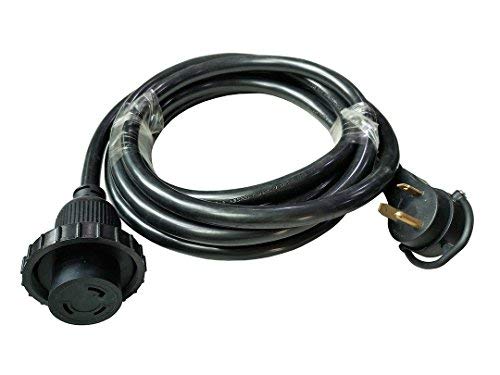
Parkworld 30-Amp 15ft RV Extension Cord
Fifteen feet coils into a smaller bundle than 25ft or 50ft options, suiting sites where the pedestal sits close to the power inlet. Ten-gauge copper wire still handles continuous 30-amp draw. Shorter length trims both storage space and cost.
Pros
- Compact coil saves storage space
- Lower cost due to shorter length
- Same 10-gauge wire as longer cords
Cons
- Too short for many back-in or pull-through sites
- No 50-amp adapter included
Side by side
| # | Model | Amp rating | Best for | Score | Price |
|---|---|---|---|---|---|
| 1 | Camco 55191 PowerGrip 30-Amp 25ft RV Extension Cord | 30-amp | Best overall | 9.4 | Check price |
| 2 | Camco 55501 PowerGrip 50-Amp 25ft RV Extension Cord | 50-amp | Best for 50-amp RVs | 9.2 | Check price |
| 3 | Mighty Cord A10-3025EH 30-Amp 25ft Extension Cord | 30-amp | Best value | 9.0 | Check price |
| 4 | Kohree 30-Amp 25ft RV Extension Cord | 30-amp | Best budget | 8.7 | Check price |
| 5 | Miady 30-Amp 50ft RV Extension Cord | 30-amp | Best for long cord runs | 8.4 | Check price |
| 6 | RVGUARD 50-Amp 50ft RV Extension Cord with LED Power Indicator | 50-amp | Best for big rigs at full hookups | 8.2 | Check price |
| 7 | Parkworld 30-Amp 15ft RV Extension Cord | 30-amp | Best for compact storage | 8.0 | Check price |
Before you buy
How do I choose an RV extension cord? Amp rating stamped on your RV’s shore power inlet decides the connector shape before anything else. Most travel trailers use a 30-amp TT-30 plug, while larger motorhomes with two air conditioners need a 50-amp NEMA 14-50 connector. Length comes next, based on how far your typical site places the pedestal from the inlet. Wire gauge and handle design round out the decision once amperage and length are settled.
30-amp vs 50-amp RV cords, what is the real difference? A 30-amp cord carries up to 3,600 watts through a three-prong TT-30 connector, fitting most single-air-conditioner trailers. A 50-amp cord uses a four-prong NEMA 14-50 connector and delivers up to 12,500 watts, enough for two air conditioners plus a residential fridge. Plugging a 30-amp cord into a 50-amp pedestal requires a dogbone adapter, not a swap in cord amperage. Buying the wrong amp rating simply means the connector will not fit the receptacle.
What cord length fits my campsite setup? Twenty-five feet covers most pull-through sites where the pedestal sits near the power inlet. Fifty-foot cords suit back-in sites, pedestals mounted behind the trailer, or irregular electrical post placement. Fifteen-foot cords work when the inlet and pedestal sit within a few feet of each other, trimming bulk and voltage drop. Longer cords add resistance, so pair a 50ft cord with 10-gauge or heavier wire to avoid dimming lights or tripped breakers.
What gauge and handle design hold up best outdoors? STW or SEOW-rated jackets stay flexible in cold weather rather than stiffening and cracking. Ten-gauge copper wire is standard for 30-amp cords, while 50-amp cords use heavier 6-gauge conductors for the higher current. Locking or twist-together handles, like Camco’s PowerGrip, reduce accidental disconnection from wind or a tripped cord. UL listing confirms the cord meets outdoor electrical safety standards for campground use.
Good to know
What amp rating do I need for my RV extension cord?
Check the plug on your RV’s power inlet. A three-prong plug means 30-amp, and a four-prong plug means 50-amp. Match the cord’s connector to that rating instead of guessing from your rig’s size.
How long should an RV power cord be?
Twenty-five feet suits most pull-through sites. Choose a 50ft cord instead if you often camp at back-in sites or campgrounds with pedestals set back from the parking spot.
Can I use a 30-amp cord on a 50-amp RV?
Not directly. A 50-amp RV needs a 50-amp cord or a dogbone adapter, and running it through a 30-amp cord limits you to roughly a quarter of the available power.
Is it safe to leave an RV extension cord out in the rain?
Cords rated STW or SEOW with UL listing are built for wet outdoor use. Even so, keep the connection point off the ground on a cord cover or elevated plug to keep water out of the receptacle.
What gauge wire is best for RV extension cords?
Ten-gauge copper is standard for 30-amp cords. Fifty-amp cords use heavier 6-gauge wire to carry the higher current without excess heat buildup.
Do RV extension cords need to be UL listed?
UL listing confirms the cord meets recognized safety standards for outdoor electrical use, which most campground rules and RV insurance policies expect as a baseline.
How do I stop my RV cord from disconnecting at the pedestal?
Locking or twist-together handle designs, like Camco’s PowerGrip line, physically secure the plug to the receptacle so wind or an accidental tug will not pull it loose.
Can I daisy chain two RV extension cords together?
Most manufacturers advise against it, since each connection point adds resistance and heat risk. One longer cord rated for your full amp draw is the safer option.
Is a 30-amp or 50-amp cord right for my travel trailer?
Most single-air-conditioner travel trailers use a 30-amp TT-30 connector. Check your rig’s power inlet plug count before buying, since the connector shape will not match otherwise.
What is a dogbone adapter for RV cords?
A dogbone adapter converts between 30-amp and 50-amp connectors so a cord and pedestal with mismatched ratings can still connect, though it does not add extra power.
The bottom line
Match the connector to your RV’s amp rating first, then choose length based on your typical campsite layout. The Camco 55191 PowerGrip suits most 30-amp trailers, and the Camco 55501 PowerGrip handles 50-amp motorhomes running dual air conditioners.