How to Pick an RV Vent Fan That Handles Rain and Heat
Fan-Tastic Vent 807350 leads on airflow and rain protection for most rigs, pairing a 900 CFM motor with an auto-close rain sensor. Heng’s Vortex II Ultra Breeze covers budget shoppers at 700 CFM. MaxxAir MaxxFan Deluxe adds a rain-shielded intake mode for stealth camping without cracking a window.
A stuffy RV cabin usually traces back to one part: the roof vent fan. Airflow, rain sensing, and dome material separate a fan that runs all summer from one that fails by year two.
We compared listed specs, owner feedback, and manufacturer data across seven current models to sort them by real use case, from full-time living to weekend towing.
What matters most
What to look for in an RV roof vent fan CFM airflow tells you how much air the fan moves per minute, and most 12-volt RV fans land between 500 and 950 CFM. Higher numbers clear kitchen steam and shower humidity faster. Speed count matters next: a single-speed switch works fine for occasional use, while 10-speed motors let you dial in airflow without draining the battery. Rain sensors matter most for anyone who parks unattended, since a sudden storm can soak the interior through an open vent.
Powered fans versus manual roof vents A manual vent relies on outside wind to pull air through, which does little on a still, humid night. Powered fans force air movement regardless of weather, cutting cabin temperature several degrees faster. Reversible models add an intake setting, pulling cooler outside air in instead of only exhausting it out. That reversibility matters most in climates with cool nights and hot days, letting one fan handle both jobs.
Best fan setup for full-time and weekend RVers Full-time RVers benefit most from a thermostat-controlled fan like the Fan-Tastic Vent 3350, since it cycles on and off without manual input while the owner is away from the rig. Weekend campers can save money with a manual-switch model like the Heng’s Vortex II, since infrequent use means automatic controls add cost without much daily benefit. Bathroom and closet vents rarely need multi-speed motors; a compact single-speed unit like the Ventline Vanair covers that smaller space adequately.
Installation and maintenance notes Most replacement fans fit the standard 14×14-inch RV roof cutout used since the 1990s, so swapping an old crank vent for a powered one usually needs no carpentry. Rain sensors and thermostats add wiring steps beyond the basic power and ground connections, so budget extra install time for those models. Clean the blade and rain sensor contacts each season, since dust and pollen buildup can cause a sensor to stick open or closed.
The shortlist, ranked
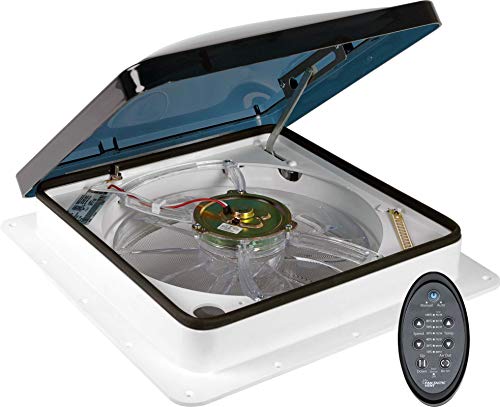
Fan-Tastic Vent 807350
This 12-volt fan pairs a rain sensor with a wall-mounted thermostat, so it runs unattended overnight. Ten fan speeds let it move air gently or exhaust heat fast during setup. Reversible airflow pulls cooler outside air in when the cabin needs intake instead of exhaust.
Pros
- Rain sensor closes the lid automatically
- Thermostat holds a set cabin temperature
- Reversible intake and exhaust airflow
Cons
- Higher current draw on top speed
- Thermostat wiring adds install time

MaxxAir MaxxFan Deluxe 00-07000K
A tall rain cover lets this fan run intake mode during a downpour without water reaching the cabin. Ten speeds and a built-in thermostat keep it flexible across coastal and mountain routes. A smoke-tinted dome resists UV yellowing over years of highway sun.
Pros
- Operates safely during light rain
- Manual lid opens to a full 6.5 inches
- Smoke-tinted dome resists UV yellowing
Cons
- No included remote
- Taller profile can catch low branches

Heng’s Vortex II Ultra Breeze
This 12-volt fan covers the basics: a 10-inch blade, three speeds, and a manual lift-and-crank lid. It fits the same 14×14-inch roof cutout used by most factory vents, so swapping in a replacement needs no carpentry.
Pros
- Low price for a powered fan
- Simple crank-lid install
- Draws under 1.5 amps on low
Cons
- No automatic rain closure
- Louder at top speed than premium models
Dometic Fan-Tastic 807356
A wider 14-inch blade pushes more air per rotation than standard vent fans, clearing kitchen steam or bathroom humidity fast. Ten speeds give fine control between a whisper and a full exhaust. An insulated lid cuts heat gain when the fan sits closed.
Pros
- Highest CFM in this lineup
- Remote adjusts speed from inside
- Insulated lid reduces heat gain when closed
Cons
- Larger blade housing sits lower inside the cabin
- Premium price for the CFM gain

MaxxAir MaxxFan 4000K
This model swaps the tall rain dome for a lower-profile design that draws less attention on the roofline. Intake mode pulls in cooler night air without opening a window or door. A ten-speed motor stays quiet enough for overnight parking near neighbors.
Pros
- Lower roofline profile than the Deluxe
- Reversible airflow for intake or exhaust
- Ten-speed motor runs quiet on low
Cons
- Cannot run open during active rain
- No thermostat included
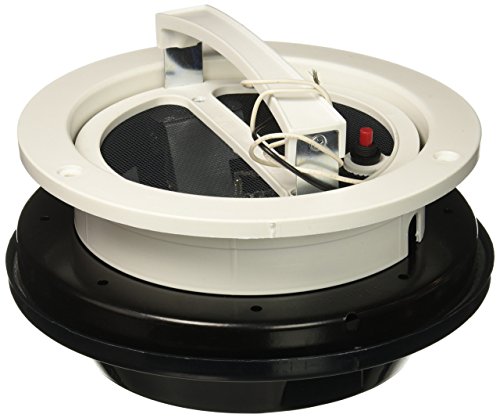
Ventline Vanair V2094SP
Sized for smaller 14×14-inch bathroom or closet vents, this fan clears moisture fast in tight spaces. A single-speed motor keeps the switch layout simple for guests or renters unfamiliar with the rig.
Pros
- Compact housing fits standard bathroom vents
- Straightforward single-switch operation
- Lower current draw than 10-speed fans
Cons
- No speed adjustment
- Manual lid must be closed before driving
Fan-Tastic Vent 3350
Built for year-round use, this fan runs on a garage-door-style remote and a wall thermostat that cycles the motor automatically. An insulated ABS dome cuts roof noise during highway driving and reduces heat transfer when parked.
Pros
- Automatic thermostat cycling for hands-off use
- Remote works from inside living areas
- Insulated dome reduces road noise
Cons
- Wiring the thermostat takes extra install steps
- Costs more than manual-switch models
The lineup, side by side
| # | Model | Airflow | Best for | Score | Price |
|---|---|---|---|---|---|
| 1 | Fan-Tastic Vent 807350 | 900 CFM max | Best overall | 9.4 | Check price |
| 2 | MaxxAir MaxxFan Deluxe 00-07000K | 900 CFM max | Best for rain protection | 9.2 | Check price |
| 3 | Heng’s Vortex II Ultra Breeze | 700 CFM max | Best budget pick | 8.3 | Check price |
| 4 | Dometic Fan-Tastic 807356 | 921 CFM max | Best for high airflow | 9.0 | Check price |
| 5 | MaxxAir MaxxFan 4000K | 800 CFM max | Best for stealth camping | 8.8 | Check price |
| 6 | Ventline Vanair V2094SP | 560 CFM max | Best for bathroom vents | 8.0 | Check price |
| 7 | Fan-Tastic Vent 3350 | 900 CFM max | Best for full-time RV living | 9.1 | Check price |
Good to know
What is a good CFM for an RV vent fan?
Most owners find 700 to 900 CFM comfortable for a standard travel trailer or Class C cabin. Larger rigs with open floor plans benefit from fans at the higher end of that range.
Do RV roof vent fans need a rain sensor?
A rain sensor is not required, but it protects the interior if rain starts while the rig sits unattended. Fans without one need the lid closed manually before a storm.
Can I run an RV vent fan while driving?
Manufacturers generally recommend closing the lid before driving, even on models rated for light rain. Wind resistance at highway speed can stress the lid hinge over time.
Fan-Tastic Vent vs MaxxAir, which is better?
Fan-Tastic Vent models tend to lead on automatic thermostat control, while MaxxAir’s MaxxFan Deluxe stands out for running safely during active rain. The better choice depends on whether hands-off temperature control or storm-ready intake matters more.
How much power does a 12-volt RV vent fan draw?
Draw varies by speed and model, generally from under 1 amp on low to around 3 amps on the highest setting. Ten-speed motors let you balance airflow against battery use on off-grid trips.
Are RV vent fans easy to install as a replacement?
Yes, most replacement fans match the standard 14×14-inch roof opening used since the 1990s. Basic models need only a power and ground wire; thermostat-equipped fans require an additional wall-mounted control wire.
What is the best RV vent fan for bathrooms?
Compact single-speed fans like the Ventline Vanair V2094SP fit standard bathroom vent openings and clear shower humidity without the cost of a 10-speed motor.
Is a remote control worth it on an RV vent fan?
A remote lets you adjust fan speed without reaching the ceiling, which is convenient in taller rigs or when the vent sits over a bed. It adds cost but little else to the install.
Which RV vent fan works best for stealth camping?
The MaxxAir MaxxFan 4000K keeps a lower roofline profile than tall rain-cover models and runs quiet on low speed, both useful for overnight parking without drawing attention.
How many speeds does an RV vent fan need?
Ten-speed motors give the finest control between a whisper setting and full exhaust, useful for balancing airflow against battery drain. Single-speed fans suit smaller bathroom or closet vents where fine control matters less.
The verdict
Most RVers get the best balance of airflow and weather protection from the Fan-Tastic Vent 807350 or the MaxxAir MaxxFan Deluxe. Budget-focused buyers can still cut cabin humidity effectively with the Heng’s Vortex II, while full-time travelers gain the most from a thermostat-controlled model that runs without daily input.