How to Choose the Right RV Water Heater for Your Rig
Suburban’s SW6DE tops the list with dual gas and electric operation plus a 6 gallon tank that recovers fast. Atwood’s GC6AA-10E matches that flexibility for less. Prefer to skip the tank altogether? The Girard Tankless GSWH-2 heats water on demand.
Three units cover most rigs well: the Suburban SW6DE, the Atwood GC6AA-10E and the Girard Tankless GSWH-2. Each solves hot water differently, through tank size, dual fuel flexibility or removing the tank entirely.
Gallon capacity matters less than recovery time and fuel access once you are on the road. We compared tank size, gas versus electric versus dual operation and reheat speed, then checked owner reports on installation fit and cold weather reliability.
The top picks, ranked
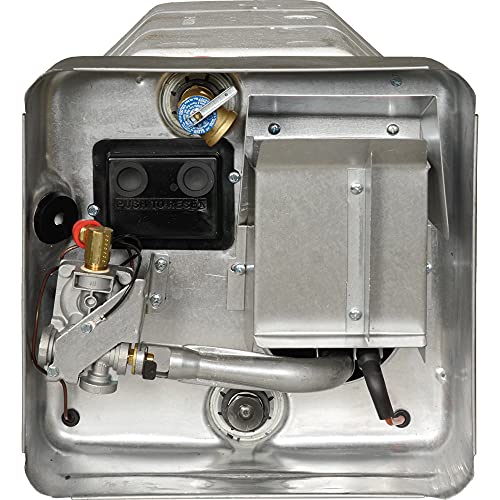
Suburban SW6DE 6 Gallon Water Heater
Dual gas and electric operation lets you heat water on shore power at a campground or run on propane while boondocking. Recovery takes about 20 minutes on gas, fast enough for back to back showers. Direct spark ignition skips the pilot light entirely.
Pros
- Dual fuel works with or without shore power
- Fast recovery supports consecutive showers
- No pilot light to relight after travel
Cons
- Electric-only mode heats slowly on its own
- Needs a matching cutout size for installation

Atwood GC6AA-10E 6 Gallon Water Heater
This 6 gallon tank matches premium rivals on dual gas and electric operation at a lower price point. Porcelain lining resists corrosion better than uncoated steel alternatives. Piezo ignition lights reliably without a separate battery-powered igniter.
Pros
- Dual fuel flexibility at a lower cost
- Porcelain lining resists tank corrosion
- Piezo ignition lights consistently
Cons
- Recovery runs a touch slower than the SW6DE
- Anode rods need regular replacement checks

Girard Tankless GSWH-2 On-Demand Water Heater
Heating water only as it flows removes the wait for a tank to recover between uses. Built in freeze protection helps guard the unit in near-freezing temperatures. Compact housing frees up storage space that a tank model would otherwise occupy.
Pros
- Unlimited hot water without a refill wait
- Compact housing frees up storage space
- Built in freeze protection for cold trips
Cons
- Propane draw rises during continuous use
- Installation differs from standard tank cutouts

Suburban SW10DE 10 Gallon Water Heater
Ten gallons of capacity suit families or groups showering back to back without waiting on recovery. Dual gas and electric fuel matches the smaller SW6DE for flexible hookups. Measure the existing cutout before replacing a 6 gallon unit, since this tank needs a bigger opening.
Pros
- Larger tank suits multiple showers back to back
- Dual fuel matches smaller Suburban models
- Reliable direct spark ignition
Cons
- Larger cutout required for replacement installs
- Adds noticeable weight to the rig

Atwood XT-6E DSI 6 Gallon Water Heater
An electronic thermostat with high limit protection helps maintain steady output in colder ambient temperatures. Direct spark ignition avoids the pilot light failures common in windy or cold conditions. A 6 gallon steel tank keeps overall weight reasonable for smaller trailers.
Pros
- Electronic thermostat handles cold ambient temps
- Direct spark avoids wind-related pilot outages
- Reasonable weight for smaller trailers
Cons
- Electric-only mode struggles in freezing weather
- Fewer aftermarket parts than Suburban models
Girard Tankless GSWH-1 On-Demand Water Heater
Removing the tank cuts noticeable weight compared to a 6 gallon steel unit, useful for smaller trailers watching cargo capacity. Hot water starts within seconds of opening a tap. Digital controls let you set a target temperature from an interior panel.
Pros
- Lighter than tank-based alternatives
- Digital panel adjusts temperature precisely
- Hot water starts within seconds
Cons
- Higher upfront cost than tank models
- Needs steady propane pressure to perform well

Suburban SW12DEL 12 Gallon Water Heater
Twelve gallons of capacity suit full-time RVers who shower daily without planning around recovery time. Dual gas and electric operation with a lower watt element setting eases demand on limited electrical hookups. Aluminum construction cuts weight versus a steel tank of the same size.
Pros
- Largest tank suits daily full-time use
- Aluminum build reduces overall weight
- Dual fuel adapts to available hookups
Cons
- Longest recovery time among the tank models here
- Largest footprint needs the most cutout space
What matters most
Tank or tankless, which fits your trips better? Tank water heaters store and preheat a fixed volume, which runs out during a long shower but recovers on its own schedule. Tankless units heat water only as it flows, giving effectively unlimited hot water while drawing more propane during continuous use. Weight-conscious trailers benefit from removing the tank entirely. Full-time RVers with regular hookups often prefer the simplicity of a tank instead.
How does fuel type limit where you can camp? Gas-only units work anywhere with a propane supply, independent of shore power or a generator. Electric-only heaters need a hookup or a running generator, which limits boondocking. Dual fuel models switch between the two, offering the most flexibility for mixed camping styles. Check your typical camping pattern before settling on a fuel type.
What tank size matches your group size? A 6 gallon tank suits solo travelers or couples taking normal length showers. Families or groups showering back to back benefit from 10 to 12 gallon tanks despite the added weight and cutout size. Recovery time between showers matters as much as raw capacity for larger groups. Measure the existing cutout before upsizing during a tank replacement.
What should you check for installation fit and cold weather? RV water heaters install into a specific exterior cutout, and swapping brands sometimes means cutting a larger opening. Direct spark ignition avoids pilot light problems in wind, which matters for anyone camping in exposed sites. Built in freeze protection helps during shoulder season trips when temperatures dip below freezing overnight. Confirm the winterizing steps for your specific unit before storing it.
The lineup, side by side
| # | Model | Tank capacity | Best for | Score | Price |
|---|---|---|---|---|---|
| 1 | Suburban SW6DE 6 Gallon Water Heater | 6 gallons | Best overall | 9.2 | Check price |
| 2 | Atwood GC6AA-10E 6 Gallon Water Heater | 6 gallons | Best value | 8.9 | Check price |
| 3 | Girard Tankless GSWH-2 On-Demand Water Heater | Tankless, on-demand | Best tankless | 8.8 | Check price |
| 4 | Suburban SW10DE 10 Gallon Water Heater | 10 gallons | Best for larger families | 8.7 | Check price |
| 5 | Atwood XT-6E DSI 6 Gallon Water Heater | 6 gallons | Best for cold weather | 8.5 | Check price |
| 6 | Girard Tankless GSWH-1 On-Demand Water Heater | Tankless, on-demand | Best for weight-conscious rigs | 8.3 | Check price |
| 7 | Suburban SW12DEL 12 Gallon Water Heater | 12 gallons | Best for full-time RVers | 8.1 | Check price |
Questions worth asking
How big of a water heater tank does an RV need?
6 gallons suits solo travelers or couples. Families or groups showering in sequence benefit from 10 to 12 gallon tanks, though those add weight and need a larger cutout.
Is a tankless RV water heater worth the extra cost?
For unlimited hot water and weight savings, yes. It draws more propane during continuous use and often costs more upfront than a tank model.
Can an RV water heater run on electric only?
Dual fuel models allow electric-only operation on shore power, though recovery runs slower than on gas. Gas-only models do not offer this option at all.
What size cutout does an RV water heater need?
Cutout size varies by tank capacity and brand, so measure the existing opening before ordering a replacement. Upsizing from a 6 gallon to a 10 or 12 gallon tank usually means cutting a larger hole.
How long does it take an RV water heater to heat up?
Tank models typically recover a full tank in 20 to 35 minutes on gas, depending on capacity. Tankless units heat continuously with no wait, since there is no tank to refill.
Do RV water heaters work well in cold weather?
Models with electronic thermostats and freeze protection handle cold ambient temperatures better. Electric-only operation tends to struggle more than gas in near-freezing conditions.
Suburban vs Atwood water heaters, what changes between them?
Both offer similar dual fuel tank models at comparable capacities. Suburban units generally use direct spark ignition, while some Atwood models rely on piezo ignition instead.
How do you winterize an RV water heater?
Drain the tank fully and bypass it before adding antifreeze to the rest of the plumbing system. Tankless units follow a different draining procedure, so check the manual for your specific model.
Which RV water heater works best for boondocking?
Gas-only or dual fuel models like the Suburban SW6DE keep working without shore power or a generator. Electric-only heaters lose that flexibility off the grid.
What is the difference between a tank and tankless RV water heater?
A tank model preheats and stores a fixed volume that eventually runs out. A tankless unit like the Girard GSWH-2 heats water continuously as it flows, with no tank to deplete.
The verdict
Most RVers do well with the Suburban SW6DE, which balances dual fuel flexibility and fast recovery in a common tank size. The Atwood GC6AA-10E delivers similar performance at a lower cost. Anyone prioritizing weight savings and unlimited hot water should look at the Girard Tankless GSWH-2 instead.


