Saucepans Compared: Stainless, Nonstick and Enamel
The All-Clad D3 Stainless 2 Quart Saucepan is our top overall pick for its fully clad tri ply construction and even heating. The Cuisinart MultiClad Pro MCP19-18N is the best value with nearly identical construction, and the Tramontina Tri-Ply Clad 3 Quart is the best budget clad option.
The All-Clad D3 is the saucepan to buy if you want one that lasts decades, the Cuisinart MultiClad Pro delivers close to the same performance for far less, and the Tramontina Tri-Ply Clad covers the job on a tight budget. All three heat evenly enough for sauces that scorch in cheaper pans.
Saucepans look interchangeable in photos, but the difference between a disc bottom pan and a fully clad one shows up the first time you reduce a sauce and find a scorched ring where the disc ends. Handle design, lid fit and pour lips then decide whether you enjoy using it daily. We compared construction methods, base thickness, induction compatibility and oven limits based on specifications, and we weighed what long term owners report about warping, staining and handle heat.
The best picks, ranked
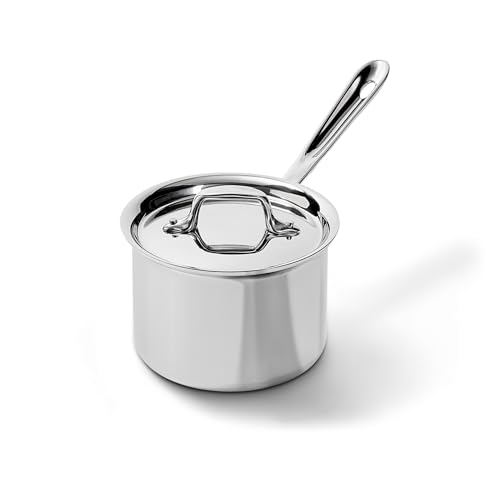
All-Clad D3 Stainless Steel 2 Quart Saucepan
The D3 bonds aluminium between two layers of stainless steel across the entire pan, walls included, so heat rises evenly up the sides instead of concentrating in a hot ring at the base. That is exactly what a sauce or a custard needs to avoid scorching. The stainless handle stays cooler on the hob than solid metal handles usually do, though it is deliberately narrow and some cooks find it uncomfortable over long stirring sessions.
Pros
- Even heat across base and walls with no hot ring
- Very high oven temperature rating
- Built to last decades with proper care
Cons
- Narrow handle is divisive over long sessions
- Highest outlay in this comparison
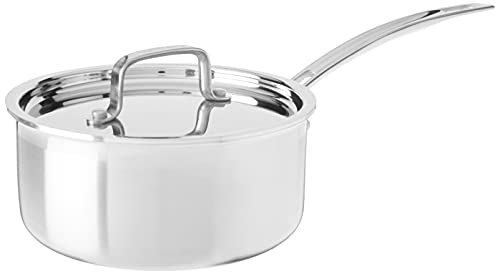
Cuisinart MultiClad Pro MCP19-18N Saucepan
The MultiClad Pro uses the same tri ply fully clad construction as premium brands at a fraction of the outlay, which makes it the default recommendation for most kitchens. A tapered rim pours cleanly and the tight fitting lid holds steam well for reductions. Owners report the handle heats more than the All-Clad on a gas hob, so a cloth is worth keeping nearby.
Pros
- Fully clad performance at a modest outlay
- Clean pouring tapered rim
- Tight lid fit for reductions and steaming
Cons
- Handle heats up on gas hobs
- Interior stains more visibly than premium finishes

Tramontina Tri-Ply Clad 3 Quart Covered Saucepan
Tramontina’s tri ply clad line delivers genuine full cladding at the lowest outlay here, with a three quart capacity that handles pasta portions, grains and larger batches of soup. The base is thick enough to resist warping on high heat. Fit and finish are a step behind the premium brands, with slightly rougher handle welds and a less refined rim.
Pros
- Fully clad construction at a very low outlay
- Larger capacity suits grains and batch cooking
- Thick base resists warping
Cons
- Finish is rougher than premium equivalents
- Lid is heavier than the pan warrants

Le Creuset Signature Enameled Cast Iron Saucepan
Enamelled cast iron holds heat far longer than stainless, which keeps a simmer genuinely gentle and steady once it settles. The enamel interior is non reactive and cleans up well after tomato or wine based sauces. It is heavy, slow to respond to a change in hob setting, and the enamel chips if knocked or subjected to sudden temperature shocks.
Pros
- Outstanding heat retention for gentle simmering
- Non reactive enamel handles acidic sauces
- Attractive enough to serve from
Cons
- Heavy and slow to respond to heat changes
- Enamel chips if knocked or thermally shocked

GreenPan Valencia Pro Ceramic Nonstick Saucepan
The Valencia Pro uses a ceramic nonstick coating over a hard anodised body, which releases eggs, porridge and milk based sauces cleanly without the sticking that plagues bare stainless. It is oven safe to a higher temperature than most nonstick pans. Ceramic coatings lose their release properties over a few years regardless of care, so treat it as a consumable rather than a lifetime pan.
Pros
- Excellent release for milk, eggs and porridge
- Higher oven rating than typical nonstick
- Very easy to clean
Cons
- Coating loses effectiveness over a few years
- Cannot be used with metal utensils

T-fal Ultimate Hard Anodized Nonstick Saucepan
T-fal’s hard anodised saucepan includes the brand’s heat indicator that changes appearance when the pan reaches temperature, which is genuinely useful for anyone learning to preheat properly. The nonstick surface is durable by budget standards and dishwasher tolerant. It is not fully clad, so heat is less even up the walls than a tri ply stainless pan.
Pros
- Heat indicator helps with proper preheating
- Durable coating for the outlay
- Light and easy to handle
Cons
- Less even heat up the walls than clad stainless
- Lower oven temperature limit

Farberware Classic Stainless Steel 3 Quart Saucepan
The Farberware Classic uses a stainless body with an encapsulated aluminium disc in the base rather than full cladding, which is perfectly adequate for boiling water, pasta and vegetables. It is light, inexpensive and effectively indestructible for routine use. Because heat concentrates over the disc, delicate sauces are more prone to catching around the edge of the base.
Pros
- Very inexpensive and durable
- Light enough for daily handling
- Fine for boiling and steaming tasks
Cons
- Disc base creates uneven heat for delicate sauces
- Low oven temperature limit
What to look for
Fully clad versus disc bottom A fully clad pan sandwiches aluminium between stainless layers across the entire body, base and walls included, so heat travels evenly and rises up the sides. A disc bottom pan attaches a thick aluminium plate to the base only, which is cheaper and works fine for boiling but concentrates heat in a circle. Reduce a sauce in a disc bottom pan and you will often find a scorched ring where the disc edge sits. If you make sauces, custards or anything with dairy or sugar, full cladding is the single most valuable feature to pay for.
Choosing a size that actually gets used A two quart saucepan is the everyday workhorse for sauces, small grain portions and reheating, and it is the size most cooks reach for daily. Three quarts handles pasta portions, soups and larger batches of rice. Anything smaller than one and a half quarts is a specialist for melting butter and warming milk. If you own only one saucepan, two quarts is the safest choice, and if you can have two, add a three quart for volume.
Materials, coatings and what to cook in each Bare stainless browns well, deglazes beautifully and tolerates metal utensils, but sticky foods such as porridge and scrambled eggs need care and fat. Nonstick releases those foods effortlessly but cannot be used with metal utensils, degrades over a few years and has a lower oven limit. Enamelled cast iron retains heat superbly for long gentle simmers but is heavy and slow to respond. A practical kitchen keeps a clad stainless saucepan as the primary and a small nonstick one for eggs and milk.
Handles, lids and the details you notice daily Handle design decides whether a pan is pleasant to use. Hollow stainless handles stay cooler than solid ones, and a handle angled away from the hob avoids the flame licking around it on a gas burner. Check that the handle is riveted rather than spot welded, since rivets survive decades of leverage. A tight fitting lid retains steam for reductions and a rolled pour lip prevents sauce running down the outside. Induction users must confirm magnetic compatibility, since some hard anodised pans lack a ferrous base entirely.
Compared at a glance
| # | Model | Construction | Best for | Score | Price |
|---|---|---|---|---|---|
| 1 | All-Clad D3 Stainless Steel 2 Quart Saucepan | Tri ply fully clad stainless | Best overall | 9.4 | Check price |
| 2 | Cuisinart MultiClad Pro MCP19-18N Saucepan | Tri ply fully clad stainless | Best value | 9.2 | Check price |
| 3 | Tramontina Tri-Ply Clad 3 Quart Covered Saucepan | Tri ply fully clad stainless | Best budget clad pan | 9.0 | Check price |
| 4 | Le Creuset Signature Enameled Cast Iron Saucepan | Enamelled cast iron | Best for slow simmering | 8.8 | Check price |
| 5 | GreenPan Valencia Pro Ceramic Nonstick Saucepan | Hard anodised with ceramic nonstick | Best nonstick option | 8.6 | Check price |
| 6 | T-fal Ultimate Hard Anodized Nonstick Saucepan | Hard anodised aluminium with nonstick | Best budget nonstick | 8.3 | Check price |
| 7 | Farberware Classic Stainless Steel 3 Quart Saucepan | Stainless with encapsulated aluminium base | Best for everyday boiling | 8.0 | Check price |
Frequently asked questions
What size saucepan is most useful?
Two quarts covers everyday sauces, grains and reheating and is the size most people reach for daily. Three quarts is better for pasta portions, soups and batch cooking.
Is a fully clad saucepan worth the extra outlay?
If you make sauces, custards or anything with dairy or sugar, yes. Disc bottom pans concentrate heat in a ring at the base, which scorches delicate mixtures. For boiling water, cladding matters little.
Can I use these on an induction hob?
Stainless and enamelled cast iron pans here are induction compatible. Some hard anodised nonstick pans lack a magnetic base, so check the specification before buying if you cook on induction.
How do I stop food sticking in a stainless saucepan?
Preheat the pan before adding fat, then add food once the fat shimmers. Adding cold food to a cold stainless pan is the most common cause of sticking.
How long does nonstick coating last?
Typically two to five years with careful use. Avoid metal utensils, high heat and dishwashers, and expect release performance to decline gradually regardless of how carefully you treat it.
Why does my stainless pan have rainbow stains?
That is a harmless oxide layer from heat. A wipe with white vinegar or a stainless cleaner removes it. White chalky spots are mineral deposits from hard water and come off the same way.
Are saucepan handles oven safe?
Stainless handles usually are, with limits between 500 and 600 degrees Fahrenheit on clad pans. Nonstick pans have lower limits and silicone or plastic handled pans are usually not oven safe at all.
Should I put a saucepan in the dishwasher?
Clad stainless tolerates it though hand washing keeps it looking better. Nonstick and enamelled cast iron last noticeably longer if hand washed, since detergents are harsh on coatings and enamel.
The bottom line
The All-Clad D3 is the saucepan we would buy once and keep, because full cladding removes the scorched ring problem that makes cheaper pans frustrating for sauces. The Cuisinart MultiClad Pro delivers nearly the same construction for a fraction of the outlay and is the sensible choice for most kitchens. Add a small ceramic nonstick pan such as the GreenPan Valencia Pro if eggs and porridge are part of your routine.