How to Pick a Sewing Light That Won’t Wreck Thread Colors
OttLite’s Wellness Series Task Lamp leads on color accuracy, reproducing thread shades close to daylight. The Brightech LightView Pro pairs a magnifier with similar output for detail work. Need something clipped right at the needle? Neatfi’s XL clamp light attaches directly to a machine or table edge.
OttLite’s Wellness Series, the Brightech LightView Pro and Neatfi’s XL clamp light solve three different problems: color accuracy, magnified detail, and flexible mounting near the needle plate. A machine’s built in bulb and standard room lighting both fall short of what fine stitching and thread matching need.
Color rendering index matters more here than raw brightness, since poor rendering makes navy and black thread look nearly identical. We compared stated lumen output, color rendering index where listed, clamp or base mounting, and arm reach, then checked those specs against what sewists report about glare and shadow at the needle.
The best picks, ranked

OttLite Wellness Series LED Task Lamp
A high CRI LED reproduces thread and fabric shades close to natural daylight, cutting down color matching mistakes. Its flexible gooseneck arm points light exactly at the needle without moving the whole base. Touch controls step through several brightness levels without a fiddly dial.
Pros
- Accurate color rendering for thread matching
- Gooseneck arm aims light right at the needle
- Touch controls step through multiple brightness levels
Cons
- Weighted base takes up real desk space
- Costs more than basic clamp lights
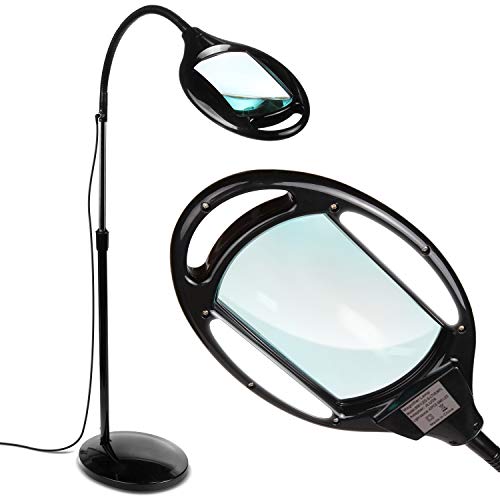
Brightech LightView Pro Magnifying Floor Lamp
A glass magnifying lens rings the LED, useful for threading needles or checking fine stitch detail up close. Its floor stand frees up table space that a desk clamp lamp would take. An adjustable swing arm reaches over a machine or hoop without moving furniture around.
Pros
- Magnifier helps with threading and fine stitch checks
- Floor stand keeps the table surface clear
- Swing arm reaches over machines without repositioning
Cons
- Larger footprint than a compact desk lamp
- Lens adds weight to the light head

Neatfi XL LED Clamp Light
A spring loaded clamp attaches straight to a sewing machine body or table edge, skipping a heavy base. The wide LED panel spreads light evenly instead of casting one hot spot. Three color temperature settings shift between warm and cool white depending on the room.
Pros
- Clamp mounts directly to a machine or table
- Wide panel spreads light instead of one hot spot
- Adjustable color temperature suits different rooms
Cons
- Clamp needs a flat edge under an inch or two thick
- No built in magnification

Daylight Company Slimline 3 Table Lamp
A slim panel head keeps the desk footprint minimal compared to bulkier lamp designs. Daylight balanced LEDs aim to reduce eye strain during long stitching sessions. Its lightweight base slides easily between a cutting table and a sewing station.
Pros
- Slim head saves limited desk space
- Lightweight base repositions easily between stations
- Daylight balance eases eye strain over long sessions
Cons
- Lower lumen output than clamp mounted rivals
- Tilt range is more limited than a full gooseneck
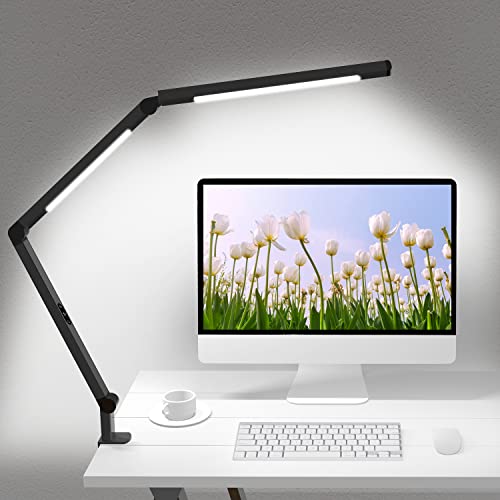
TaoTronics LED Desk Lamp with Clamp
A removable clamp base doubles as a standing desk lamp, covering two mounting styles at one price. Five color modes and several brightness levels cover general use beyond sewing alone. It costs less than dedicated craft lighting brands while still delivering decent brightness.
Pros
- Switches between clamp and stand mounting
- Priced below most dedicated craft lamps
- Multiple brightness and color mode options
Cons
- Lower color rendering than daylight specific lamps
- Light output trails premium sewing lights

Vremi LED Desk Lamp with Clamp
Two independently adjustable heads let sewists light the needle area and a pattern or instructions at the same time. The clamp base keeps the table clear for fabric and tools. A touch strip steps brightness up or down on each head separately.
Pros
- Two heads light separate work areas at once
- Clamp mount keeps the table surface clear
- Simple touch strip adjusts brightness per head
Cons
- Each head runs dimmer than single head lamps
- Clamp arm feels less sturdy with frequent repositioning

LEPOWER LED Metal Desk Lamp
A heavy metal base resists tipping when the arm extends fully over a machine, unlike lighter plastic stands. Three color temperatures and several brightness levels adjust to match the room. Its all metal head sheds heat better than plastic housings during long sessions.
Pros
- Heavy base resists tipping when fully extended
- Metal housing manages heat well over time
- Adjustable color temperature settings
Cons
- Heaviest base in this group to reposition
- No clamp mounting option included
What matters most
What matters more, brightness or color rendering? Color rendering index measures how accurately a light reproduces true colors against natural daylight. Low CRI lighting can make navy and black thread, or close fabric shades, look nearly identical. Sewists matching thread to fabric gain more from a high CRI light than from extra raw lumens.
Clamp mounting versus a weighted desk base A clamp light attaches straight to a machine or table edge, freeing desk space for fabric and tools. A weighted base sits on its own and repositions without needing a compatible edge to clamp onto. Table thickness and how often the light moves between stations should decide which style fits.
Do sewing lights need a built in magnifier? A magnifying lens helps with threading fine needles, checking small stitches, or working on detailed embroidery. That lens adds weight and bulk to the light head, which matters less on a floor stand than a compact desk lamp. Not every sewist needs magnification, so weigh it against the added size.
Placing a light to cut shadows at the needle Position a light slightly above and in front of the needle rather than straight overhead, which casts a shadow from the presser foot. A wider panel spreads illumination more evenly than a narrow bulb, cutting down hot spots. A second light source, even a basic room lamp, further reduces shadow on detailed work.
How they compare
| # | Model | Light output | Best for | Score | Price |
|---|---|---|---|---|---|
| 1 | OttLite Wellness Series LED Task Lamp | About 1000 lumens | Best overall | 9.3 | Check price |
| 2 | Brightech LightView Pro Magnifying Floor Lamp | About 900 lumens | Best for detail work | 9.0 | Check price |
| 3 | Neatfi XL LED Clamp Light | About 1500 lumens | Best for mounting on the machine | 8.8 | Check price |
| 4 | Daylight Company Slimline 3 Table Lamp | About 800 lumens | Best for small workspaces | 8.6 | Check price |
| 5 | TaoTronics LED Desk Lamp with Clamp | About 700 lumens | Best value | 8.4 | Check price |
| 6 | Vremi LED Desk Lamp with Clamp | About 600 lumens per head | Best for lighting two areas at once | 8.2 | Check price |
| 7 | LEPOWER LED Metal Desk Lamp | About 750 lumens | Best for a sturdy weighted base | 8.0 | Check price |
Frequently asked questions
What brightness works best for sewing tasks?
About 700 to 1000 lumens positioned close to the work area covers most sewing tasks well, with the higher end suiting very detailed stitching.
What is color rendering index and why does it matter for sewing?
Color rendering index measures how accurately a light source reproduces true colors. A high CRI light helps match thread to fabric correctly, since low CRI lighting distorts subtle color differences.
Should I choose a clamp light or a desk lamp for sewing?
A clamp light saves table space by attaching to a machine or table edge. A desk lamp with a weighted base repositions more freely without a suitable edge to clamp onto.
Do sewing lights need a magnifier?
A magnifier helps with threading needles and checking fine stitch detail, but it isn’t essential for general sewing. It does add size and weight to the light head.
How do I stop my sewing light from casting a shadow?
Position the light slightly above and in front of the needle instead of straight overhead. Overhead placement casts a shadow from the presser foot onto the stitching area.
What color temperature works best for a sewing lamp?
Daylight balanced settings, generally between 5000 and 6500 kelvin, render fabric and thread colors closest to how they look in natural light.
Can a sewing light attach directly to my machine?
Clamp style lights, like the Neatfi XL, attach directly to many machine bodies or a nearby table edge, as long as the clamp fits the available thickness.
Are LED sewing lights better than older bulb types?
LEDs run cooler, last longer and typically hold more consistent color rendering than incandescent or fluorescent bulbs, which is why they’re now standard in sewing lights.
Which sewing light works best for small workspaces?
The Daylight Company Slimline 3 fits tight spaces well, with a slim panel head and a lightweight base that slides easily between stations.
The bottom line
For accurate thread and fabric matching, OttLite’s Wellness Series delivers the most reliable color rendering. Sewists focused on fine detail benefit from the Brightech LightView Pro and its built in magnifier. Anyone wanting a light clamped right at the needle should reach for the Neatfi XL instead.