Home Sewing Machines Ranked for Beginners and Pros
The Brother CS7000X is the best all-around home machine, blending computerized stitches with beginner-friendly setup. For denim and canvas the Singer Heavy Duty 4423 has the strongest motor here, while the Brother XM2701 is the easiest budget starter.
For most home sewers the Brother CS7000X strikes the best balance of features and simplicity, with a large stitch library and an automatic needle threader that spares beginners a lot of frustration. If you sew thick layers, the Singer Heavy Duty 4423 is the muscle pick.
Sewing machines are tricky to shop for because a long stitch list means little if the machine bogs down on denim, and computerized features can overwhelm a first-timer. We compared these seven on motor strength, stitch options, ease of threading, and build using manufacturer specifications and owner feedback rather than staged testing.
Before you buy
Mechanical versus computerized Mechanical machines use dials and are simpler to learn, cheaper, and easy to service, which suits beginners and heavy-fabric work. Computerized machines add screens, memory, and large stitch libraries that help with decorative and precise projects, but they cost more and take longer to master, so pick based on how far you plan to take the hobby.
Match motor strength to your fabrics If you plan to sew denim, canvas, upholstery, or multiple layers, prioritize a heavy-duty motor and metal frame like the Singer 4423 or Brother ST371HD. A lighter budget machine handles cotton, quilting cottons, and mending fine, but it will stall and skip stitches when pushed through thick seams.
Threading and bobbin systems save frustration An automatic needle threader and a top drop-in bobbin remove two of the most common beginner headaches. Front-loading bobbins and manual threading are workable, but if you are new to sewing, a machine that simplifies these steps will keep you at the table instead of fighting the setup.
Do not overbuy on stitch count A machine with hundreds of stitches looks impressive, but most people use straight, zigzag, and a buttonhole stitch for the vast majority of projects. Choose a higher stitch count only if you genuinely want decorative or lettering work; otherwise, a focused machine you fully understand is more useful than an intimidating one.
The best picks, ranked
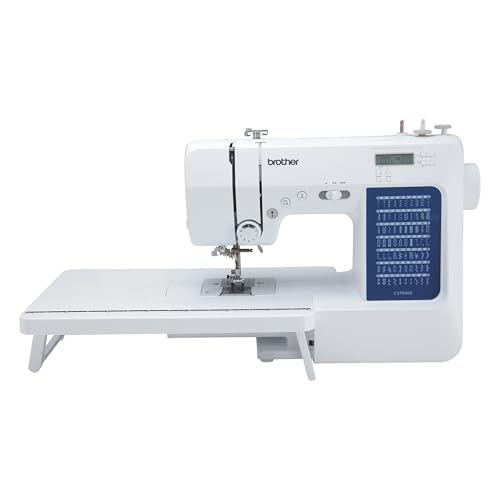
Brother CS7000X
This computerized machine offers a wide stitch selection, an automatic needle threader, and a drop-in bobbin that beginners find approachable. Owners praise the included wide table and hard case as genuinely useful extras for larger projects.
Pros
- Large stitch selection
- Beginner-friendly threading
- Wide table for quilting
Cons
- Plastic exterior
- Struggles with very thick seams

Singer Heavy Duty 4423
A strong motor and metal frame let this machine power through denim, canvas, and layered fabrics that stall lighter models. It is mechanical rather than computerized, which keeps operation simple and repairs straightforward.
Pros
- Powerful motor for thick layers
- Sturdy metal frame
- Fast stitching speed
Cons
- Loud during operation
- Fewer decorative stitches

Brother XM2701
A lightweight mechanical machine that covers the essential stitches plus a one-step buttonhole, ideal for a first machine. Owners report it handles everyday cotton and light mending reliably without a steep learning curve.
Pros
- Very affordable
- Light and portable
- Simple for first-timers
Cons
- Not for heavy fabrics
- Basic feature set
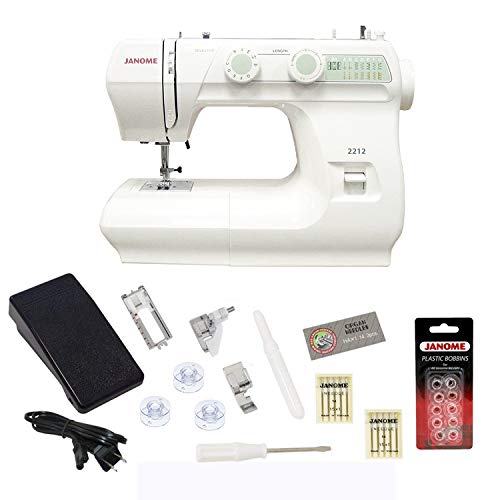
Janome 2212
A pared-back mechanical machine with dial controls that many sewers trust for consistent, tidy stitches. There is no screen to navigate, which appeals to people who want dependable basics over gadgetry.
Pros
- Smooth, consistent stitching
- Simple dial operation
- Well-regarded reliability
Cons
- Limited stitch count
- Four-step buttonhole is fiddly
Singer Start 1304
Stripped to the essentials, this machine keeps setup and stitch selection about as simple as it gets for a nervous first-timer. It is light and inexpensive, making it a low-risk way to learn the basics.
Pros
- Minimal, unintimidating controls
- Inexpensive entry point
- Easy to move and store
Cons
- Very limited stitches
- Outgrown as skills improve
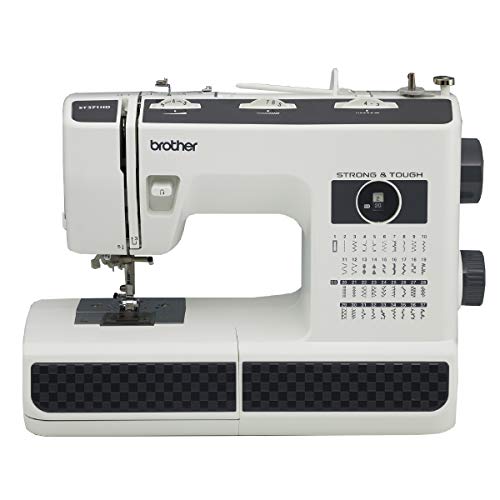
Brother ST371HD
A strong-frame machine aimed at tougher fabrics that still keeps things beginner-approachable with an auto threader and drop-in bobbin. Owners like that it bridges everyday sewing and occasional heavier jobs.
Pros
- Handles thicker fabrics well
- Auto threader included
- Good stitch variety for the price
Cons
- Some vibration at high speed
- Manual is brief

Singer Quantum Stylist 9960
With a huge stitch library, multiple fonts, and programmable features, this computerized machine suits ambitious projects and detailed decorative work. The trade-off is more complexity than a beginner would want on day one.
Pros
- Enormous stitch selection
- Programmable and precise
- Great for decorative work
Cons
- Overkill for basics
- Steeper learning curve
How they compare
| # | Model | Type | Best for | Score | Price |
|---|---|---|---|---|---|
| 1 | Brother CS7000X | Computerized | Best overall | 9.4 | Check price |
| 2 | Singer Heavy Duty 4423 | Mechanical | Best for heavy fabrics | 9.1 | Check price |
| 3 | Brother XM2701 | Mechanical | Best budget | 8.6 | Check price |
| 4 | Janome 2212 | Mechanical | Best mechanical simplicity | 8.8 | Check price |
| 5 | Singer Start 1304 | Mechanical | Best absolute beginner | 8.3 | Check price |
| 6 | Brother ST371HD | Mechanical | Best value heavy-duty | 8.9 | Check price |
| 7 | Singer Quantum Stylist 9960 | Computerized | Best for advanced sewers | 9.0 | Check price |
Frequently asked questions
What is the best sewing machine for a complete beginner?
Look for a simple, well-supported machine with an automatic needle threader and a drop-in bobbin, such as the Brother XM2701 or CS7000X. These reduce the fiddly setup steps that discourage new sewers and keep the focus on learning to stitch.
Do I need a heavy-duty machine?
Only if you regularly sew denim, canvas, upholstery, or several layers at once. For garments in cotton, quilting, and general mending, a standard machine is plenty; a heavy-duty motor mainly matters when fabric thickness would otherwise stall a lighter model.
Is a computerized machine better than a mechanical one?
Not universally. Computerized machines offer more stitches, memory, and precision for decorative work, while mechanical machines are simpler, often sturdier for thick fabric, and easier to repair. The better choice depends on your projects and comfort with technology.
How many stitches do I actually need?
Most everyday sewing relies on a straight stitch, a zigzag, and a buttonhole. A dozen well-chosen stitches cover the majority of projects, so a large stitch library is a bonus for decorative work rather than a must-have.
Why does my machine skip stitches or jam on thick seams?
That usually means the fabric is too heavy for the motor, the needle is wrong for the material, or tension needs adjusting. Using a heavier needle and a machine rated for the fabric weight, like a heavy-duty model, resolves most of these issues.
What accessories should come with a good machine?
Useful inclusions are several presser feet, spare bobbins, a seam ripper, and ideally a hard case or dust cover. Some machines add an extension table for quilting, which is genuinely helpful for larger projects.
How do I keep a sewing machine running well?
Clean lint from the bobbin area regularly, change needles often, and oil the machine if the manual calls for it. Occasional servicing keeps tension and timing accurate, and using the correct needle and thread for each fabric prevents most problems.
Can one machine handle both quilting and garments?
Yes, many home machines cover both, especially those with a wide extension table and a good range of stitches like the Brother CS7000X. For heavy quilt layers or large quilts, a stronger motor and larger throat space make the work easier.
The bottom line
The Brother CS7000X is the most versatile pick for home sewers, pairing a generous stitch library with beginner-friendly threading and quilting extras. Choose the Singer Heavy Duty 4423 if thick fabrics are your focus, the XM2701 to start on a budget, or the Quantum Stylist 9960 once decorative work becomes your priority.