Backyard Shade Ideas: Sails, Awnings and Umbrellas
The Coolaroo Ready-to-Hang Shade Sail covers the most area for the least cost and handles wind well thanks to its breathable weave. An Abba Patio offset cantilever umbrella shades a table without a centre pole, and a VEVOR retractable awning gives a wall mounted patio proper adjustable cover.
If you need a lot of shade quickly, a Coolaroo Ready-to-Hang Shade Sail is the most cost effective answer, an Abba Patio cantilever umbrella is the best way to shade a dining table, and a VEVOR retractable awning suits a patio against the house. Which one fits depends on what you have to anchor to.
Shade shopping is confusing because listings quote fabric UV block figures that say nothing about how much of your seating area actually stays in shadow as the sun moves, and because most fabric failures are caused by wind rather than sun. Breathable knitted fabrics survive gusts that tear solid waterproof covers. We compared UV ratings, fabric type, coverage, anchoring needs and wind behaviour, then ranked options by how much usable shade they deliver on an average garden.
How to choose
Match the solution to what you can anchor to Sails need three or four solid anchor points such as posts, a house wall or mature trees, and the quality of those anchors decides whether the sail survives. Cantilever umbrellas need heavy base weight and nothing else. Awnings need a structurally sound wall and proper fixings. Working out your anchors first narrows the choice faster than comparing fabrics does.
Breathable fabric versus waterproof cover Knitted shade cloth lets air and water through, blocks around 90 percent of UV and stays put in wind because gusts pass through it. Coated waterproof fabric keeps a shower off but behaves like a sail, which is why awnings and canopies must be retracted or closed when the wind gets up. Based on specifications, breathable fabric is the safer default unless you specifically need rain cover.
Sun angle decides real coverage A shade that looks generous at noon can leave a whole seating area exposed at four in the afternoon, because low sun comes in from the side. Work out where the sun sits during the hours you actually use the space, then oversize the cover in that direction or add a side element such as a roll up shade. Sails hung with a pronounced tilt cast shade further as the sun drops.
Anchoring, tensioning and longevity Most fabric failures owners report start at a corner that was left slack, because flapping fabric fatigues stitching quickly. Use turnbuckles or tensioning hardware at each corner, retension after the first few weeks as the fabric settles, and take sails down before winter storms in exposed gardens. For umbrellas, weight matters more than any other specification, and manufacturers routinely underspecify the base needed.
The best picks, ranked

Coolaroo Ready-to-Hang Shade Sail
Knitted HDPE fabric that blocks the large majority of UV while letting hot air and wind pass through, which is why sails survive gusty gardens that shred solid covers. Corner hardware is included, and coverage per unit of cost is better than anything else here.
Pros
- Large coverage for the outlay
- Wind passes through the weave
- No rigid structure needed
Cons
- Needs three or four solid anchor points
- Does not keep rain off

Abba Patio 10ft Offset Cantilever Umbrella
The offset arm puts the canopy over a table with nothing in the middle to work around, and the head tilts and rotates to follow the sun through an afternoon. It needs a heavy base, and owners report that skimping on base weight is the main cause of tipping.
Pros
- Clear space under the canopy
- Rotates to track the sun
- Folds away in minutes
Cons
- Needs substantial base weight
- Must be closed in strong wind

VEVOR Manual Retractable Patio Awning
Mounts to a house wall and winds out to whatever depth the sun demands, then retracts flat when you want the light back. It is the most permanent solution here, and the fabric sheds light rain, which none of the breathable options can do.
Pros
- Depth adjusts to the sun
- Sheds light showers
- Retracts fully out of the weather
Cons
- Wall fixing is a real installation job
- Must be wound in before wind arrives

Shade&Beyond Rectangle Sun Shade Sail
A wide range of sizes and colours at a low price, which makes it easy to match an awkward span without paying for a custom cut. Edges are reinforced with a cable and stainless D rings, though owners report tensioning is critical, since a slack sail flaps and wears at the corners.
Pros
- Sizes for almost any span
- Very low cost per square foot
- Breathable in wind
Cons
- Tensioning hardware sold separately
- Colour fades over several seasons

Radiance Cordless Roll-Up Outdoor Shade
A roll up shade for the open side of a porch or a pergola, dealing with low sun that any overhead cover misses entirely. The cordless mechanism avoids dangling cords, and the woven slats give privacy while still letting a breeze through.
Pros
- Handles low angle sun
- Adds privacy to a porch
- No hanging cords
Cons
- Needs a solid header to fix to
- Reed versions weather over time

Quik Shade Expedition EX100 Instant Canopy
A pop up canopy that goes from bag to standing shade in a couple of minutes, which suits sports sidelines, markets and gardens where nothing can be fixed permanently. Stakes and guy ropes are essential, since an unpegged canopy is effectively a kite.
Pros
- Sets up almost anywhere
- Packs into a wheeled bag
- Height adjustable legs
Cons
- Must be pegged and guyed
- Not for permanent outdoor use
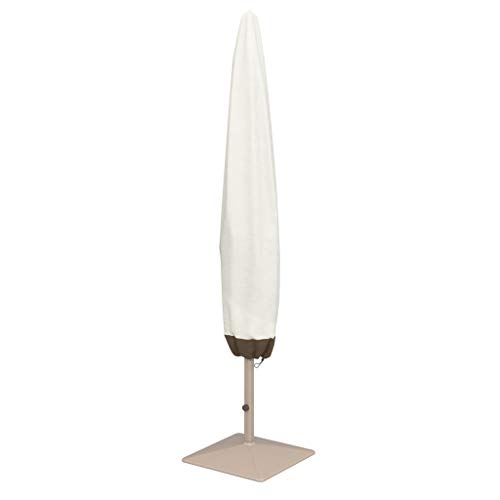
Amazon Basics Outdoor Patio Umbrella
A conventional centre pole umbrella that drops through a patio table hole and covers the seats around it for very little money. The canopy fabric and crank are basic compared with premium umbrellas, and for a small table on a sheltered patio it does the job.
Pros
- Lowest cost real shade
- Fits standard patio tables
- Simple crank operation
Cons
- Centre pole gets in the way
- Fabric fades faster than premium canopies
The lineup, side by side
| # | Model | UV block | Best for | Score | Price |
|---|---|---|---|---|---|
| 1 | Coolaroo Ready-to-Hang Shade Sail | Around 90 percent | Best overall | 9.4 | Check price |
| 2 | Abba Patio 10ft Offset Cantilever Umbrella | About 10 ft diameter | Best for dining areas | 9.2 | Check price |
| 3 | VEVOR Manual Retractable Patio Awning | Around 8 to 10 ft | Best for wall mounted patios | 9.0 | Check price |
| 4 | Shade&Beyond Rectangle Sun Shade Sail | Around 90 percent | Best value | 8.8 | Check price |
| 5 | Radiance Cordless Roll-Up Outdoor Shade | Multiple, 4 ft to 8 ft | Best for porches | 8.6 | Check price |
| 6 | Quik Shade Expedition EX100 Instant Canopy | About 10 by 10 ft | Best portable shade | 8.3 | Check price |
| 7 | Amazon Basics Outdoor Patio Umbrella | About 9 ft diameter | Best budget | 8.0 | Check price |
Questions worth asking
Do shade sails keep the rain off?
No. Knitted shade fabric is deliberately permeable so wind and water pass through. If you need rain cover, look at a retractable awning or a solid roof panel instead.
How much UV does shade cloth actually block?
Typically around 90 percent for quality knitted fabric, which the manufacturers state on the specification. It still pays to use sunscreen underneath, since reflected UV comes off paving and walls.
What size shade sail should I buy?
Measure the anchor points, then subtract room for the tensioning hardware at each corner. Ordering a sail exactly the same size as the span leaves nothing to tension with, which is a common mistake.
How heavy should an umbrella base be?
For a freestanding cantilever umbrella, considerably heavier than most people expect, often well over one hundred pounds of weight or a filled cross base. A table mounted umbrella can use a lighter base because the table adds stability.
Can I leave shade products up all year?
Awnings retract and can stay mounted. Sails, canopies and umbrellas should come down before winter storms, since snow load and gusts cause most of the damage owners report.
What is the best shade for a west facing patio?
Something that blocks low afternoon sun from the side, such as a roll up porch shade or a sail hung with a steep tilt. Overhead only cover leaves a west facing seat exposed exactly when it is hottest.
Do darker or lighter fabrics work better?
Darker fabric blocks more light and looks cooler beneath, but absorbs heat itself. Lighter colours reflect more heat while letting through more brightness, so mid tones are the usual compromise.
Will a shade sail damage my house wall?
Not if it is anchored into structural masonry with proper fixings and the load is taken at an angle the wall can handle. Fixing into render, fascia boards or single skin brick is where problems occur.
The bottom line
For covering a large area affordably, the Coolaroo Ready-to-Hang Shade Sail is still the best value in garden shade, provided you have solid anchor points and tension it properly. Shade a dining table with the Abba Patio cantilever umbrella so nothing sits in the middle of the group, and choose the VEVOR retractable awning if your patio backs onto the house and you want adjustable, semi permanent cover. Plan around the afternoon sun angle rather than midday, and take fabric down before winter storms.