Siphon Pumps for Gas, Water, and Oil Transfer Compared
Original Safety Siphon suits food-grade and general use, the TERA PUMP TRFA05 wins for hands-free battery power, and H-veenjor’s dual-hose pump moves fluid fastest once primed. Koehler’s RA912 is the simplest budget pick for occasional fuel transfers.
A battery-powered pump like the TERA PUMP TRFA05 moves fuel with no squeezing or sucking, while the manual Original Safety Siphon still transfers about 3.5 gallons a minute by hand pressure alone. Households juggling gas, oil, and diesel fit better with the multi-fluid HORUSDY pump. Larger vehicle tanks favor the stronger motor in the SEDY pump.
Flow rate, hose diameter, and backflow protection vary more between these pumps than most buyers expect. We compared listed transfer rates, valve design, and owner feedback on priming ease before ranking these seven.
The best picks, ranked

The Original Safety Siphon 6-Foot Hose Pump
A squeeze bulb primes the line, skipping any mouth-suction step even with gasoline. FDA food-grade tubing also works for water and home brewing, not just automotive fuel. The 1/2-inch shutoff valve stops flow mid-transfer without disconnecting the hose.
Pros
- Self-priming bulb removes any suction by mouth
- Food-grade material extends use to water and drinks
- Shutoff valve stops flow mid-transfer
Cons
- Manual squeezing continues throughout the transfer
- Shorter reach than dual-hose pumps
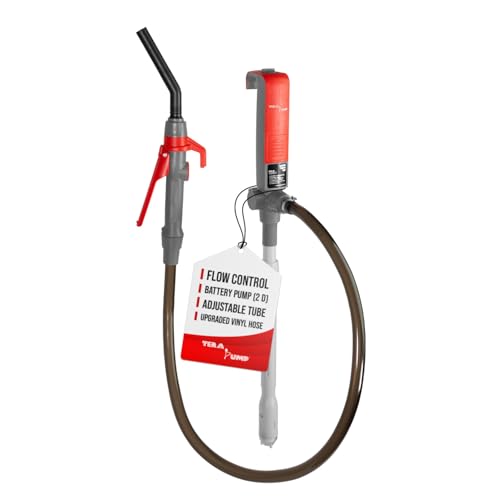
TERA PUMP TRFA05 Battery Operated Fuel Transfer Pump
A built-in motor pumps once the hose sits in the tank, freeing both hands during transfer. Gasoline, diesel, and kerosene are all rated fluids, which suits topping off generators and mowers. Flow holds steady near 2 gallons a minute after priming.
Pros
- No manual squeezing or sucking required
- Steady flow once the pump primes
- Handles repeated small transfers well
Cons
- Needs batteries with no manual backup option
- Slower than gravity-fed dual-hose pumps for large volumes

H-veenjor Gasoline Siphon Hose Pump
Separate intake and discharge hoses move fluid faster once primed than single-hose pumps. A one-way stop valve blocks fuel from draining back into the source container. Gas, oil, diesel, and water all fall within its rated fluid list.
Pros
- Faster transfer than single-hose manual pumps
- One-way valve prevents backflow into the source
- Rated across several common fluid types
Cons
- Thicker hoses flex less in tight engine bays
- Priming takes a few pumps before flow starts

SEDY Battery Operated Siphon Pump
A stronger motor than typical battery pumps clears larger fuel tanks without repositioning or restarting. Standard batteries power it instead of a proprietary rechargeable pack, so replacements stay easy to find. The rigid intake tube stays submerged through longer transfers.
Pros
- Clears larger tanks without restarting the pump
- Standard batteries are simple to replace
- Rigid intake tube stays submerged reliably
Cons
- Not rated for water or food-grade use
- Battery output drops in cold weather
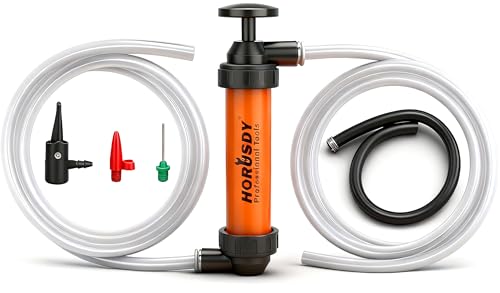
HORUSDY Manual Siphon Pump
Gasoline, diesel, oil, and water all sit within its rated range, useful for households running a mower, generator, and vehicle from one tool. A hand-priming bulb keeps setup simple with nothing to charge. The hose coils down small enough for a garage shelf.
Pros
- Rated across a wide range of fluid types
- Coils small for glovebox or garage storage
- No battery to charge or replace
Cons
- Flow slows noticeably with thicker fluids like oil
- Manual priming takes more effort than a battery pump
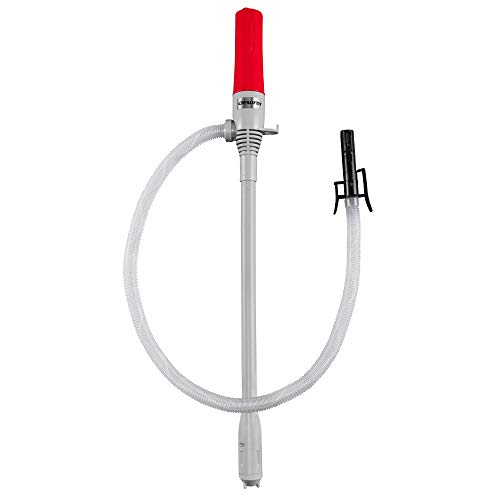
DEWAY Battery Operated Siphon Pump
Its compact cordless build tucks into an RV compartment or boat locker between occasional fuel transfers. Hands-free operation carries over from other battery pumps, once the intake sits in the tank. Lower cost than higher-flow battery models offsets its slower rate.
Pros
- Compact size fits RV and boat storage
- Hands-free once the intake is submerged
- Lower price than higher-flow battery pumps
Cons
- Slower flow rate than the SEDY or TERA PUMP
- Best suited to occasional rather than daily use

Koehler Enterprises RA912 Original Siphon Pump
No motor or battery sits inside this bare-bones hand-primer pump, just a bulb and hose. Fewer parts mean fewer things that can fail over years of garage use. Its low price has kept it a staple for quick top-offs.
Pros
- Low price with no batteries needed
- Simple design with few failure points
- Compact enough to store in a glovebox
Cons
- Slower flow rate than dual-hose or battery pumps
- Shorter hose limits reach to distant tanks
How to choose
Manual or battery power Manual bulb pumps like the Original Safety Siphon need no batteries and work anywhere. Ongoing hand squeezing keeps fluid moving throughout the transfer. Battery pumps free both hands once the intake hose sits in the tank, which helps when filling several containers or working at an awkward angle.
Matching flow rate to tank size A single-hose manual pump under 2 gallons a minute suits topping off a mower or generator. Larger vehicle tanks or repeated transfers call for a dual-hose design or a stronger motor like the one in the SEDY pump. Speed differences add up fast once several tanks need filling in one session.
Fluid compatibility matters more than it looks Not every siphon pump rates for every liquid. Food-grade pumps such as the Original Safety Siphon work for water and drinks. Fuel-only pumps are built for gasoline, diesel, or oil, and residue inside them makes crossing over to drinking water risky.
Best for compact storage in RVs and boats Storage space stays tight aboard an RV or boat, so a pump that coils or folds small matters more than top flow rate. The DEWAY battery pump and HORUSDY manual pump both prioritize a small footprint over maximum speed. Either one tucks into a side compartment between uses.
The lineup, side by side
| # | Model | Hose length | Best for | Score | Price |
|---|---|---|---|---|---|
| 1 | The Original Safety Siphon 6-Foot Hose Pump | 6 feet | Best overall | 9.2 | Check price |
| 2 | TERA PUMP TRFA05 Battery Operated Fuel Transfer Pump | Battery operated (D-cell) | Best battery powered | 9.0 | Check price |
| 3 | H-veenjor Gasoline Siphon Hose Pump | 15 mm | Best value | 8.7 | Check price |
| 4 | SEDY Battery Operated Siphon Pump | Battery operated | Best for larger tanks | 8.6 | Check price |
| 5 | HORUSDY Manual Siphon Pump | Approx. 5 feet | Best for multiple fluid types | 8.5 | Check price |
| 6 | DEWAY Battery Operated Siphon Pump | Battery operated | Best for RVs and boats | 8.4 | Check price |
| 7 | Koehler Enterprises RA912 Original Siphon Pump | Approx. 4 feet | Best budget | 8.3 | Check price |
Good to know
How does a siphon pump work without an electric motor?
Manual siphon pumps use a squeeze bulb to prime the hose, starting gravity-driven flow between containers set at different heights. Fluid keeps moving on its own once primed, until the hose comes out or a valve closes.
Are battery-operated siphon pumps safe for gasoline?
Yes, models like the TERA PUMP TRFA05 and SEDY pump carry ratings for gasoline and diesel, with motors sealed against fuel contact. Check the listed fluid compatibility for any specific model before use.
What is the fastest way to siphon gas from a car?
A dual-hose pump or a battery-powered motor pump generally moves fuel faster than a single-hose manual bulb. Flow rates among the pumps compared here range from about 1.5 to 3.5 gallons a minute.
Can I use a siphon pump for drinking water?
Only pumps explicitly listed as FDA food-grade, such as the Original Safety Siphon, are safe for drinking water or home brewing. Fuel-rated pumps can leave residue that makes water unsafe.
Do siphon pumps stop gas from flowing back into the tank?
Pumps with a one-way stop valve, like the H-veenjor model, block backflow once the transfer ends. Basic hand-bulb pumps without a valve can let some fluid drain back if the hose stays in too long.
What hose size works best for a siphon pump?
Wider hoses, such as the 15mm diameter on the H-veenjor pump, move fluid faster but flex less in tight engine bays. Narrower hoses fit cramped spaces but transfer more slowly.
How long do batteries last in a battery-operated siphon pump?
Runtime depends on tank size and fluid thickness, though most battery pumps handle several full tank transfers before batteries need swapping. Cold weather can shorten that runtime noticeably.
Is it legal to siphon gas from someone else’s vehicle?
Siphon pumps themselves are legal tools, but removing fuel from a vehicle without ownership or permission is not. Confirm consent before transferring fuel from any tank that is not yours.
Can a siphon pump move motor oil as well as gas?
Pumps rated for oil, like the H-veenjor and HORUSDY models, handle its thicker viscosity, though flow slows compared with gasoline. Pumps rated only for fuel should not be used for oil changes.
The verdict
Original Safety Siphon covers the widest range of uses with its food-grade rating and self-priming bulb. Anyone wanting a hands-free transfer should pick the TERA PUMP TRFA05 instead, while households juggling gas, diesel, and oil fit better with the multi-fluid HORUSDY pump.
