Sippy Cups Built to Survive Toddler Car Rides Without Spills
Munchkin’s Miracle 360 Trainer Cup wins overall, sealing shut the instant a toddler stops sipping from its spoutless rim. Babies just off the bottle do best with the NUK Learner Cup and its soft silicone spout. Straw drinkers stay drier with the OXO Tot Transitions, thanks to its hinged, leakproof cap.
Seven toddler cups went head to head on seal design, spout type, and how many parts need scrubbing after every use. Munchkin’s Miracle 360 Trainer Cup topped the group, since its spoutless rim closes automatically between sips. Two runners-up serve narrower needs: the NUK Learner Cup for babies fresh off a bottle, and the OXO Tot Transitions for kids ready to master a straw.
Picking one is tricky because pediatric dentists steer parents away from hard spouts, yet spoutless rims and straws each leak under different conditions. We compared valve design, part counts, BPA-free materials, and owner reports of drops, tip-overs, and dishwasher wear to rank this list.
How to choose
How to choose a sippy cup Match the mouthpiece to your toddler’s stage before anything else. Soft spouts suit babies just off a bottle, while 360 rims and straws suit kids building independent drinking skills. Insulated bodies matter more for long car rides than short trips across the kitchen. Count the parts before buying, since every valve and gasket adds a spot for mold to grow.
What age fits which cup type Six months marks the usual starting point for a soft-spout cup like the NUK Learner or a 360 rim like the Miracle 360. Straw cups such as the OXO Tot Transitions tend to click between nine and twelve months, once bite coordination improves. By age two, the American Academy of Pediatric Dentistry recommends open cups for daily use, keeping sippy cups mainly for travel.
Spout vs 360 rim vs straw, which is better for teeth Pediatric dentists caution against prolonged hard-spout use, since it can shape how teeth and swallowing patterns develop. Spoutless rims sidestep that concern by mimicking open-cup drinking. Training a preferred tongue position is where straws have the edge. Whatever mouthpiece wins, plain water between meals protects enamel more than any cup design does.
Cleaning sippy cups and preventing mold Disassemble every part after each use, since valves and weighted straws hide milk residue in places you can’t see. Hot soapy water works, or the top dishwasher rack if the manufacturer allows it. A narrow straw brush reaches inside silicone tubes that regular sponges miss. Replace any valve or straw showing dark spots, and let all pieces air dry fully before reassembly.
The best picks, ranked

Munchkin Miracle 360 Trainer Cup
Any point along this cup’s 360-degree rim works for sipping, and the opening seals shut the moment a child stops drinking. Pediatric dentists favor the spoutless shape because it mirrors open-cup drinking and supports jaw development. Just three parts make up the whole cup, and all of them survive the top dishwasher rack.
Pros
- Rim seals on its own, so a dropped cup stays mostly dry
- Spoutless design matches dentist guidance for oral development
- Three-part build skips straws and valves that trap residue
Cons
- New users often need a few days to learn the rim
- Silicone valve can trap milk film without daily rinsing
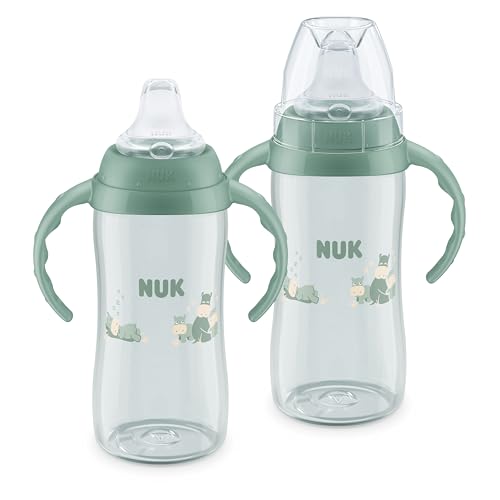
NUK Learner Cup
Soft silicone shapes the spout on this 5-ounce cup, easing the jump away from bottle nipples. Small hands get a grip from two handles that snap off once no longer needed. An air vent built into the spout cuts down on the gulping and air swallowing bottle-fed babies often show.
Pros
- Spout texture feels close to a bottle nipple for reluctant switchers
- Handles detach once a toddler can manage the cup solo
- Vented spout reduces swallowed air during fast drinking
Cons
- Silicone spout softens and wears faster once teeth arrive
- Five-ounce capacity means more refills through a thirsty afternoon

OXO Tot Transitions Straw Cup
A hinged cap folds down over the straw, keeping this 9-ounce cup from soaking a diaper bag between uses. Light bite pressure opens the almond-shaped straw, and it seals again the moment a child lets go. Removable handles let the cup grow from two-handed toddler grip to one-handed sipping.
Pros
- Hinged cap blocks leaks when the cup rides loose in a bag
- Straw sipping trains the tongue position dentists recommend over spouts
- Ounce markings on the side help with portioning drinks
Cons
- Bite-activated valve takes some toddlers a few tries to master
- More pieces to disassemble and wash than a spoutless cup

Thermos Foogo Vacuum Insulated Straw Bottle
Double-wall stainless steel construction keeps milk cold for hours, useful on long car rides or hot playground afternoons. Nothing sweats on the outside, so the bottle leaves no ring on furniture or car seats. Between drinks, a flip-up straw tucks flat under the lid out of reach of curious fingers.
Pros
- Insulation holds cold drinks through a full outing without a cooler
- Stainless body resists cracks that plastic cups pick up from drops
- Condensation-free exterior keeps bags and seats dry
Cons
- Full bottle weighs more than plastic alternatives of similar size
- Manufacturer recommends hand washing the body to protect the insulation

Munchkin Any Angle Weighted Straw Trainer Cup
A weighted ball inside the straw keeps its tip submerged no matter how far a toddler leans back, bottle-style. Click-lock lid seals firmly enough for a diaper bag or car cupholder. Flip-top cap shields the straw opening from dirt between sips.
Pros
- Weighted tip keeps drinks flowing even when tilted like a bottle
- Flip cap keeps the straw clean at the playground or park
- Side handles suit toddlers not yet ready for a straight straw cup
Cons
- Weighted assembly adds an extra piece to disassemble and clean
- Straw tip needs periodic replacement as teeth start marking it

Dr. Brown’s Milestones Cheers360 Cup
Sharing the same spoutless concept as the Miracle 360, this cup lets toddlers drink from any point on its rim. Its silicone valve lifts out as a single piece instead of several small parts. Replacement valves stay inexpensive and easy to find, which owners mention often in reviews.
Pros
- Spoutless rim delivers similar dental benefits to pricier competitors
- One-piece valve removes and rinses faster than multi-part designs
- Lightweight cup body suits smaller hands still building grip strength
Cons
- Fast drinkers can pull liquid quicker than the valve regulates
- Standard version ships without handles attached

Nuby Two-Handle No-Spill Super Spout Cup
Touch-flo valve technology opens this soft silicone spout only when a child actively sucks, closing again at rest. Two easy-grip handles suit hands starting around six months old. Nothing fancy sits inside, just a basic setup that covers everyday drinking without extra parts to lose.
Pros
- Suction-based valve keeps a tipped cup from dripping
- Soft spout feels gentle against gums during teething
- Minimal parts count lowers the chance of losing pieces
Cons
- Dentists suggest moving past spout drinking by around age one
- Printed patterns fade after repeated dishwasher cycles
Side by side
| # | Model | Capacity | Best for | Score | Price |
|---|---|---|---|---|---|
| 1 | Munchkin Miracle 360 Trainer Cup | 7 oz | Best overall | 9.4 | Check price |
| 2 | NUK Learner Cup | 5 oz | Best for 6-month-olds | 9.2 | Check price |
| 3 | OXO Tot Transitions Straw Cup | 9 oz | Best straw cup | 9.0 | Check price |
| 4 | Thermos Foogo Vacuum Insulated Straw Bottle | 10 oz | Best insulated | 8.8 | Check price |
| 5 | Munchkin Any Angle Weighted Straw Trainer Cup | 7 oz | Best for bottle-to-straw transition | 8.6 | Check price |
| 6 | Dr. Brown’s Milestones Cheers360 Cup | 7 oz | Best value | 8.3 | Check price |
| 7 | Nuby Two-Handle No-Spill Super Spout Cup | 8 oz | Best budget | 8.0 | Check price |
Good to know
What is the best sippy cup for a 6-month-old?
NUK Learner Cup fits this age well, since its soft silicone spout feels close to a bottle nipple and its handles suit new grips. Munchkin’s Miracle 360 also works from six months if skipping spouts from day one sounds appealing.
Are 360 cups better than straw cups?
Neither wins across the board. A 360 rim like the Miracle 360 builds open-cup habits and seals shut when dropped. Straw cups like the OXO Tot Transitions train tongue position and travel well behind a capped straw. Many households keep both types on hand.
Munchkin Miracle 360 vs Dr. Brown’s Cheers360, what’s the difference?
Both rely on a spoutless 360-degree rim with similar dental upside. Munchkin’s three-part build and wide range of handle options give it broader appeal. Dr. Brown’s counters with a one-piece valve that owners often call quicker to rinse.
How do I transition my baby from bottle to sippy cup?
Introduce the cup at one feeding a day, starting around six months, using a familiar liquid. A soft spout like the NUK Learner or a weighted straw like the Munchkin Any Angle helps, since both allow bottle-like tilting. Drop one bottle feeding per week after that.
Can sippy cups cause tooth decay?
Yes, when they carry milk or juice for hours at a time. Constant sipping bathes teeth in sugar regardless of mouthpiece design. Dentists recommend water between meals, milk only at mealtimes, and never sending a child to bed with a full cup.
Which sippy cup is best for milk?
At home, a 360 cup like the Miracle 360 rinses clean with the fewest hiding spots for residue. On the go, the Thermos Foogo keeps milk cold for hours inside its stainless body. Either way, rinse promptly, since milk left in a valve sours fast.
How many sippy cups do I need?
Two or three covers most households: one in use, one in the wash, one packed in the diaper bag. Sticking to a single model keeps parts interchangeable between cups. Add an insulated bottle like the Foogo once outings run past an hour.
Is a weighted straw cup worth it?
For toddlers who lean back while drinking, yes. A weighted ball in the Munchkin Any Angle keeps the straw tip submerged at any angle, so liquid flows instead of air. Once a child sits upright to drink, a standard straw cup is easier to clean.
When should a baby stop using a sippy cup?
Around age two, the American Academy of Pediatric Dentistry recommends daily open-cup use instead. Many toddlers still carry a sippy cup for car rides and outings past that point. Weaning gradually, one meal at a time, usually goes smoother than an abrupt switch.
What is the best sippy cup for travel?
OXO Tot Transitions Straw Cup travels well, since its hinged cap seals the straw shut inside a bag. For temperature control on long trips, the Thermos Foogo keeps milk or water cold for hours. Both skip open spouts that spill under pressure in a diaper bag.
Our pick
Most families do well starting with the Munchkin Miracle 360 Trainer Cup, since its spoutless rim wins on leaks, cleanup, and dental guidance. Choose the NUK Learner Cup for a six-month-old still attached to bottle feeding. For travel and cold drinks, the Thermos Foogo and the capped OXO Tot Transitions keep bags dry on longer outings.


