Skateboards for Beginners, Cruisers and Street Riders
The Element Section complete is the best all round skateboard, with a maple deck and components good enough to learn on and keep riding. Powell Peralta Golden Dragon suits heavier riders and park sessions, and the Krown Rookie is the low risk way to find out if skating sticks.
The Element Section complete is the skateboard most beginners and returning riders should buy, with the Powell Peralta Golden Dragon a stronger option for heavier riders or park use and the Krown Rookie the cheapest sensible way to try skating at all.
Complete skateboards are confusing because the price gap between a toy and a real board is not obvious from photos, and the components that matter are the ones nobody photographs. We compared current completes on deck construction, truck and bearing specification and published dimensions, alongside what riders report about wheel bite, loose hardware and decks that delaminate.
The best picks, ranked

Element Section Complete Skateboard
The Section is the complete most shops point beginners towards because everything on it is real skate hardware rather than parts that need replacing in a month. The seven ply maple deck has a moderate concave that suits learning without fighting you. Riders report the stock bearings are the first thing worth upgrading, which is normal even at this level.
Pros
- Genuine skate components throughout
- Moderate concave suits learners
- Deck holds up to real use
Cons
- Stock bearings are the weak point
- Graphics vary by batch
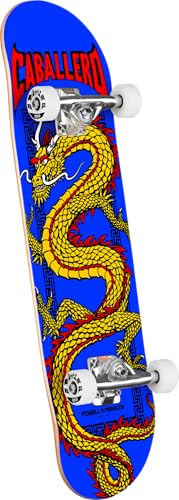
Powell Peralta Golden Dragon Complete Skateboard
Powell Peralta has been building decks since the beginning, and the Golden Dragon uses a reinforced construction that resists snapping better than standard maple. That matters for heavier riders and for anyone dropping into transitions. Based on specifications the wheels are a harder street compound, which rolls well on smooth park surfaces but transmits more vibration on rough pavement.
Pros
- Reinforced deck resists snapping
- Suits heavier riders
- Long standing brand reputation
Cons
- Hard wheels are rough on poor pavement
- Heavier than some completes

Birdhouse Stage 3 Complete Skateboard
The Stage 3 line exists specifically to give first time skaters a proper board without the price of a custom build. Deck widths run across a useful range so a smaller rider is not stuck on an eight inch board. Riders report the trucks need tightening after the first few sessions, which is true of every new complete rather than a fault here.
Pros
- Sensible width options for smaller riders
- Set up correctly out of the box
- Good value from an established brand
Cons
- Bushings are soft for heavier riders
- Grip tape quality is average

Santa Cruz Classic Dot Complete Skateboard
Santa Cruz completes often ship with softer wheels than a street setup, which transforms how a board feels on rough sidewalks and cracked asphalt. If your skating is mostly getting around rather than learning tricks, that is the right compromise. Owners report softer wheels grip well but scrub speed on smooth park concrete.
Pros
- Comfortable over rough pavement
- Iconic deck graphics
- Good grip on painted and slick surfaces
Cons
- Soft wheels are slower in a park
- Not ideal for learning slides

Enjoi Whitey Panda Complete Skateboard
Enjoi builds this complete around a street focused setup with a responsive concave and hard wheels that slide predictably. It suits riders who have the basics down and are working on flip tricks and ledges. Based on specifications the deck sits in the popular width range where most street skaters end up, which makes it easy to replace parts later.
Pros
- Concave suits flip tricks
- Hard wheels slide predictably
- Common width makes parts easy to source
Cons
- Unforgiving on rough surfaces
- Not a beginner’s first board
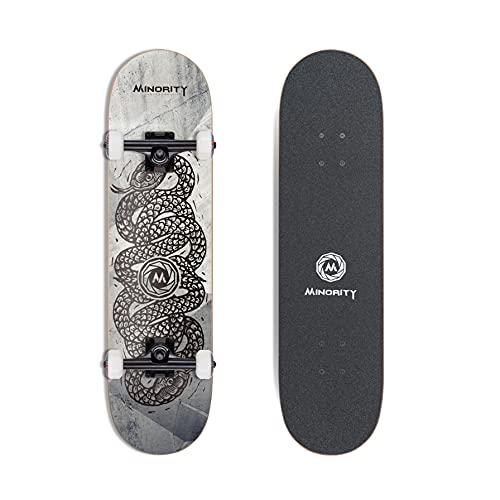
Minority 32 inch Maple Complete Skateboard
Minority has built a following among riders buying their first proper board online, offering a maple deck and alloy trucks at a price close to toy store boards. It is a genuine skateboard rather than a novelty, though the components are entry level. Riders report the wheels and bearings are the parts most people upgrade once they start progressing.
Pros
- Real maple deck at an entry price
- Assembled and ready to ride
- Popular first board online
Cons
- Entry level wheels and bearings
- Hardware needs checking before first ride

Krown Rookie Complete Skateboard
The Rookie is the board to buy when you genuinely do not know whether skating will stick, which is a common and reasonable situation. It rides properly enough to learn to push, turn and balance on. Riders report it is not built for heavy trick use, so anyone who progresses quickly will outgrow it within a season.
Pros
- Lowest risk way to try skating
- Rides properly for learning basics
- Assembled out of the box
Cons
- Components wear quickly under trick use
- Narrow deck limits progression
How they stack up
| # | Model | Deck | Best for | Score | Price |
|---|---|---|---|---|---|
| 1 | Element Section Complete Skateboard | 7 ply maple, 8 in width | Best overall | 9.4 | Check price |
| 2 | Powell Peralta Golden Dragon Complete Skateboard | Reinforced maple construction | Best for park skating | 9.2 | Check price |
| 3 | Birdhouse Stage 3 Complete Skateboard | 7 ply maple | Best for beginners | 9.0 | Check price |
| 4 | Santa Cruz Classic Dot Complete Skateboard | 7 ply maple with classic graphic | Best for cruising | 8.7 | Check price |
| 5 | Enjoi Whitey Panda Complete Skateboard | 7 ply maple, street concave | Best for street skating | 8.5 | Check price |
| 6 | Minority 32 inch Maple Complete Skateboard | Maple, 32 in length | Best value | 8.2 | Check price |
| 7 | Krown Rookie Complete Skateboard | 7 ply maple | Best budget | 8.0 | Check price |
What matters most
Deck width matters more than length Most skateboard decks are roughly the same length, so width is the meaningful dimension. Narrower decks around seven and a half to seven and three quarter inches turn quickly and suit smaller riders and technical street skating. Wider decks from eight to eight and a half inches give more foot space, more stability and suit transition and park riding. Shoe size is a rough guide, but riding style matters more.
Wheel hardness changes everything about the ride Durometer describes wheel hardness, with higher numbers meaning harder wheels. Hard wheels in the high nineties roll fast on smooth concrete and slide cleanly, which is what park and street skaters want. Softer wheels in the seventies and eighties absorb rough pavement and grip better, which is what you want for cruising and commuting. Putting hard wheels on a rough sidewalk is why some boards feel unbearable.
What actually separates a real board from a toy A genuine skateboard has a seven or eight ply maple deck, alloy trucks with a replaceable kingpin and bushings, and polyurethane wheels on replaceable bearings. Department store boards often use plastic trucks, soft plywood and wheels that will not roll straight. The difference shows up as soon as anyone tries an ollie, and it is a safety issue as much as a performance one.
Set up, safety and first sessions Check every bolt before the first ride, since completes ship with hardware that loosens quickly. Adjust truck tightness to taste, looser for turning and tighter for stability while learning. A helmet is sensible for everyone and mandatory in many parks, with wrist guards worth having for the first months since that is where most beginner injuries happen. Learning to fall properly reduces injuries more than any equipment.
Common questions
What size skateboard should a beginner get?
For most adults and teenagers, a deck between eight and eight and a quarter inches wide gives a stable platform to learn on. Younger or smaller riders are usually more comfortable on seven and a half to seven and three quarter inches.
Is a complete skateboard as good as a custom build?
A quality complete from an established skate brand is perfectly good for learning and for a long time afterwards. Custom builds let you choose every component, which matters once you know your preferences, but they cost significantly more.
What do wheel durometer numbers mean?
They describe hardness. Numbers in the nineties and above are hard street wheels that roll fast and slide cleanly on smooth surfaces. Numbers in the seventies and eighties are soft cruising wheels that absorb rough pavement and grip more.
Do I need to assemble a complete skateboard?
Completes generally ship fully assembled. You should still check the hardware, axle nuts and kingpin tightness before the first ride, because they commonly loosen in transit and during the first few sessions.
How tight should skateboard trucks be?
Tight enough that the board does not wobble at speed, loose enough that you can turn by leaning. Beginners usually start tighter for stability and loosen them as balance improves. Adjust the kingpin nut in small increments and test between each change.
What is wheel bite and how do I stop it?
Wheel bite is when the wheel contacts the deck during a sharp turn and stops the board suddenly. Tightening the trucks, fitting riser pads or using smaller wheels all prevent it, and it is a common issue on setups with soft cruising wheels.
How long does a skateboard deck last?
For casual riding, a deck can last years. For regular trick skating, decks lose their pop and can snap within months. Delamination at the edges and a soft, flat feel underfoot are the signs it is time for a replacement.
Do I need a helmet?
Yes for beginners, and many skateparks require them regardless of age or experience. Wrist guards are also worth wearing during the first months, since wrists take the impact in most beginner falls.
The verdict
The Element Section complete is the skateboard to buy if you want one board that works for learning and keeps working as you progress. Heavier riders and park skaters get more from the reinforced Powell Peralta Golden Dragon, and anyone who mostly wants to get around should look at the softer wheeled Santa Cruz. If you are unsure skating will stick, the Krown Rookie makes that a cheap question to answer.


