Youth Ski Helmet Guide: MIPS, Fit, and Sizing
Based on specifications and owner feedback, the Giro Crue MIPS Youth Helmet leads for its lightweight MIPS-equipped shell. OutdoorMaster Kelvin Kids Helmet offers strong value with adjustable venting. Smith Zoom Jr MIPS fits older kids and tweens moving into teen sizing.
Giro’s Crue MIPS Youth Helmet stands out for families wanting rotational-impact protection in a lightweight in-mold shell, though its size range stops before bigger teens.
Head shape, growth rate, and the sport a kid actually plays all change which helmet fits right, so specs alone rarely settle the question. Published safety certifications, shell construction, fit systems, and owner feedback across seven current youth models sorted real tradeoffs from marketing claims.
Our top picks

Giro Crue MIPS Youth Helmet
Giro bonds a polycarbonate skin directly to EPS foam in the Crue MIPS, cutting weight compared to hard-shell designs. A MIPS liner sits between the foam and the head, letting the shell rotate slightly on impact to reduce rotational force. Multiple vents with an internal channel move air through on warmer days.
Pros
- MIPS liner reduces rotational impact force
- In-mold shell keeps weight low for smaller necks
- Dial-adjust fit system works with gloves on
Cons
- Size range fits younger kids, not bigger teens
- Vents are fixed and cannot close in cold wind

OutdoorMaster Kelvin Kids Helmet
A reinforced ABS brim pairs with an in-mold shell here to spread impact force across the front edge. Parents tighten the fit with a rear dial, no glove removal needed, and the liner plus ear pads unclip for washing. Vents open for spring slush and close for a cold, windy chairlift ride.
Pros
- Adjustable vents handle both cold and warm days
- Removable liner and ear pads are machine washable
- Rear dial covers several growth stages in one shell
Cons
- No MIPS rotational protection layer
- Bulkier profile than premium in-mold competitors

Smith Zoom Jr MIPS
Smith scales this shell up from younger youth models, with a size range that carries into small adult heads. MIPS sits under the liner, and AirEvac channeling pulls warm, humid air out through rear vents to fight goggle fog. A micro-adjust dial replaces hook-and-loop straps for a more precise fit.
Pros
- Sizing carries kids from tween into teen years
- AirEvac venting cuts down on goggle fog
- Micro-adjust dial gives finer control than straps
Cons
- Not sized for toddlers or younger kids
- Fewer vents than some multi-sport alternatives

POC POCito Fornix
POC scaled its adult Fornix shell down for the smallest skiers with the POCito Fornix. Extended coverage at the back of the head protects the gap where the shell meets goggles. An adjustable fit ring at the rear tightens down to smaller head shapes than most youth helmets reach.
Pros
- Extended rear shell guards the goggle gap on small heads
- Bright colorways improve visibility on the hill
- Fit ring adjusts to smaller shapes than most youth shells
Cons
- No MIPS layer on this base model
- Sizing tops out before older kids need it
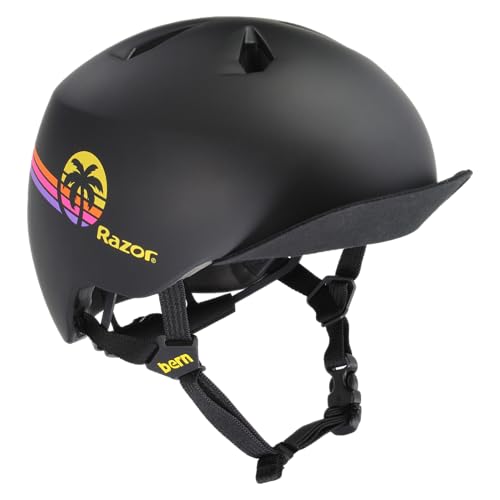
Bern Nino 2.0 MIPS
Bern built the Nino 2.0 MIPS as a hardshell helmet with liners that swap between seasons. A thin liner suits bike and skate riding, while a thicker liner with ear flaps converts it for the slopes. The hard ABS shell shrugs off scuffs from rails and pavement better than in-mold foam alone.
Pros
- One shell covers biking, skating, and skiing seasons
- Hard ABS shell resists scuffs from rails and pavement
- Ear-flap liner adds warmth without a separate helmet
Cons
- Winter liner availability varies by kit sold
- Heavier than dedicated in-mold ski helmets

Anon Rime Kids’ Helmet
A Boa dial fit system, borrowed from Anon’s adult lineup, wraps around an in-mold shell on the Rime kids helmet. A removable liner and ear pads adjust warmth for shoulder-season riding. The low-profile shape suits snowboarders who want a helmet that pairs closely with goggles and a hood.
Pros
- Boa dial gives a secure, low-profile fit for goggles
- Removable liner and ear pads adjust for warmer days
- Low-profile shape suits freestyle and park riding
Cons
- Fixed vents cannot close in heavy snow or wind
- Fewer size options than multi-sport competitors
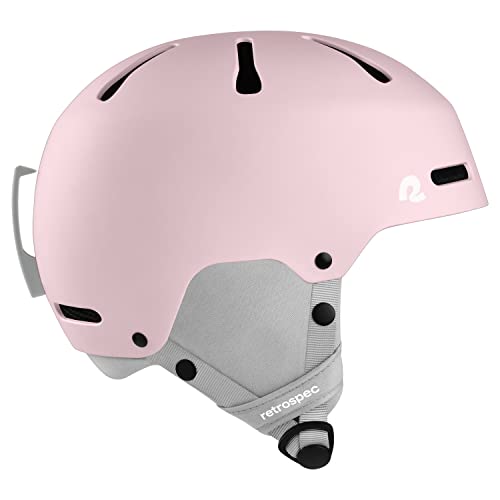
Retrospec Comstock Youth Ski & Snowboard Helmet
An ABS hard shell over EPS foam gives the Comstock the traditional construction found in entry-level snow helmets. A rear dial adjusts fit, and the ear pads and liner pull out for washing between trips. Solid color options sit at a lower entry point than MIPS-equipped shells.
Pros
- Lower entry point than MIPS-equipped youth helmets
- Removable liner and ear pads simplify cleaning
- Wide color selection for kids who want to choose
Cons
- No MIPS rotational impact layer
- Heavier hard shell than in-mold alternatives
How to choose
What makes a kids ski helmet safe A foam liner, usually EPS, crushes on impact to absorb energy before it reaches the skull in every certified helmet. Shells come in two basic builds: in-mold, where a thin polycarbonate skin bonds directly to the foam for light weight, and hardshell, where a separate ABS shell sits over the foam for extra durability. Check that a listing states compliance with ASTM F2040, the snow-sport helmet standard used across the US market. Some models add MIPS, a thin layer that lets the shell shift slightly on angled impacts to cut rotational force to the brain.
Sizing and fit as kids grow Measure head circumference with a soft tape just above the eyebrows, then check that number against the brand’s size chart rather than guessing by age. Rear dial systems, found on the OutdoorMaster Kelvin and Smith Zoom Jr MIPS, let one shell cover a season or two of growth. A helmet that shifts when a child shakes their head, or leaves a finger-width gap at the forehead, fits too loosely to protect properly. Cracks in the shell or a helmet that no longer sits level with goggles both call for replacement, even without a visible crash.
MIPS vs standard EPS foam MIPS targets rotational impacts, the angled falls common on groomed runs, by letting the inner liner rotate a few millimeters against the head. Standard EPS foam alone still absorbs the straight-on force of a fall, and it remains the baseline in every ASTM-certified helmet regardless of MIPS. Families on tighter budgets, like those choosing the Retrospec Comstock, still get real protection without MIPS, just less defense against glancing, twisting falls. Kids who ski aggressively or ride terrain parks benefit most from the added rotational layer.
Matching the helmet to the sport Alpine skiers who stick to groomed runs do fine with any certified helmet that fits, since falls tend to be straightforward slides. Snowboarders and park riders take more sideways and rotational falls, so a low-profile shell like the Anon Rime that pairs tightly with goggles and a hood pays off. Families who bike or skate in warmer months get more use from one shell, such as the Bern Nino 2.0 MIPS, by swapping its liner between seasons. Adult-style shells scaled down, like the POCito Fornix, cover toddlers and small-headed kids that a standard youth size rarely fits.
How they stack up
| # | Model | Safety system | Best for | Score | Price |
|---|---|---|---|---|---|
| 1 | Giro Crue MIPS Youth Helmet | MIPS rotational protection | Best overall | 9.4 | Check price |
| 2 | OutdoorMaster Kelvin Kids Helmet | In-mold with ABS brim reinforcement | Best value | 9.1 | Check price |
| 3 | Smith Zoom Jr MIPS | MIPS | Best for older kids and teens | 8.9 | Check price |
| 4 | POC POCito Fornix | PC shell over EPS foam | Best for toddlers and small kids | 8.7 | Check price |
| 5 | Bern Nino 2.0 MIPS | Hardshell ABS | Best for multi-sport use | 8.4 | Check price |
| 6 | Anon Rime Kids’ Helmet | In-mold | Best for snowboarding | 8.2 | Check price |
| 7 | Retrospec Comstock Youth Ski & Snowboard Helmet | ABS hard shell over EPS foam | Best budget | 8.0 | Check price |
Frequently asked questions
What is the safest ski helmet for kids?
Any helmet certified to ASTM F2040 provides baseline protection. MIPS models like the Giro Crue MIPS add a rotational-impact layer on top of that standard for angled falls.
How do I measure my child’s head for a ski helmet?
Wrap a soft tape measure around the head just above the eyebrows and ears, then match that number to the brand’s size chart instead of guessing by age.
Is MIPS worth it for a kids ski helmet?
MIPS adds a rotational-impact layer without changing how the helmet otherwise fits or vents. Choosing it makes sense whenever two similar models are on the table.
Can kids use the same helmet for skiing and snowboarding?
Yes, a standard ski helmet works for both sports. Only helmets marketed strictly as bike or skate helmets, without a snow certification, should stay off the slopes.
How often should a kids ski helmet be replaced?
Replace it after any hard impact, once the shell cracks, or when the child’s head grows past the size range, which for younger kids often means every season or two.
What size ski helmet does a 6-year-old need?
Fit depends on head circumference, not age. A 6-year-old can fall into toddler, youth, or junior tiers, so measure the child’s head and match it to the specific model’s chart.
Do ski helmets fit with goggles?
Yes, ski helmets leave a gap at the brow for goggle straps and a rear notch for the strap. The POCito Fornix extends its shell specifically to close that gap at the back.
Ski helmet vs bike helmet for kids: can one helmet do both?
Only helmets built for both, such as the Bern Nino 2.0 MIPS with its interchangeable liners, safely cover both sports. A single-purpose ski or bike helmet should not substitute for the other.
Which youth ski helmet fits toddlers best?
The POC POCito Fornix scales an adult shell down for the smallest heads, with a rear fit ring that tightens beyond the range most youth helmets reach.
Final word
Giro Crue MIPS Youth Helmet earns the top spot for rotational-impact protection in a shell light enough for young necks, though its sizing suits younger kids best. Families with teens or tweens outgrowing youth sizing should look at the Smith Zoom Jr MIPS, since its range stretches further. Budget-focused parents still get certified protection from the Retrospec Comstock, just without the MIPS layer.


