Youth Sleeping Bags That Fit, Warm, and Last
The Kelty Little Camp is the best overall pick for most families, offering a snug mummy cut, a quality synthetic fill, and a compressible stuff sack at a reasonable price. Its main limitation is that it is not suitable for very cold weather, rated only to 40 degrees Fahrenheit, so you will need a warmer bag for winter camping.
Finding a sleeping bag that fits your child properly is key to a good night’s sleep outdoors. A bag that is too big lets heat escape, while one that is too small is uncomfortable. Youth-specific bags are shorter and narrower, and they often come in fun colors and designs that kids love.
This roundup covers a range of youth sleeping bags, from ultralight backpacking models to cozy rectangular bags for car camping and sleepovers. We have included options for boys and girls, with temperature ratings from summer to three-season use.
Our top picks

Kelty Little Camp 40 Sleeping Bag
The Kelty Little Camp is a well-made mummy bag that fits kids up to 5 feet 5 inches. It uses Cloudloop synthetic insulation that retains warmth even when damp, and it packs down small for easy transport. Parents praise its quality zippers and durable fabric.
Pros
- Compressible and lightweight for backpacking
- Soft cotton flannel lining feels cozy
- Zipper has anti-snag feature
Cons
- Not for freezing temperatures
- Mummy shape may feel restrictive to some kids
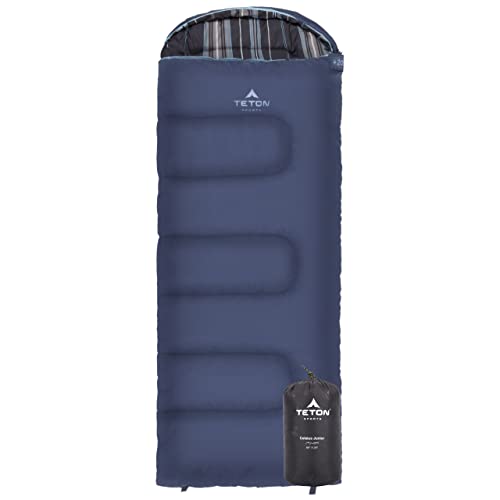
TETON Sports Celsius Junior Sleeping Bag
The TETON Sports Celsius Junior is a roomy rectangular bag that is great for car camping and sleepovers. It has a soft brushed polyester lining and a warm layer of polyfill. It comes with a compression sack for storage, and it is easy to clean in a large washing machine.
Pros
- Very affordable price
- Spacious rectangular shape
- Comes with a compression sack
Cons
- Bulky when compressed
- Not suitable for backpacking

Marmot Trestles 30 Youth Sleeping Bag
The Marmot Trestles 30 Youth is a mummy bag that offers excellent warmth for its weight, making it ideal for scout trips and backpacking. It uses Marmot’s SpiraFil synthetic insulation and has a draft tube and collar to keep heat in. The bag packs down to a reasonable size.
Pros
- Warm for its weight
- Durable construction
- Compression sack included
Cons
- Higher price
- Mummy cut may be snug for larger kids

Coleman Kids 50°F Sleeping Bag
The Coleman Kids Sleeping Bag is a simple, colorful rectangular bag that is perfect for indoor sleepovers or warm summer nights. It features a soft cotton flannel lining and a roll-up design for easy storage. It is machine washable and comes with a matching pillow.
Pros
- Fun patterns and colors
- Pillow included
- Machine washable
Cons
- Not for cold weather
- No compression sack
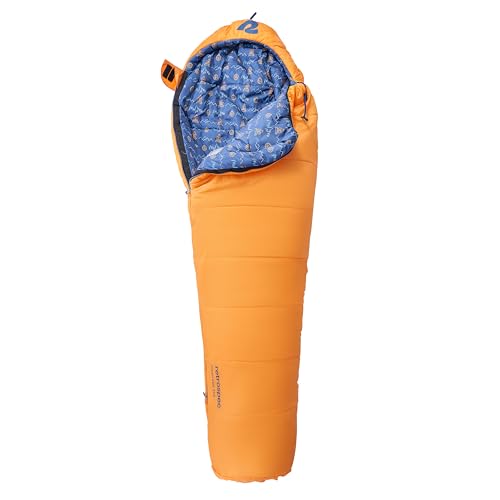
REI Co-op Kindercone 25 Sleeping Bag
The REI Co-op Kindercone 25 is a high-performance mummy bag that keeps kids warm in temperatures down to 25 degrees Fahrenheit. It is filled with a blend of recycled polyester and has a water-repellent finish. It is designed to fit kids up to 5 feet 6 inches and packs down well.
Pros
- Great warmth for cold camping
- Eco-friendly insulation
- Compression sack included
Cons
- Price is higher
- Limited color options

Slumberjack Latitude Youth 35 Sleeping Bag
The Slumberjack Latitude Youth 35 offers a balance of price and performance. It is a mummy-style bag with a comfortable flannel lining and a weather-resistant shell. It is rated to 35 degrees and comes with a stuff sack. It is a solid choice for camping trips that are not too extreme.
Pros
- Good warmth for the price
- Quality zipper
- Stuff sack included
Cons
- Not as compressible as premium bags
- Mummy shape might not appeal to all kids

Wilderness Systems Kids Sleeping Bag
The Wilderness Systems Kids Sleeping Bag is extra small, designed for toddlers and young children up to 4 feet tall. It has a cozy fleece lining and a simple rectangular shape that makes it easy for little ones to get in and out. It is great for indoor camping or warm summer nights.
Pros
- Perfect size for small children
- Soft fleece lining
- Inexpensive
Cons
- Not for cold weather
- May be too small for older kids
How to pick the right one
The lineup, side by side
| # | Model | Temperature Rating | Best for | Score | Price |
|---|---|---|---|---|---|
| 1 | Kelty Little Camp 40 Sleeping Bag | 40°F | Best Overall | 9.4 | Check price |
| 2 | TETON Sports Celsius Junior Sleeping Bag | 35°F | Best Budget | 8.9 | Check price |
| 3 | Marmot Trestles 30 Youth Sleeping Bag | 30°F | Best for Backpacking | 9.2 | Check price |
| 4 | Coleman Kids 50°F Sleeping Bag | 50°F | Best for Sleepovers | 8.6 | Check price |
| 5 | REI Co-op Kindercone 25 Sleeping Bag | 25°F | Best for Cold Weather | 9.0 | Check price |
| 6 | Slumberjack Latitude Youth 35 Sleeping Bag | 35°F | Best Value | 8.8 | Check price |
| 7 | Wilderness Systems Kids Sleeping Bag | 50°F | Best for Toddlers | 8.4 | Check price |
Questions worth asking
What temperature rating should I choose for my child?
It depends on the conditions. For summer camping, a 40 to 50 degree bag is sufficient. For spring and fall, choose a 30 degree bag. If your child sleeps cold, or if you plan to camp in colder weather, consider a 20 degree bag. Always add a few degrees of margin, as children tend to sleep colder than adults.
How do I know if the sleeping bag fits my child?
Check the manufacturer’s recommended height range. The bag should be long enough that your child can fully stretch out, but not so long that there is a lot of empty space at the bottom. A good rule is to have about 6 inches of extra length beyond your child’s height. The bag should fit snugly around the shoulders and chest without being tight.
Can a youth sleeping bag be used for backpacking?
Yes, but you need a lightweight and compressible model. Look for bags that weigh under 3 pounds and come with a compression sack. Mummy bags are better for backpacking because they are more efficient. Avoid bulky rectangular bags, as they take up too much space in a pack.
How do I clean a youth sleeping bag?
Most synthetic bags can be machine washed on a gentle cycle with cold water and a mild detergent. Use a front-loading machine if possible, as top-loaders can damage the bag. Tumble dry on low heat with a couple of clean tennis balls to help fluff the insulation. Always check the care label before washing.
Are there sleeping bags that grow with my child?
Some brands offer sleeping bags with extendable foot boxes, but youth-specific bags are sized for a limited age range. It is better to buy a bag that fits your child now, rather than one that is too large. You can also use a blanket or liner to fill extra space if needed.
What is the difference between a mummy and a rectangular bag?
Mummy bags are shaped like a cocoon, tapering toward the feet, which reduces dead space and improves warmth for the weight. They often have a hood and draft collar. Rectangular bags are shaped like a blanket with a zipper, offering more room to move but less thermal efficiency. They are generally heavier and bulkier.
Can I use a sleeping bag liner with a youth bag?
Yes, a liner can add warmth and keep the bag clean. Liners are especially useful if you are camping in slightly colder conditions than the bag’s rating. They are also easy to wash, which can extend the life of the sleeping bag.
What safety features should I look for in a youth sleeping bag?
Look for zippers that can be opened from the inside and outside to prevent trapping, and avoid bags with drawstrings around the neck that could be a strangulation hazard. Ensure that the bag is not too tight around the neck. Also, check that the materials are not flammable and meet safety standards.
The verdict
For most families, the Kelty Little Camp is the best all-around youth sleeping bag because it offers reliable warmth, good quality, and a reasonable price. If you need a bag for colder weather or backpacking, choose the Marmot Trestles 30 or the REI Kindercone 25, as they provide better insulation and compressibility. For budget-conscious parents or for sleepovers, the TETON Sports Celsius Junior or the Coleman Kids bag are excellent choices.