Bad Battery or Failing Alternator: How Smart Testers Tell
The NOCO GB40 pairs jump starting with built in diagnostics for most drivers. The Ancel BA101 adds Bluetooth app logging for tracking a battery over time. Shops testing daily lean on the Topdon BT100 for its fast standalone readout.
A slow crank in freezing weather does not always mean a dead battery. The NOCO GB40 clears that up fastest, since it runs a battery health check before you even connect it for a jump. Its diagnostics stay basic though, with no app or logged history.
Battery, starter and alternator problems often share the same symptom, a slow or failed crank, which makes guessing expensive when the wrong part gets replaced. We compared stated CCA ranges, diagnostic modes and owner reports on accuracy against known good and known bad batteries.
What we recommend
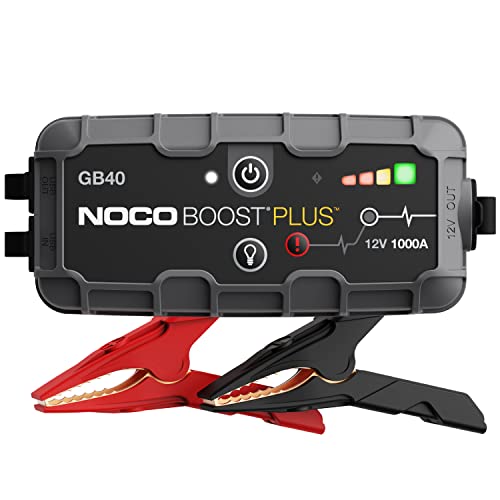
NOCO GB40 UltraSafe Jump Starter with Battery Tester
A built in health check runs before the jump start even begins, flagging a failing battery instead of just reviving it temporarily. Reverse polarity and spark proof clamps guard against a wrong connection. Many owners keep it in the trunk since one unit covers both diagnosis and the actual jump.
Pros
- Combines jump starting with diagnostics in one unit
- Spark proof clamps prevent wiring mistakes
- Small enough for glovebox storage
Cons
- Diagnostics stay basic next to dedicated testers
- No Bluetooth or app logging included

Ancel BA101 Bluetooth Battery Tester
Clamp it onto the terminals and a paired phone app logs voltage, CCA and health percentage for later reference. Cranking and charging system tests run alongside the battery check, separating a weak alternator from a weak battery. Owners tracking a fleet or an aging battery over months rely on that saved history.
Pros
- App saves test history for later comparison
- Separates battery, starter and alternator faults
- Wide 100 to 2000 CCA range covers most vehicles
Cons
- Needs a phone and app for full functionality
- Clamps feel lighter duty than shop grade testers

Topdon BT100 12V Car Battery Tester
A built in screen shows CCA, voltage and health percentage without pairing to a phone, which speeds up back to back tests. Cranking and charging voltage tests run in the same session as the battery check. Shops testing many vehicles a day cite that fast result screen as the reason it fits their workflow.
Pros
- Standalone screen skips phone pairing entirely
- Fast enough for high volume shop testing
- Covers cranking and charging diagnostics together
Cons
- No Bluetooth logging for later review
- Bulkier than pocket sized testers

Schumacher BA6 Digital Battery Load Tester
This tester applies an actual load rather than only reading conductance, which some mechanics trust more for catching a battery that reads fine but fails under real draw. A digital display replaces the analog needle found on older load testers. Owners doing their own maintenance without a smart tester budget find it a reliable middle ground.
Pros
- Load testing catches faults conductance testing can miss
- Digital display reads easier than an analog needle
- Works on both 6V and 12V systems
Cons
- No app or Bluetooth logging
- Larger and heavier than digital clamp testers
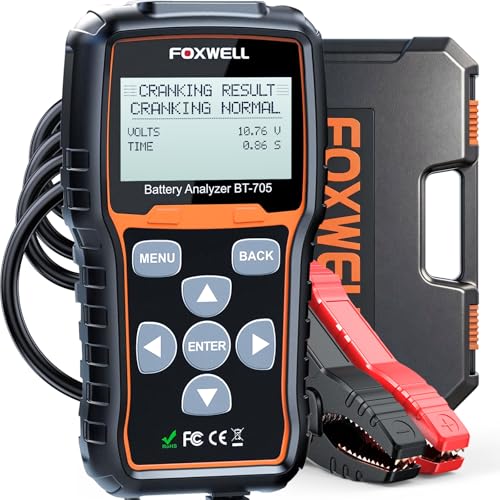
Foxwell BT705 Battery and Electrical System Analyzer
Beyond the battery, this analyzer profiles ripple voltage and alternator diode condition, catching issues a basic tester misses entirely. A built in printer outputs test results directly for a customer record. Independent shops running frequent electrical diagnostics use it alongside their main scan tool.
Pros
- Catches alternator diode issues basic testers miss
- Built in printer creates a paper record
- Covers both 12V and 24V systems
Cons
- Steeper learning curve for casual users
- Priced higher than clamp style testers

Autel MaxiBAS BT506 Battery and System Tester
Cloud connected reporting lets a shop track one battery across multiple visits, useful for reconditioning programs or fleet upkeep. An OBD-II connection adds a broader vehicle health check alongside the battery test. Fleet managers cite exportable reports as the main reason they pick it over a standalone clamp tester.
Pros
- Cloud reports track batteries across visits
- OBD-II connection adds broader diagnostics
- Suits fleet and reconditioning workflows
Cons
- More tool than a casual home user needs
- Full cloud features may need a subscription
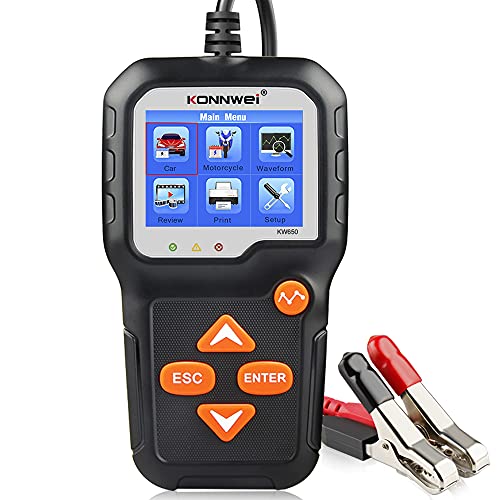
KONNWEI KW600 12V Battery Tester
A no frills clamp tester covers CCA, voltage and health percentage on a small screen for a fraction of the cost of app connected models. Cranking and charging tests are included despite the low price. Owners doing occasional checks on a single vehicle find it enough without extra features they will not use.
Pros
- Low cost for a full diagnostic feature set
- Needs no app or pairing to operate
- Covers the core battery and charging tests
Cons
- Build quality feels less durable long term
- Screen is small next to shop grade units
How to choose
What to look for in a smart battery tester CCA range should exceed your vehicle’s rated cold cranking amps with room to spare. Diagnostic modes matter next, since separating battery, starter and alternator faults avoids replacing the wrong part. Bluetooth logging helps if you want history over months rather than a single reading. Clamp build quality decides how long the tester survives regular use.
Dedicated tester versus a jump starter with a tester built in A dedicated tester like the Ancel BA101 gives more diagnostic depth in a single function. A combo unit like the NOCO GB40 saves a second purchase if a jump starter already needs to live in the trunk. Drivers wanting one item for emergencies and routine checks lean combo, while frequent testers benefit more from a dedicated tool.
Best way to diagnose a no start problem A no start can stem from the battery, the starter motor or an alternator that is not recharging properly, and guessing wrong wastes money on parts. Testers with separate cranking and charging tests, like the Topdon BT100 or Foxwell BT705, isolate which system actually failed. A basic voltage only tester cannot make that distinction reliably.
Best setup for shops and fleets Volume testing rewards a standalone screen that skips phone pairing, since tapping through an app slows down back to back jobs. Cloud reporting on tools like the Autel MaxiBAS BT506 helps a fleet track one battery’s condition across service visits. A built in printer on the Foxwell BT705 gives an instant paper record for a customer.
How they stack up
| # | Model | Function | Best for | Score | Price |
|---|---|---|---|---|---|
| 1 | NOCO GB40 UltraSafe Jump Starter with Battery Tester | Jump starter with integrated battery test | Best overall | 9.3 | Check price |
| 2 | Ancel BA101 Bluetooth Battery Tester | Bluetooth app pairing | Best for app tracking | 9.0 | Check price |
| 3 | Topdon BT100 12V Car Battery Tester | Built in LCD screen | Best for shops | 8.8 | Check price |
| 4 | Schumacher BA6 Digital Battery Load Tester | Direct load testing | Best for load testing | 8.5 | Check price |
| 5 | Foxwell BT705 Battery and Electrical System Analyzer | Color LCD with built in printer | Best for full electrical diagnostics | 8.3 | Check price |
| 6 | Autel MaxiBAS BT506 Battery and System Tester | Bluetooth with cloud reporting | Best for fleet tracking | 8.1 | Check price |
| 7 | KONNWEI KW600 12V Battery Tester | Small built in LCD | Best budget | 8.0 | Check price |
Common questions
How do you know if a car battery needs replacing?
A reading below the pass threshold for CCA, combined with a health percentage under roughly 50 percent, usually points to replacement. A battery that fails a load test but shows a normal resting voltage often still needs replacing despite seeming fine at rest.
Can a battery tester tell a bad battery from a bad alternator?
Testers with separate cranking and charging modes can, since a failing alternator shows normal battery health but low charging voltage. A basic tester that only reads battery voltage cannot make that distinction.
What CCA rating does my car need?
Check the sticker on the factory battery or the owner’s manual for the rated CCA, then buy a tester rated above that figure. Most passenger vehicles fall between 400 and 800 CCA, while trucks and cold climate batteries run higher.
Do Bluetooth battery testers work with any phone?
Most pair with iOS and Android through a manufacturer app, though always check that app’s compatibility list before buying. A tester with a built in screen skips this requirement entirely.
Is a load tester more accurate than a digital conductance tester?
Load testing applies actual current draw and can catch failures a conductance reading alone might miss. Digital conductance testers run faster and go easier on the battery, which is why most modern smart testers default to that method.
Can you test a car battery without removing it?
Yes, every tester here clamps directly onto the terminals with the battery still installed. Testing in the car also checks cranking voltage during an actual engine start, which a bench test cannot replicate.
How often should you test a car battery?
Testing before winter and again before summer catches most seasonal failures, since heat and cold stress a battery differently. Vehicles over three years old benefit from more frequent checks.
Do smart battery testers work on AGM and gel batteries?
Most listed here explicitly support flooded, AGM and gel battery types, though always confirm the specific tester’s compatibility list. Selecting the wrong battery type setting can skew the health percentage.
Battery tester vs jump starter: which one should you buy first?
A dedicated tester like the Ancel BA101 answers what is actually wrong with a battery in more detail. A combo unit like the NOCO GB40 makes more sense if a jump starter is the bigger gap in your trunk kit.
The verdict
Drivers wanting one tool for both diagnosis and emergency jumps should get the NOCO GB40. Anyone tracking a battery over months, or running more than one vehicle, gets more value from the Ancel BA101 and its app history. Shops testing daily should skip phone pairing altogether and pick the Topdon BT100 for speed.


