Smart Door and Window Sensors That Actually Catch Entries
Most households do best with the Aqara Door and Window Sensor P2, which bridges one Zigbee hub to HomeKit, Alexa and Google Home together. Apple-only setups run smoother on the Eve Door & Window over Thread. Without any existing hub, the Third Reality Smart Door Sensor pairs directly through Matter.
A door left ajar matters only if a sensor notices fast, and radio protocol decides how reliable that alert is. Through one Zigbee hub, the Aqara P2 reaches three ecosystems at once. Eve’s Door & Window suits Apple homes natively over Thread, while the Third Reality sensor skips proprietary hubs by running on Matter.
Sensors split hard by radio type, and a Zigbee unit bought for a Z-Wave hub will not pair at all. We compared listed battery life, hub requirements and confirmed ecosystem support against owner reports of dropped connections and false alerts.
The shortlist, ranked

Aqara Door and Window Sensor P2
Zigbee 3.0 radio links this sensor to an Aqara Hub M2 or M3. From there it bridges to HomeKit, Alexa and Google Home at once. Owners report open and close alerts arriving in under a second.
Pros
- Bridges Zigbee to HomeKit, Alexa and Google Home through one hub
- CR1632 battery rated for up to two years per listing
- Compact adhesive mount keeps the body low profile
Cons
- Needs a separate Aqara hub purchase
- No native Matter support yet

SwitchBot Contact Sensor
Bluetooth connects this sensor straight to a phone within range. Add the SwitchBot Hub 2 for Alexa, Google Home and Matter access. A built-in light sensor also flags whether a room is dark, useful for triggering automations.
Pros
- Built-in light sensor adds automation triggers beyond open and close
- Multi-packs lower cost per sensor compared with most Zigbee options
- Hub 2 upgrade adds Matter support
Cons
- Bluetooth-only range is limited without the hub
- Hub sold separately for full ecosystem integration

Wyze Sense V2 Contact Sensor
Four-packs keep this sensor’s per-unit cost lowest in the group according to the listing. Pairing happens through a Wyze Bridge or directly with compatible Wyze Cam models. Apple HomeKit support is absent, so iPhone-only households should look elsewhere.
Pros
- Lowest price per sensor in bulk packs among this group
- Setup runs through the simple Wyze app
- Pairs directly with many Wyze camera models
Cons
- No Apple HomeKit compatibility
- Some Wyze cameras still require a separate Bridge

Eve Door & Window
Thread connects this sensor directly once a HomePod mini or Apple TV 4K acts as border router. Matter firmware update extended compatibility to Google Home and SmartThings. Two AAA batteries replace the usual coin cell, simplifying swaps.
Pros
- Direct HomeKit integration without a proprietary hub
- Thread connection responds quickly and stays reliable
- Matter update extends compatibility to Google Home and SmartThings
Cons
- HomePod mini or Apple TV needed for the Thread connection
- AAA batteries add slightly more bulk than coin cells

Third Reality Smart Door Sensor
Matter over Thread lets this sensor pair directly with Apple Home, Google Home, SmartThings or a Matter-capable Echo. No proprietary bridge is needed beyond the Thread border router most modern hubs already include. This model typically costs less than single-ecosystem Zigbee sensors, per the listing.
Pros
- Single device works across Apple, Google, Amazon and SmartThings
- No proprietary hub purchase required
- Typically costs less than many Zigbee-only alternatives
Cons
- Requires a Thread border router already present in the home
- Newer to market than established Zigbee options
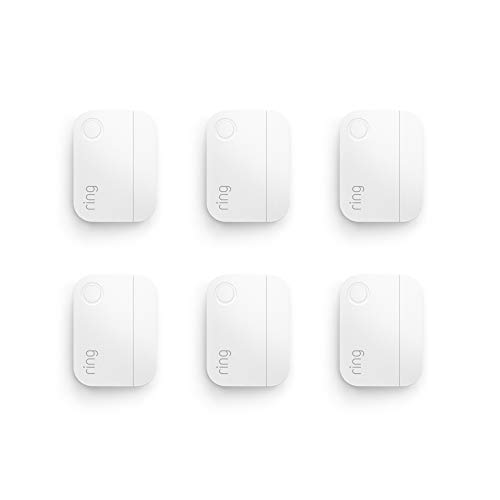
Ring Alarm Contact Sensor (2nd Gen)
Ring Alarm Base Station links this sensor into the same app as Ring cameras and alarm status. Alexa gets native control since Amazon owns Ring, covering routines and announcements. A Base Station purchase is required, suiting households already using Ring hardware.
Pros
- Unifies with Ring cameras and alarm status in one app
- Deep native Alexa integration for routines and announcements
- CR123A battery rated for up to three years per listing
Cons
- Ring Alarm Base Station required to function
- No Apple HomeKit support
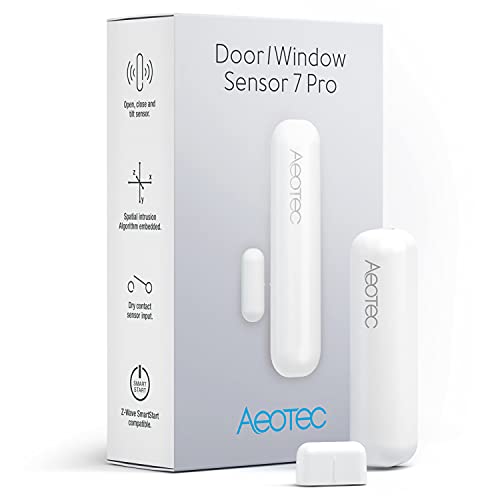
Ecolink Z-Wave Plus Door/Window Sensor
Z-Wave Plus radio pairs with SmartThings, Hubitat or any other Z-Wave controller, skipping proprietary bridges. Larger homes often benefit from Z-Wave’s mesh range compared with Zigbee, per owner reports. Two-piece magnetic housing fits slightly larger gaps than compact adhesive sensors.
Pros
- Wide compatibility with Z-Wave hubs like SmartThings and Hubitat
- Stronger mesh range reported in larger homes
- Two-piece magnetic design handles bigger gaps
Cons
- Requires an existing Z-Wave hub to function
- Housing is bulkier than adhesive-style competitors
How they stack up
| # | Model | Connectivity | Best for | Score | Price |
|---|---|---|---|---|---|
| 1 | Aqara Door and Window Sensor P2 | Zigbee 3.0, requires Aqara hub | Best overall | 9.4 | Check price |
| 2 | SwitchBot Contact Sensor | Bluetooth, optional SwitchBot Hub 2 | Best value | 9.1 | Check price |
| 3 | Wyze Sense V2 Contact Sensor | Wyze proprietary via Wyze Bridge | Best budget | 8.8 | Check price |
| 4 | Eve Door & Window | Thread (Matter) or Bluetooth | Best for Apple HomeKit | 8.6 | Check price |
| 5 | Third Reality Smart Door Sensor | Matter over Thread | Best for Matter and mixed households | 8.3 | Check price |
| 6 | Ring Alarm Contact Sensor (2nd Gen) | Ring proprietary (Z-Wave based) | Best for Ring and Alexa households | 8.1 | Check price |
| 7 | Ecolink Z-Wave Plus Door/Window Sensor | Z-Wave Plus | Best for SmartThings and Z-Wave hubs | 8.0 | Check price |
What to look for
How do smart door and window sensors work? A small magnet and a reed switch form the core of every sensor, one mounted on the frame and one on the moving door or window. Separating the two breaks a magnetic circuit, triggering a radio signal to a hub or app. Over one to two years, a coin cell or AAA battery typically powers that radio. Range and reliability then depend on which wireless protocol carries the signal onward.
Zigbee vs Z-Wave vs Matter: which protocol fits your hub? Zigbee sensors like the Aqara P2 only pair with a Zigbee hub, not a Z-Wave or Matter controller. Ecolink’s Z-Wave Plus sensor instead needs SmartThings, Hubitat or another Z-Wave controller. Thread and Matter devices, including the Eve Door & Window and Third Reality sensor, connect through a border router already built into many modern hubs. Buying the wrong protocol for an existing hub remains a common return reason, according to owner feedback.
Do you need a hub for a door sensor? Ring and Aqara sensors require their own base station or hub before they function at all, so budget for that extra hardware. SwitchBot’s sensor works standalone over Bluetooth, though a Hub 2 unlocks remote alerts and Matter access. Skipping a proprietary hub entirely is possible with Matter-native devices like the Third Reality sensor, provided a Thread border router already exists in a HomePod mini, Nest speaker or newer Echo. Protocol support is worth confirming before adding any sensor to a cart, since mismatches drive returns according to owner feedback.
What are the best door and window sensors for specific rooms or renters? Side doors and garages that see heavy daily use benefit from a Z-Wave sensor’s stronger mesh range in larger homes, such as the Ecolink model. Renters without permanent hub installations do better with SwitchBot’s standalone Bluetooth mode or a Matter sensor paired to a portable Echo. Pairing a Ring Alarm Contact Sensor with existing Ring cameras suits elderly monitoring setups that want one unified activity log. Mixed households, where some members carry iPhones and others use Android, get consistent alerts from the Aqara P2 or Third Reality sensor.
Common questions
Do smart door sensors work without wifi?
Zigbee, Z-Wave and Thread all route through a hub instead of a home wifi network directly. Bluetooth-only sensors, like a standalone SwitchBot unit, work within about 100 feet without any network at all. Only the hub itself typically needs an internet connection for remote alerts, not each individual sensor.
What is the difference between Zigbee and Z-Wave door sensors?
Both protocols form low-power mesh networks, but they use different radio frequencies and cannot substitute for each other. Aqara’s P2 needs a Zigbee hub, while Ecolink’s sensor needs a Z-Wave controller such as SmartThings or Hubitat. Z-Wave often carries a longer per-hop range, while Zigbee hardware tends to cost less per sensor.
Can door sensors work with Apple HomeKit without a separate hub?
Only sensors connecting over Thread or Bluetooth qualify, as the Eve Door & Window does through a HomePod mini or Apple TV acting as a Thread border router. Zigbee and Z-Wave sensors still need a HomeKit-compatible bridge in between, since Apple’s Home app does not speak those protocols natively.
How long do door and window sensor batteries last?
Coin cell models like the Aqara P2 and Third Reality sensor typically last one to two years, per listing claims. AAA battery models such as the Eve Door & Window often last slightly longer thanks to greater cell capacity. Cold garages and exterior doors tend to drain batteries faster than interior rooms.
Are Matter door sensors worth buying in 2026?
Households not locked into one ecosystem benefit most, since a single Matter sensor like the Third Reality model pairs with Apple Home, Google Home, SmartThings and Matter-enabled Alexa devices. Existing Zigbee or Z-Wave setups still work fine and do not need replacing just to add Matter support.
What is the best door sensor for a rental apartment?
Standalone Bluetooth options avoid drilling for a permanent hub, making SwitchBot’s Contact Sensor a common pick among renters. Matter sensors paired to a portable Echo or Nest speaker also skip permanent wiring, and both types usually mount with adhesive that leaves no marks.
Can door sensors trigger other smart devices, like lights?
Automation rules inside the hub’s app make that possible. Opening a door can switch on a smart bulb, start a camera recording, or send a phone notification, depending on what other devices share that hub or ecosystem.
SmartThings vs Ring for door and window sensors, which is better?
SmartThings accepts third-party Z-Wave and Zigbee sensors from many brands, giving broader hardware choice. Ring’s ecosystem stays closed to its own sensors but integrates tightly with Ring cameras and Alexa in one app. Choose SmartThings for flexibility, Ring for a unified security app.
Does a smart door sensor need its own hub, or can it use an existing one?
Many sensors reuse a hub already in the home instead of requiring a new purchase. Matter and Thread devices like the Third Reality sensor and Eve Door & Window rely on border routers already built into a HomePod mini, Nest speaker or newer Echo. Ring and Aqara sensors are exceptions, needing their specific base station or hub.
The bottom line
Multi-app households get the broadest reach from the Aqara Door and Window Sensor P2, since one Zigbee hub reaches Alexa, Google Home and HomeKit together. Apple-first homes see smoother results from the Eve Door & Window’s native Thread connection. Anyone starting without an existing hub skips that extra purchase through the Third Reality Smart Door Sensor’s Matter support.


