Soap Dispensers for Kitchens, Bathrooms and Busy Sinks
The simplehuman Rechargeable Sensor Pump ST1043 is our top pick for its fast sensor and adjustable dose. The OXO Good Grips Stainless Steel Soap Dispenser is the best manual option, and the Secura Automatic Soap Dispenser is the value touchless choice.
The simplehuman Rechargeable Sensor Pump ST1043 leads this roundup because its sensor responds fast enough that you do not hover waiting for soap, the dose is adjustable and it recharges rather than eating batteries. The OXO Good Grips Stainless Steel Soap Dispenser is the pick if you would rather have a pump that cannot fail electronically, and the Secura Automatic Soap Dispenser covers the touchless case for a fraction of the premium price.
Soap dispensers seem like a trivial purchase until the pump clogs, the sensor fires at your sleeve, or the refill opening turns out to be narrower than the neck of a soap bottle. Thick soaps, particularly foaming hand washes and gel formulations, are what separate a dispenser that works for years from one that jams in a fortnight, and sensor dispensers vary hugely in how quickly they read a hand. We compared pump construction and clog resistance, sensor speed and dose adjustment, battery type and expected life, how easy each is to refill and clean, and what owners report about longevity after a year of daily use.
What matters most
Touchless or manual, and when each makes sense The argument for a sensor dispenser is strongest at the kitchen sink, where you arrive with raw chicken on your hands, and in a family bathroom where nobody wants to touch the pump. The argument for manual is durability, since a pump with no electronics simply does not stop working, and cost. A reasonable compromise many households land on is a sensor dispenser at the kitchen sink and manual pumps elsewhere. If you go touchless, prioritise sensor speed over everything else, because a dispenser you have to wave at twice is more irritating than a manual one.
Soap thickness is the hidden variable Most dispenser failures come down to using a soap that is thicker than the pump was designed for. Thick gel hand washes, moisturising formulations and anything containing beads or exfoliants clog the narrow channels in sensor pumps in particular. Thinning thick soap with a little warm water before filling solves most of it and does not meaningfully reduce cleaning power. Foaming dispensers are a separate category entirely and need soap diluted specifically for them, typically one part soap to four or five parts water, since foaming pumps aerate thin liquid rather than pushing thick gel.
Refilling, cleaning and long term reliability Check the refill opening before you buy, because a narrow neck means either a funnel or a mess every time. Removable tanks are the cleanest arrangement, since you fill them at the tap. Whatever the design, rinse the pump through with warm water every few months, which clears the dried soap that eventually seizes the mechanism, and never let a dispenser sit empty with soap dried in the tube. On sensor models, the infrared window collects soap splatter and stops reading hands reliably, so wipe it when you refill.
Placement, stability and power A dispenser gets pushed sideways every time it is used one handed, so a weighted base or a non slip foot matters more than it sounds. Wall mounting removes the problem entirely and is worth considering in a small bathroom or a busy kitchen, though adhesive mounts fail on textured paint and need screws. On sensor models, rechargeable units avoid the steady battery drain, while battery powered ones are easier to place away from an outlet. Keep any electronic dispenser far enough from the tap that it does not get sprayed directly.
The best picks, ranked

simplehuman Rechargeable Sensor Pump ST1043
simplehuman solved the two problems that make cheap sensor dispensers annoying, namely lag and dose control, and the difference is obvious within a day of use. The pump reads a hand almost instantly and you can set how much soap it delivers. It recharges over a cable rather than running through batteries, and the stainless body stays put on a wet worktop.
Pros
- Sensor responds without a noticeable delay
- Adjustable dose stops soap waste
- Recharges instead of consuming batteries
Cons
- Among the most expensive dispensers available
- Very thick gel soaps still need thinning

OXO Good Grips Stainless Steel Soap Dispenser
OXO builds this around a pump that resists clogging and a wide mouth that takes a soap bottle without a funnel, which are the two things that matter on a manual dispenser. The weighted base does not skate across the worktop when you push down one handed. There is no sensor, no battery and correspondingly nothing to stop working.
Pros
- No electronics to fail over years of use
- Wide opening refills without spilling
- Base stays planted during one handed use
Cons
- Manual pumps mean touching it with dirty hands
- Stainless shows water spots in hard water areas
Secura Automatic Soap Dispenser
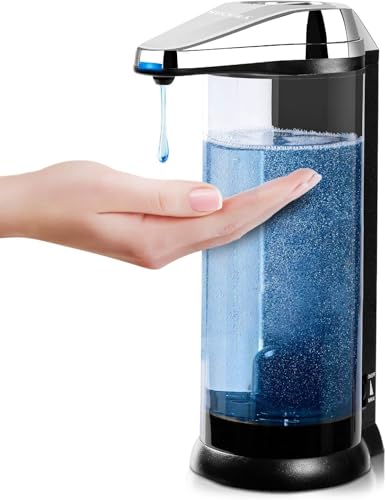
Secura delivers the touchless experience without the premium price, with an infrared sensor, adjustable volume settings and a removable tank for refilling at the tap. Response is a fraction slower than the simplehuman and the housing is plastic rather than metal. For a family bathroom where dispensers get knocked over, that is arguably an advantage.
Pros
- Touchless operation at a modest price
- Removable tank makes refilling clean
- Volume settings reduce soap waste
Cons
- Sensor lag is noticeable next to premium units
- Battery consumption is steady rather than efficient

mDesign Glass Soap Dispenser Pump
A glass bottle reads better on a bathroom counter than plastic, and it lets you see when soap is running low without lifting it. mDesign pairs it with a metal pump that survives daily use better than the pumps that come on soap bottles. Glass on a tiled bathroom floor has an obvious failure mode, so it suits adult bathrooms more than family ones.
Pros
- Glass looks considerably better than plastic
- Soap level visible at a glance
- Metal pump outlasts standard bottle pumps
Cons
- Breaks if knocked onto a tiled floor
- Heavier to lift when refilling
SVAVO Wall Mounted Manual Soap Dispenser
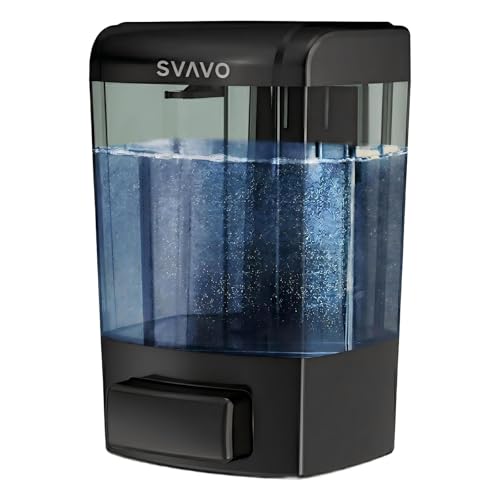
Mounting the dispenser on the wall clears the worktop entirely and stops the bottle being knocked into the sink, which is why commercial washrooms do it. SVAVO offers adhesive and screw mounting, and the reservoir holds far more than a countertop bottle. Adhesive mounting holds well on tile and poorly on textured paint.
Pros
- Removes the bottle from the counter entirely
- Larger reservoir means fewer refills
- Two mounting options for different surfaces
Cons
- Adhesive fails on textured or painted walls
- Fixed position cannot be moved easily

Umbra Joey Soap Pump
Umbra keeps this straightforward, with a moulded body, a reliable pump and a shape that does not slide around when pushed. It is inexpensive enough to buy one for every sink in the house. The plastic construction will not impress anyone, but it survives being knocked over, which glass and ceramic do not.
Pros
- Cheap enough to buy several at once
- Survives being knocked off a counter
- Pump works reliably with standard hand soap
Cons
- Plastic looks basic next to glass or steel
- Small capacity means frequent refills

Amazon Basics Automatic Liquid Soap Dispenser
When you want touchless dispensers at the kitchen sink, the downstairs cloakroom and the family bathroom, price per unit starts to matter. This one covers the basics with an infrared sensor, battery power and a straightforward refill opening. Sensor response and build quality both sit below the premium options, which is the expected trade.
Pros
- Cheapest route to touchless at every sink
- Simple refill without removing parts
- Runs a long time on a set of batteries
Cons
- Sensor is slower and less consistent than premium units
- Housing feels light on a wet counter
Side by side
| # | Model | Type | Best for | Score | Price |
|---|---|---|---|---|---|
| 1 | simplehuman Rechargeable Sensor Pump ST1043 | Touchless sensor pump | Best overall | 9.4 | Check price |
| 2 | OXO Good Grips Stainless Steel Soap Dispenser | Manual pump | Best manual | 9.2 | Check price |
| 3 | Secura Automatic Soap Dispenser | Infrared sensor pump | Best value touchless | 9.0 | Check price |
| 4 | mDesign Glass Soap Dispenser Pump | Manual pump | Best for countertops | 8.8 | Check price |
| 5 | SVAVO Wall Mounted Manual Soap Dispenser | Wall mounted manual | Best wall mounted | 8.6 | Check price |
| 6 | Umbra Joey Soap Pump | Manual pump | Best budget | 8.3 | Check price |
| 7 | Amazon Basics Automatic Liquid Soap Dispenser | Infrared sensor pump | Best for multiple sinks | 8.0 | Check price |
Good to know
Do automatic soap dispensers work with any soap?
Not reliably. Thick gel soaps, moisturising washes and anything with beads clog sensor pumps. Standard liquid hand soap works well, and thicker soaps can be thinned with a little warm water before filling. Foaming dispensers need soap diluted specifically for them, usually around one part soap to four parts water.
How long do the batteries last in a touchless dispenser?
Commonly three to six months in a household bathroom, less at a busy kitchen sink. Rechargeable models avoid the issue entirely and typically go a few months between charges. Battery life drops noticeably if the sensor is triggering on passing movement, so check where the dispenser is aimed.
Why has my soap dispenser stopped pumping?
Dried soap in the tube or pump head is the usual cause. Run warm water through the mechanism, working the pump repeatedly until it clears. On sensor models, also wipe the infrared window, since soap splatter blocks it and the pump never triggers. Prevention is rinsing the pump through every few months.
Can I use dish soap in a hand soap dispenser?
Yes, and many people do at the kitchen sink. Dish soap is usually thinner than hand soap, so it pumps easily and may dispense more than you want, which is where an adjustable dose setting helps. It is harsher on skin with repeated use than a dedicated hand soap.
Are wall mounted dispensers worth it?
In a small bathroom or a busy kitchen, yes, because they free the counter and cannot be knocked into the sink. The reservoir is usually larger, so refills are less frequent. The catch is that they are fixed in place and adhesive mounting is unreliable on textured or freshly painted walls.
How do I clean the inside of a soap dispenser?
Empty it, fill with warm water and a splash of white vinegar, pump it through until it runs clear, then rinse with plain water and pump that through too. Do this every few months. Never let a dispenser stand empty with soap residue drying inside the tube.
What is the difference between a foaming and a liquid dispenser?
A foaming pump mixes air with heavily diluted soap to produce lather, which uses considerably less soap per wash. A liquid pump dispenses soap as it comes. They are not interchangeable; putting undiluted soap in a foaming pump clogs it, and putting foaming soap in a liquid pump gives you a watery squirt.
Is stainless steel or plastic better for a soap dispenser?
Stainless looks better and resists knocks without cracking, but it shows water spots and fingerprints in hard water areas. Plastic is lighter, cheaper and survives being dropped. Glass looks best of the three and is the one that breaks. For a family bathroom, plastic is the practical answer.
The verdict
At a kitchen sink where hands are frequently dirty, the simplehuman Rechargeable Sensor Pump ST1043 justifies its price through sensor speed and the fact that it never needs batteries. Anywhere touchless is not the priority, the OXO Good Grips Stainless Steel Soap Dispenser is the more durable buy, with a clog resistant pump and an opening wide enough to refill without a funnel. If you want touchless at several sinks without the premium, the Secura Automatic Soap Dispenser is the sensible compromise.


